The premium foldable squeeze
The global foldable market reaches $17 billion in 2026 as shipments grow 12.6% to 22.9 million units. I see a market where premium devices hold 42% of the share, while budget models only account for 22%. The broader smartphone market shrinks to 1 billion units, but foldables remain the only growing segment. The memory shortage hitting the market in the second half of 2026 causes shipments to fall 27.2% year-over-year as vendors struggle to absorb rising NAND and DRAM costs. Apple’s entry into the segment with a 25% market share projection changes the competitive environment for brands like Samsung and Huawei. Samsung maintains a 38% share, while Huawei holds 22% of the market. The total smartphone market value reaches $613 billion even as volume drops, because the average selling price rises to $581. Flip phones lead the product split with 34% of sales, followed by fold out phones at 30% and dual screen designs at 24%. The market size in 2026 is projected to reach $17.0 billion, and demand for foldables will grow at a 26.2% CAGR through 2036.
Xiaomi MIX Fold 4 hardware
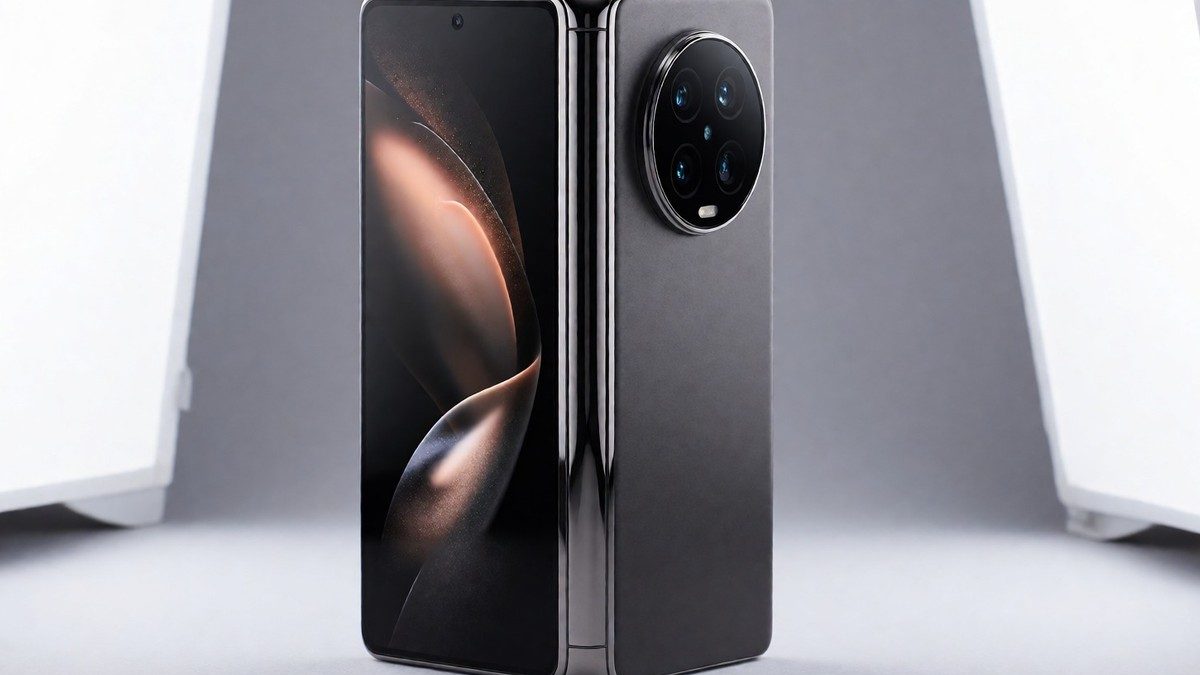
The Xiaomi MIX Fold 4 uses the Snapdragon 8 Gen 3 chip and a 5100 mAh battery. The device weighs 226 grams or 228 grams. The display provides 3000 nits of peak brightness and a 7.98 inch unfolded area. I find the Xiaomi hardware capable, but the company must improve its camera capabilities to compete with the Google Pixel 10 Pro Fold. CEO Lei Jun wants a dedicated camera department within the smartphone division to accumulate more technology. The camera system uses Leica lenses and includes a 50 MP wide sensor, a 50 MP telephoto sensor with 2x optical zoom, a 10 MP periscope telephoto sensor with 5x optical zoom, and a 12 MP ultrawide sensor. The Pixel 10 Pro Fold, announced in August 2025, carries an IP68 rating, while the MIX Fold 4 has an IPX8 rating. Xiaomi also offers 12 GB or 16 GB of RAM and 1 TB of storage. The external display is an LTPO AMOLED with 3000 nits peak brightness. The rear camera captures 8K video at 24fps and 4K video at up to 60fps.
| Feature | MIX Fold 4 Specification |
|---|---|
| Processor | Snapdragon 8 Gen 3 |
| RAM | 12 GB or 16 GB |
| Storage | 256 GB, 512 GB, or 1 TB |
| Battery | 5100 mAh |
| Charging | 67W wired, 50W wireless |
| Display | 7.98 inch LTPO AMOLED |
| Peak Brightness | 3000 nits |
| Weight | 226 g or 228 g |
| Water Resistance | IPX8 |
The US market gap
Xiaomi’s US presence is weak because the company focuses on a $29 power bank and a $499 electric scooter. This strategy targets Millennials, but it ignores the users looking for $1,999 devices like the Apple iPhone Duo. I think the decision to market scooters in the US is a waste. Samsung’s Galaxy Z Fold8 is available in 106 markets, while Apple lists the iPhone Duo at $1,999 in the USA, £1,999 in the UK, and EUR 2,299 in Germany. It costs $83.29 a month for 24 months in the USA. You should realize that carrier stores control 36% of foldable sales through subsidies and trade-ins. I find the Xiaomi marketing push for small accessories to be a bizarre way to build brand awareness for a premium smartphone line. As Samsung’s mobile division moved to an operating loss of KRW 700 billion in the second quarter of 2026, competition for premium buyers intensifies. The U.S.-China tech trade war escalation involves China implementing restrictions on foreign smartphones and the U.S. imposing tariffs on Chinese imports, which threatens Apple’s market access. Does Xiaomi believe a battery pack will build the same brand prestige as a high-end foldable?