

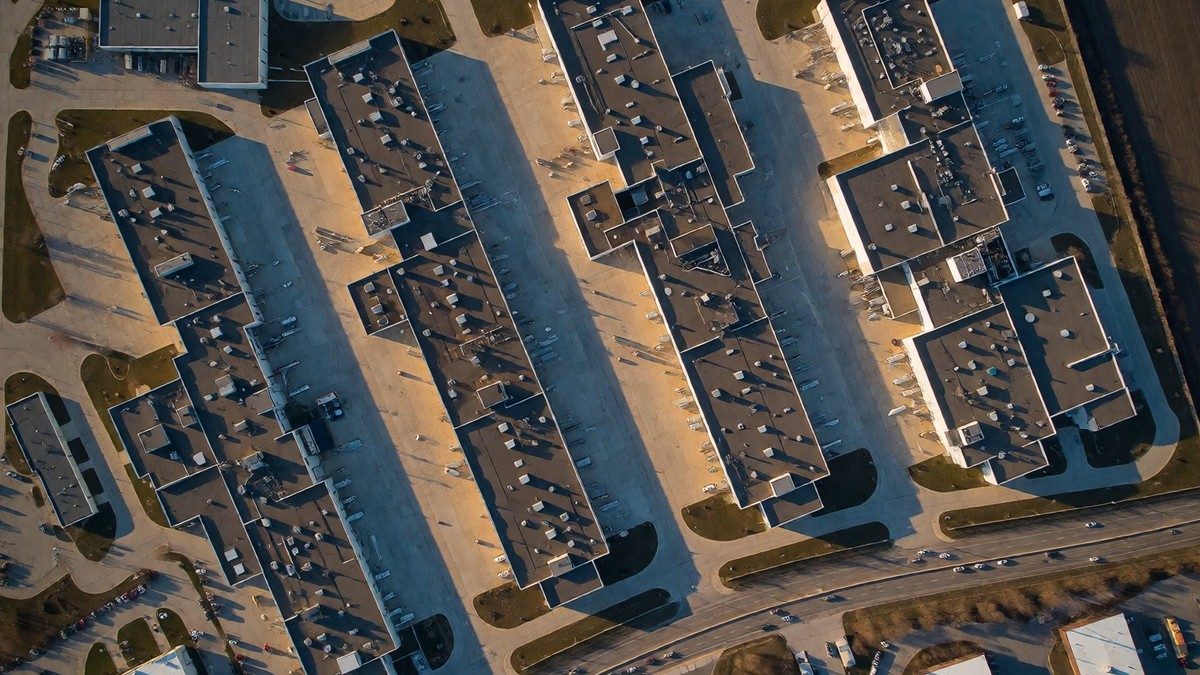
Anduril Industries holds a $61 billion valuation after its May 2026 Series H funding round. Thrive Capital and Andreessen Horowitz led this $5 billion investment. The company reported $2.2 billion in revenue for 2026. This follows a $31 billion valuation in June 2025 when the company raised $2.5 billion. The company prioritizes manufacturing speed over traditional procurement timelines. Its Arsenal-1 manufacturing campus in Columbus, Ohio, began production in late March 2026. This facility builds airframes, motors, avionics, and mission software under one roof. The company manages the Lattice command layer across all product lines. This vertical integration separates the company from traditional primes that bid out subsystems. The $20 billion US Army Lattice integration contract signed in March 2026 remains one of the largest awards for a non-traditional defense company.
| Date | Funding Stage | Amount Raised | Valuation | Lead Investors |
|---|---|---|---|---|
| May 2026 | Series H | $5.0 billion | $61.0 billion | Andreessen Horowitz, Thrive Capital |
| June 2025 | Series G | $2.5 billion | $30.5 billion | Founders Fund |
| August 2024 | Series F | $1.5 billion | $14.0 billion | Founders Fund, Sands Capital |
| December 2022 | Series E | $1.48 billion | $8.48 billion | Valor Equity Partners |
The Replicator failure and the rise of DAWG
The Pentagon transitioned the Replicator initiative into the Defense Autonomous Working Group. This shift follows a Secretary Hegseth memo from August 2025 that consolidated Replicator 2 under Joint Interagency Task Force 401. Replicator 1 aimed to field thousands of systems by August 2025 but only delivered hundreds. I find the Replicator 1 fielding targets an embarrassing failure because the program only delivered hundreds of drones instead of the promised thousands by the August 2025 deadline. Replicator 2 focuses on counter-small uncrewed aerial systems to protect critical installations. The administration requested $54.6 billion for the Defense Autonomous Working Group in the fiscal 2027 budget, with $53.6 billion of that total coming through the budget reconciliation process to bypass standard appropriations. This new group works to address the warfighter priority of countering small uncrewed aerial systems. The Defense Innovation Unit serves as the primary responsibility office for Replicator.
Production contracts for the Collaborative Combat Aircraft program
The U.S. Air Force moved Anduril’s YFQ-44A Fury and General Atomics’ YFQ-42A into production for Increment 1 of the Collaborative Combat Aircraft program. This decision occurred on June 17, 2026, four months earlier than the service planned. Anduril began airframe assembly at its Ohio factory before the contract award. The program pairs these drones with F-35 fighters as loyal wingmen. These drones carry munitions and expand sensor coverage. The total procurement request for the first batch of drones is $996.5 million plus a $150 million advance. The Air Force seeks to field more than 1,000 units by 2029. The program targets a cost of roughly $30 million per unit, but recent goals aim even lower. This shift to attritable mass challenges the traditional focus on exquisite, expensive platforms.
Software layers and autonomous pilot distinctions
Anduril builds the battlefield brain with Lattice OS. This software provides command-and-control and sensor fusion. Shield AI builds the autonomous pilot with Hivemind. This software handles aircraft-level decision-making. The distinction matters for the Collaborative Combat Aircraft program. Both companies are currently being funded at premium multiples. Shield AI received a Pentagon contract for LUCAS drone swarm coordination in May 2026. Shield AI projects $540 million in revenue for 2026. The company grew its revenue by 80% year-over-year. You already know the software-first model is winning in the defense sector.
The economics of drone swarms and cost imposition
The cost of a $100,000 drone can overwhelm a $2 billion vessel. I find this cost imposition curve heavily favors adversaries who use cheap, mass-produced drones. The Pentagon wants more than 200,000 AI-enabled lethal drones by 2027. The Drone Dominance program targets a price of $3,000 per unit as production scales. This program started at $5,000 per unit. The military needs thousands of drones to counter the threat of mass. Every increase in offensive drone deployment creates a new defensive requirement. This reality drives the demand for counter-drone systems. The Pentagon’s Joint Interagency Task Force 401 committed more than $600 million to counter-UAS capabilities.
Non-traditional procurement and the speed of DIU
Other Transaction Authorities allow the Department of Defense to bypass the standard FAR process. Anduril secured a $20 billion US Army Lattice integration contract in March 2026 through these pathways. The Defense Innovation Unit manages much of the Replicator-related procurement. DIU awards 88% of its contracts. The use of these authorities enables the rapid prototyping and fielding of unmanned systems. The military can get a requirements document and move to production without the old process. This approach avoids the cost risks that typically stall traditional programs. The Department of Defense is using these tools to bypass legislative gridlock. Will the new investment team maintain this momentum if the reconciliation budget fails to pass?
The industrial barbell and the $200 billion strategy
The Pentagon uses a barbell strategy to fund its industrial base. This strategy balances large prime contractors like Lockheed Martin with high-growth firms like Anduril. The $200 billion capitalization strategy includes $153 billion in mandatory funding. This funding targets subsectors like autonomous systems and missile defense. The strategy uses a Wall Street approach to portfolio management. The Department of Defense uses loans, guarantees, and direct equity-like injections to de-risk private investment. This includes $133 billion planned for the fiscal 2026 budget alone. The funding favors both established primes and high-growth defense-tech firms.
| Subsector | Strategic Focus | Primary Beneficiaries |
|---|---|---|
| Missile Defense | Golden Dome | Lockheed Martin, RTX Corp |
| Shipbuilding | Maritime Dominance | Huntington Ingalls, General Dynamics |
| Space Superiority | Next-Gen Sensing | Northrop Grumman |
| Autonomous Systems | Attritable Mass | Anduril, Kratos, AeroVironment |
The intelligence layer and global infrastructure
The Pentagon signed AI access agreements with NVIDIA, Microsoft, AWS, SpaceX, Google, OpenAI, and Oracle. These companies have access to classified IL6/IL7 networks. These agreements put the Physical AI platform stack inside military networks. This intelligence layer is part of a larger geopolitical infrastructure. NASA announced a $30 billion Moon Base program in May 2026. Three missions launch in 2026 to establish a presence at the lunar south pole. This program is the largest physical infrastructure procurement cycle since the International Space Station. Every mission depends on autonomous robots and AI systems. A 20 GW pipeline of new data center capacity is under construction globally. This infrastructure provides the physical substrate for every robot brain trained this decade.