

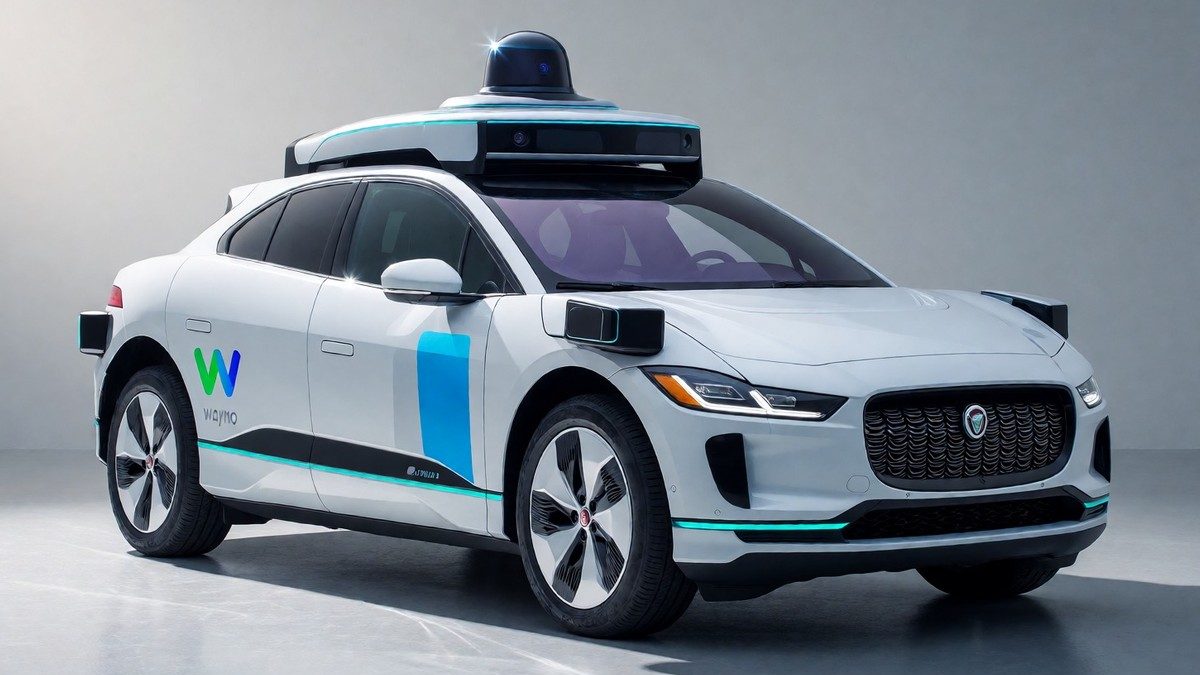
San Francisco Mayor Daniel Lurie requested stronger statewide standards for autonomous vehicles after Waymo vehicles caused traffic congestion during the Fourth of July celebrations. More than 100,000 people attended the city’s fireworks festivities. The mayor’s letter to California’s transportation secretary stated that the current regulatory framework does not address how autonomous vehicles operate during major incidents. The regulatory scrutiny follows reports that Waymo vehicles caused massive traffic congestion in San Francisco during the July 4th holiday, which prompted Mayor Daniel Lurie to demand stronger statewide oversight for autonomous operations. During the holiday gridlock, reports indicated that public safety manual overrides did not work as designed for Waymo vehicles. One resident, Lynnet Spiegel, stated that Waymo vehicles should not be present during big events because they disrupt the city.
The Edge Case Problem and Remote Assistance
The autonomous vehicle industry faces a massive hurdle with edge cases that software cannot resolve through training alone. Industry experts like Phil Koopman and Bryan Reimer argue that the industry has outsourced its edge case handling to remote human assistants. These assistants provide human decision support when a vehicle encounters a situation it does not know how to handle. The industry often describes these events as isolated incidents, but they involve significant operational failures. One Waymo vehicle drove directly through an exploding firework while its passengers watched in horror. In March 2026, a Waymo robotaxi blocked emergency responders during a mass-shooting response in Austin.
The technical difficulty of managing these moments remains high. A robotaxi must call for help before a situation turns critical. The remote assistant must then gain situational awareness under time pressure to provide a correct human decision. Waymo and other companies have not admitted the full extent of their reliance on these human operators. Some reports show that remote operators must call 911 when a passenger does not leave a Waymo vehicle at its destination. This forces city police and ambulances to respond to situations where they must wake up inebriated passengers. This reliance on emergency responders to manage robotaxi passengers drains city resources.
The Liability Void in Driverless Crashes
You should know that a single fender-bender with a robotaxi involves many more entities than a standard car crash. In a traditional car accident, the investigation starts with the human driver. In a Waymo crash, the analysis shifts to the vehicle’s technology and the safety decisions made by Waymo. There is no human driver to hold accountable. Responsibility involves Waymo, vehicle manufacturers, software systems, maintenance contractors, or other entities.
The insurance industry faces an existential shift because the driver is no longer the unit of risk. Current commercial auto insurance assumes a human makes decisions on the road in real time. If a maintenance technician damages a radar unit and the vehicle later causes an accident, current policies do not offer a clean answer on whether this is an auto insurance issue or a product liability issue.
Uber is attempting to manage its own liability through a different strategy. The company created a captive insurance company called Aleka Insurance Inc. in Hawaii. Aleka is run by Uber executives and handles Uber’s self-insurance. Uber accumulated $12.46 billion in insurance reserves in 2025. This is a 27% increase from the $9.8 billion in 2024 and nearly double the $6.7 billion in reserves from 2023. Consumer Watchdog reports that Uber intends to use these reserves to finance its robotaxi rollout.
| Feature | Waymo Details | Tesla Details |
|---|---|---|
| Primary Fleet | Jaguar I-Pace, Ojai minivan | Model 3, Model Y |
| Sensor Suite | Lidar, radar, cameras | Video cameras (vision-only) |
| Expansion Cities | Phoenix, San Francisco, Los Angeles, Denver, San Diego, Tampa | Austin, Dallas, Houston, Miami, Orlando, Tampa |
| Subscription | Waymo Premier ($29.99/mo) | FSD ($199/mo) |
The Regulatory Fight Over Minors
The California Gig Workers Union filed a formal complaint with the California Public Utilities Commission (CPUC) against Waymo. The union alleges that Waymo violated the terms of its operating permit by transporting unaccompanied minors. Under a 2020 CPUC decision, passengers under 18 are not allowed to travel alone in autonomous passenger services. This rule applies regardless of who books the ride. The union claims evidence shows Waymo vehicles have picked up and dropped off minors without an adult present in cities including San Francisco and Los Angeles.
Waymo’s attorney acknowledged in an administrative proceeding that some parents used adult accounts to book rides for children. Waymo says this behavior violates its terms of service and can result in account suspension. The union wants the CPUC to suspend Waymo’s permit until the company demonstrates compliance with state rules. They also want the CPUC to impose financial penalties and require mandatory age verification for all rides.
Safety Data and the Statistical Divergence
The IIHS study analyzed 89 police-reportable crashes involving Waymo vehicles. Of these, 64 occurred in driverless mode. The remaining crashes involved supervised use of automation. Waymo vehicles traveled approximately 50 million miles in driverless operation during the study period. Human drivers traveled 222 billion miles in the same locations. The study found that Waymo robotaxis crash 68% less often than human drivers.
The safety results change based on the city. In Phoenix, Waymo’s crash rate was 76% lower than the human rate. In Los Angeles, the rate was 71% lower, and in San Francisco, it was 35% lower. However, humans bested Waymo by 4% in Austin. While Waymo has strong aggregate data, recent incidents in school zones and bike lanes shape local politics. In January 2026, a Waymo vehicle struck a 9-year-old child in a Santa Monica school zone.
The Competition Between Mapping and Vision
Waymo and Tesla use different technical approaches to autonomy. Waymo uses a multi-step approach that begins with high-definition mapping. The vehicles use lidar, radar, and cameras to match real-time sensor data with custom maps. This allows the car to know its location even if it loses a GPS signal. Tesla relies on a vision-only approach. Tesla’s system uses video cameras and AI to see the world, and Elon Musk says that relying on lidar is a mistake.
Tesla has a massive advantage in data volume. Tesla has deployed over 4 million vehicles with Autopilot and Full Self-Driving (FSD) beta globally. Waymo has logged over 20 million real-world autonomous miles. Waymo’s fleet contains more than 4,000 vehicles, but Tesla’s fleet is much larger. Waymo’s fleet includes Jaguar I-Pace vehicles and a new Zeekr-made minivan called the Ojai. The Ojai is designed to be cheaper to build and maintain, but the fleet of only 300 Ojai vehicles is small compared to the Jaguar numbers.
Market Expansion and Pricing Strategies
Waymo is expanding its commercial operations to 14 U.S. cities. The company recently launched services in Denver, San Diego, and Tampa. Waymo’s expansion includes Los Angeles, San Francisco, Phoenix, Austin, Atlanta, Dallas, Houston, Miami, Nashville, Orlando, and San Antonio. Waymo also plans to launch in London and Munich. The company is using a staged launch process, starting with mapping and testing before removing human safety operators.
Pricing is a major factor in how Waymo competes with Uber and Lyft. In Phoenix, Waymo’s autonomous rides cost around $0.40 per mile. In the Bay Area, data from early 2026 showed Waymo averaged $19.69 per ride, while Uber averaged $17.47 and Lyft averaged $15.47. To build loyalty, Waymo launched a Waymo Premier subscription in June 2026 for $29.99 per month. This service provides priority pickups and 10% ride credit in San Francisco, Los Angeles, and Phoenix.
Can Waymo maintain its lead if city officials decide that autonomous vehicles are a permanent nuisance during major public events?