
The Memphis-Southaven AI cluster consists of three separate facilities. Colossus 1 occupies the former Electrolux factory on Paul R. Lowry Road in South Memphis. Colossus 2, also called Macrohard on its rooftop, sits at 5420 Tulane Road in the Whitehaven area. A third building named MACROHARDRR sits near Southaven, Mississippi. These sites hold 555,000 GPUs. The total capacity reaches 2 gigawatts. This deployment exceeds any other single-site AI training installation in the world.
The Memphis hardware footprint
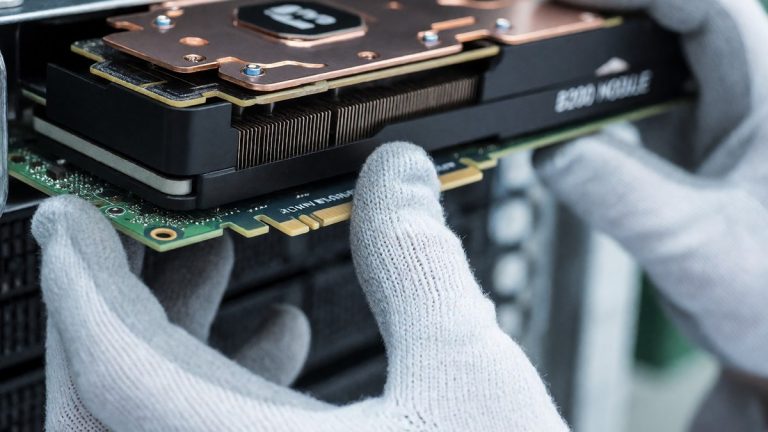
The deployment of 555,000 GPUs at the Memphis site costs approximately $18 billion. This massive investment means the average cost per GPU is $32,400. The hardware mix includes NVIDIA GB200 and GB300 processors. In July 2025, the first batch of 550,000 GB200 and GB300 units went live at Colossus 2. These systems provide the compute power necessary to train the Grok model series. The scale of the deployment allows for larger model parameter counts and faster training iteration cycles.
The Colossus cluster uses a multi-tier fat-tree topology with NVIDIA InfiniBand NDR at 400 Gb/s as the primary GPU-to-GPU interconnect to support AllReduce operations across the full cluster without creating bottlenecks. This network fabric connects the hardware to allow for massive parallel training runs. The system uses Supermicro liquid-cooled rack systems. Each rack holds 64 GPUs in a 4U-per-node configuration. This density requires specific cooling protocols to prevent hardware failure.
| GPU Type | Deployment Count | Status/Context |
|---|---|---|
| GB200 | ~520,000 | First batch operational July 2025 |
| GB300 | ~30,000 | Latest Blackwell variant |
| H100/H200 | ~30,000 | Colossus 1 legacy install |
On-site power and gas turbines
xAI builds its own power generation to avoid the long wait for utility interconnection. The Memphis site bypasses traditional utility constraints by using on-site generation. MXZ Tech, an affiliate of xAI, operates a gas-turbine plant in Southaven at the former Duke Energy site. This facility is located only 1.5 miles from the Colossus 2 campus. The company uses methane-fueled turbines to meet the electricity demands of the GPUs.
The project uses 168 Tesla Megapacks to provide redundancy and support the grid during peak demand. These batteries help safeguard Shelby County residents from potential blackouts. The permanent 1.2 GW simple-cycle plant under construction includes 41 turbines. This power capacity is enough to power approximately 1.5 million homes. You already know that massive compute requires massive power.
The use of these turbines has caused friction with local regulators. The company operates several methane gas turbines without the required Clean Air Act permits. This situation led to a lawsuit filed by the NAACP and the Southern Environmental Law Center. The lawsuit alleges that the Southaven plant has a disproportionate impact on nearby Black communities. The U.S. Department of Justice moved to dismiss the case in June 2026. Will the local utility eventually allow the facility to connect to the main grid without the reliance on methane turbines?
Cooling technology and water management
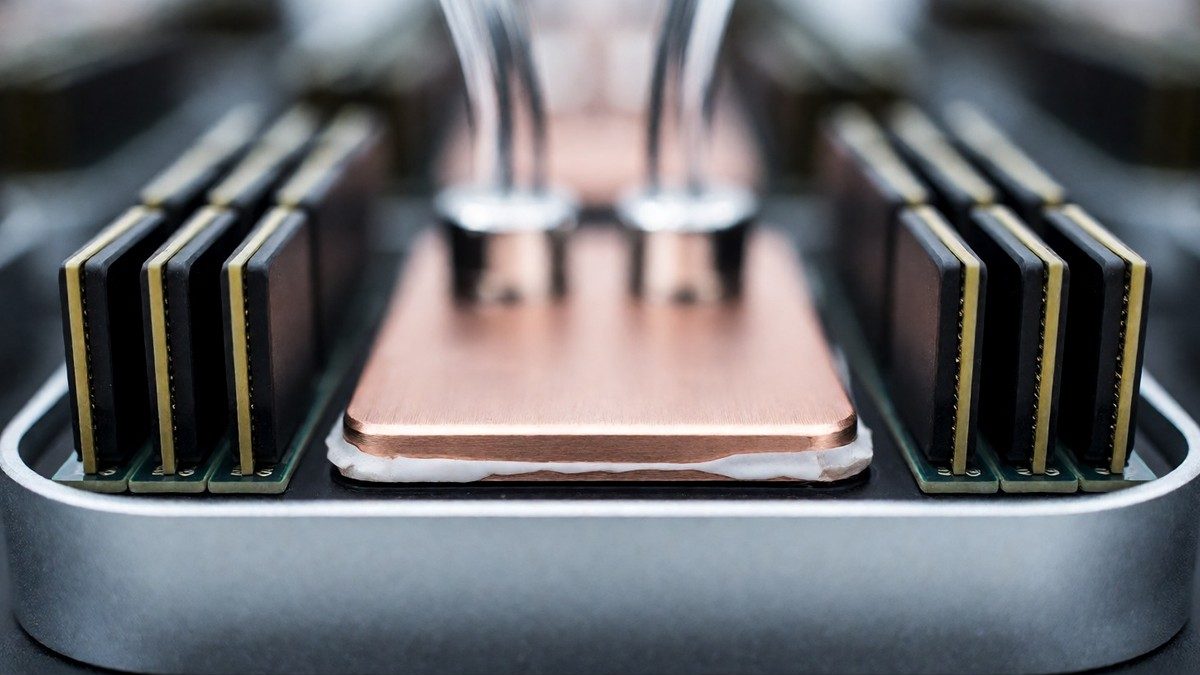
The density of the GB200 and GB300 processors requires liquid cooling. Each GB200-NVL72 configuration contains 72 GPUs per rack. These racks use direct-to-chip liquid cooling with warm water loops. The heat from the GPU cold plates moves to facility-level heat rejection systems. The 2 GW of GPU compute generates 1.8 GW of heat. This heat requires 50,000 gallons per minute of cooling capacity.
The facility uses two types of water loops. A closed loop carries heat from the chips to the cooling towers. An open loop handles the majority of the heat rejection through evaporation. This open loop needs 3 million gallons of water every day. xAI uses treated wastewater for this purpose instead of using drinking water. The Colossus Water Recycling Plant sits between the city wastewater plant and the data center. Construction for this plant began in October 2025. The facility filters the wastewater to remove suspended solids before use.
The large water demand creates tension with local conservationists. The Memphis Sands Aquifer provides the drinking water for the region. Groups like Protect Our Aquifer worry that heavy water use could damage the aquifer. They argue that pulling water from deep wells could breach the clay layer protecting the aquifer. This could allow toxic material from old coal ash ponds to enter the water supply.
Grok model performance and efficiency
Grok 4.5 launched on July 8, 2026. It is a 1.5-trillion-parameter model trained on tens of thousands of NVIDIA GB300 GPUs. The model was trained using real developer session data from the Cursor code editor. SpaceX acquired Cursor for $60 billion in June 2026. Grok 4.5 focuses on programming and agentic tasks. It is an Opus-class model that performs well in reasoning and coding.
The model is much more efficient than its competitors. On the SWE-Bench Pro benchmark, Grok 4.5 uses 15,954 output tokens. Claude Opus 4.8 uses 67,020 tokens for the same task. This represents a 4.2x efficiency gap in token usage. The pricing also stays lower than other frontier models. Grok 4.5 costs $2 per million input tokens and $6 per million output tokens. Claude Opus 5.5 costs $4 per million input tokens and $20 per million output tokens.
| Model | Intelligence Index Score | Input Price (per 1M) | Output Price (per 1M) |
|---|---|---|---|
| Grok 4.5 | 38.8 | $2.00 | $6.00 |
| Grok 4.6 | 61.0 | $2.00 | $6.00 |
| GPT-5.6 Sol | 61.0 | $5.00 | $30.00 |
| Claude Opus 5.5 | 41.8 | $4.00 | $20.00 |
Grok 4.6 arrived on August 12, 2026. It improved the intelligence score from 56 to 61 on the Artificial Analysis Index. Grok 4.7 arrived on September 21, 2026. These updates show how quickly xAI iterates on its models.
The AI compute rental market
The Colossus cluster serves both internal and external customers. Anthropic rents the capacity at Colossus 1 to train its models. This arrangement allows Anthropic to access high-end compute without building its own site. Google also uses the cluster for its own training needs. Google signed a deal on June 5, 2026, to rent 110,000 GPUs.
The Google deal lasts from October 2026 through June 2029. Google pays $920 million per month for this access. Other companies like Reflection AI also use the cluster capacity. The scale of these leases shows the demand for single-site training installations. The facility provides a way for companies to acquire massive GPU counts without waiting for their own builds.
The market for compute is crowded. Meta and Microsoft also run massive clusters. Meta’s Llama 3 training cluster uses 24,576 H100 GPUs. Microsoft’s projects target 100,000 GPUs for initial phases. The Colossus site remains the largest single-site training installation because of its concentrated scale.
Environmental and legal impacts
The expansion in Memphis has caused significant environmental concern. The gas turbines in South Memphis emit nitrogen oxides and formaldehyde. These emissions worsen ground-level ozone and smog. The high concentration of pollutants is a problem for the predominantly Black neighborhoods in South Memphis. These areas already face high asthma rates and poor air quality.
The legal battles over these emissions are ongoing. The NAACP and the Southern Environmental Law Center filed a lawsuit in Mississippi. They claim that the turbines operate without required Clean Air Act permits. The company operates these units to provide power while waiting for grid connections. This operation violates federal law if the company does not have a permit.
The health impact is measured in dollars. A Harvard study found that the 41 permanent gas turbines could cause $44 million in health damages per year to the local community. The pollutants include fine particulate matter that enters the bloodstream. This matter increases the risk of heart attacks and strokes. The local government and the community want more transparency regarding the air quality and the water use.
The compressed buildout methodology
xAI uses a different construction model than traditional data center operators. Traditional builds take 18 to 24 months from site selection to operation. xAI built the first Colossus cluster in 122 days. This speed comes from maximum parallelization of all workstreams. Crews install cooling systems on one side while they rack GPUs on the other.
This methodology accepts higher risks to meet speed requirements. The company builds its own power and cooling instead of waiting for utilities. This vertical integration allows the company to bring clusters online in months rather than years. The Colossus 1 buildout used 100,000 H100 GPUs. It went from concept to operational status in just four months.
The buildout is not finished. The company aims for 1 million GPUs in total. The current 555,000 GPUs represent 55% of that goal. Future expansion may require a second major site or more power in Memphis. The current pace of deployment at Colossus 2 is limited by the shipment of GB300 chips.
| Milestone | Traditional Data Center | xAI Colossus |
|---|---|---|
| Site to Groundbreaking | 6-12 months | Weeks |
| Construction | 2-3 years | 122 days |
| Power Provisioning | 1-2 years | On-site generation |
| GPU Installation | 3-6 months | Concurrent with build |