
The Jeopardy! Foundation
David Ferrucci led the research team that created Watson, an artificial intelligence system designed to answer questions in natural language. The project used the DeepQA framework to combine machine learning, automated reasoning, and information retrieval. Watson took its name from the founder of IBM, Thomas J. Watson. The system originally targeted the quiz show Jeopardy!. In 2004, IBM research manager Charles Lickel noticed the silence in a restaurant as people watched Ken Jennings on television. This moment inspired the team to consider the quiz show as a challenge. In 2006, Ferrucci tested the system with 500 historical clues, but Watson only got 15% correct. This was a far cry from the 95% accuracy rate of human champions. IBM Research executive Paul Horn and manager Charles Lickel pushed for the system to compete against humans. By 2011, Watson defeated champions Brad Rutter and Ken Jennings to win a $1 million prize.
To achieve this, Watson parsed questions into keywords and sentence fragments to find statistically related phrases. The innovation resided in the ability to execute hundreds of language analysis algorithms simultaneously. One module calculated the bet amount for Final Jeopardy based on confidence scores and contestant scores. Another module used the Bayes rule to find the probability of a Daily Double using historical data from the J! Archive. If the system found a Daily Double, a 2-layered neural network similar to the one used by TD-Gammon in the 1990s computed the wager. The system used the Apache UIMA framework and the Apache Hadoop framework to provide distributed computing. The software used various languages. These languages were Java, C++, and Prolog. Watson also ran on the SUSE Linux Enterprise Server 11 operating system. Watson’s reaction time on the buzzer was faster than human contestants because electronic circuitry activated the signal within eight milliseconds. Humans relied on a light that took tenths of a second to perceive.
The Strategic Healthcare Bet
IBM moved into healthcare in 2013 by announcing a collaboration with Memorial Sloan Kettering Cancer Center. This project aimed to assist with lung cancer treatment decisions in conjunction with WellPoint. In 2015, IBM launched Watson Health as a dedicated business unit. The company built this division through several massive acquisitions. IBM spent $1 billion to buy Merge Healthcare for medical imaging. It also paid $2.6 billion to acquire Truven Health Analytics. This purchase doubled the size of the Watson Health business and gave access to 200 million lives. Truven’s technology also helped the state of Delaware identify reasons for rising healthcare spending.
IBM also bought Explorys and Phytel to acquire clinical trial data for 50 million patients. These companies provided proprietary analytics to mine data for insights. IBM estimated the total investment in Watson at $15 billion between 2010 and 2015. The company employed 7,000 people to support this initiative. These moves intended to help hospitals transition from fee-for-service models to value-based models. The company aimed to use its computing prowess to sort through medical spending data. By 2016, Watson Health had access to 100 million electronic health records and 200 million claims records. These assets allowed the company to expand its reach across the healthcare ecosystem.
The Oncology Failure
The Watson for Oncology product failed to deliver consistent value in real clinical settings. The system relied heavily on the expertise of specialists at Memorial Sloan Ketting for its training. Instead of learning from millions of diverse patient outcomes, the software used a small number of synthetic cases or hypothetical patients. This meant the system provided "The MSK Way" rather than universal medical wisdom. Because the system relied heavily on a small number of specialized doctors at Memorial Sloan Kettering to provide training data, Watson often suggested treatments that ignored local medical guidelines or used drugs that doctors in other countries could not access. Doctors in Denmark or India found that Watson recommended drugs that they could not access. It also suggested treatments that ignored local medical guidelines.
The system struggled to interpret unstructured data like physician notes. These notes contain jargon and shorthand that the system could not always parse correctly. Because Watson could not explain the reasoning behind its recommendations, doctors found it difficult to trust the "black box" outputs. The system functioned as a structured knowledge base that required constant human intervention to stay relevant. In many trials, Watson simply confirmed what doctors already knew, but it did so at a much higher cost and with a slower interface. The scale of the ambition grew as IBM moved into global rollout before it validated its core assumptions.
Operational Friction and MD Anderson
The University of Texas MD Anderson Cancer Center ended its relationship with IBM in 2016. The center spent $62 million on the Oncology Expert Advisor project before it failed to produce a usable system. Internal IBM documents from 2017 show that medical specialists identified many examples of unsafe and incorrect treatment recommendations. These documents blame the training process on the use of synthetic data from a small group of specialists. The mismatch between the IBM narrative and clinical reality became clear as the program scaled. Hospitals found that using Watson required doctors to manually input massive amounts of data into a separate system. This process disrupted the workflow of overworked oncologists.
Implementation costs for these systems reached tens of millions of dollars for some institutions. When the system failed to deliver immediate return on investment, major partners like MD Anderson canceled their contracts. Additionally, the engineering teams at acquired companies like Phytel reported that the "bluewashing" process caused work to stop for nearly a year. The company directed them to focus on merging databases instead of improving existing products. The offering management department also lacked technical backgrounds. This led to product ideas that were simply impossible to build. The workers at Phytel felt that the integration process destroyed the companies they helped build.
Financial Fallout and Layoffs
The Watson division caused significant financial strain for IBM. By 2023, Watson resulted in a 10% loss in IBM stock value. This loss cost the company four times more than the revenue the division brought in. Mass layoffs hit the Watson Health workforce in May 2022. These cuts primarily affected workers from the acquired companies Phytel, Explorys, and Truven. One engineer from Phytel estimated that IBM laid off 80 percent of its employees. These layoffs included roughly 120 people from engineering, sales, and project management. The cuts also affected offices in Dallas, Ann Arbor, Cleveland, and Denver.
IBM stated that the activity was a move toward technology-intensive offerings and automation. However, analysts at Jefferies LLC argued that the division would not be profitable despite the heavy investment. Smaller competitors began to win contracts because they were faster and cheaper. The company also faced difficulties because customers struggled to integrate Watson with existing data systems. A Morgan Stanley analyst also noted that the layoffs represented restructuring that typically follows an acquisition. The company faced increasing competition in the AI space. Companies like Google and Amazon remained significant rivals in the field.
The 2022 Divestiture and Merative
Francisco Partners acquired the Watson Health assets in 2022. The transaction allowed IBM to focus on its hybrid cloud and AI strategy. The deal closed in the second quarter of the year. The acquired assets include Health Insights, MarketScan, Clinical Development, Social Program Management, Micromedex, and imaging software. IBM rebranded these assets as Merative. Merative is headquartered in Ann Arbor, Michigan. Gerry McCarthy leads the new organization as CEO. She previously served as the CEO of eSolutions.
The company serves clients in life sciences, provider, imaging, payer, employer, and government health sectors. The current management team from the Watson Health era continues to serve existing clients in similar roles. True Wind Capital and Sixth Street also invested in Merative. The company organizes its products into six families. These families include Health Insights, MarketScan, Clinical Development, Social Program Management and Phytel, Micromedex, and Merge Imaging solutions. The new owners aim to leverage the data assets to realize the full potential of the technology. This sale marks the end of the Watson Health experiment for IBM.
Technical Specifications of Watson
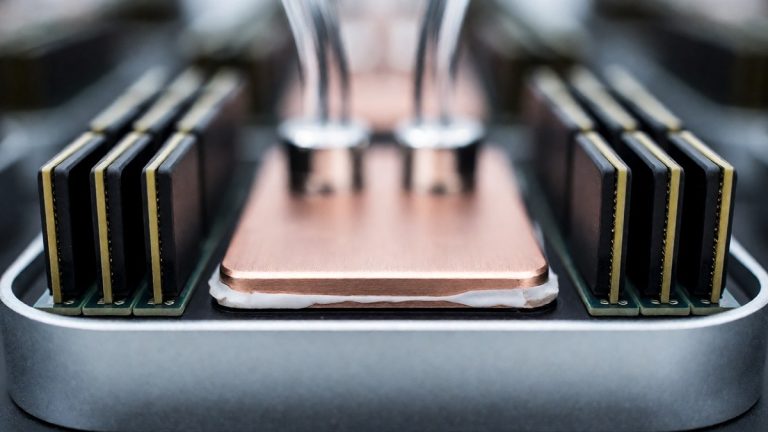
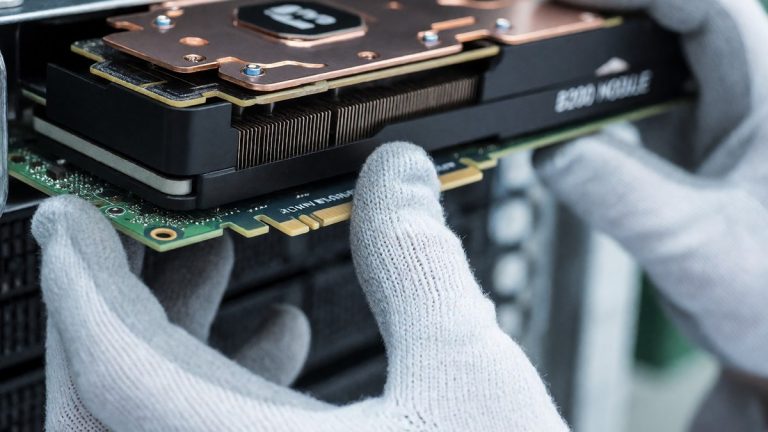
The original Watson system used high-performance hardware to process data. The system utilized a cluster of ninety IBM Power 750 servers. Each server contained a 3.5GHz POWER7 eight-core processor with four threads per core. The total system capacity included 2,880 processor threads and 16 terabytes of RAM. John Rennie noted that Watson kept all content in its RAM during the Jeopardy! games to maintain speed. The system can process 500 gigabytes of data every second. Its Linpack performance reached 80 TeraFLOPs. This speed was about half the cut-off line for the Top 500 Supercomputers list. Tony Pearson estimated the hardware cost at approximately $3 million.
| Component | Specification |
|---|---|
| Server Count | 90 IBM Power 750 servers |
| Processor Threads | 2,880 POWER7 threads |
| Total RAM | 16 terabytes |
| Data Processing Speed | 500 gigabytes per second |
| Linpack Performance | 80 TeraFLOPs |
| Estimated Hardware Cost | $3 million |
The Legacy of the AI Experiment
The sale of Watson Health assets marks a retreat from the healthcare market. IBM once viewed health as a market opportunity alongside financial services. Now, other tech giants dominate the space. Oracle acquired Cerner for $28 billion. Microsoft bought Nuance for $19.7 billion. Investment groups bought Athenahealth for $17 billion. You already know that Watson won Jeopardy!, so I will focus on the difference between that victory and the struggle to integrate AI into clinical workflows. The Watson Health project moved from a "moonshot" to a set of independent assets. The company assembled capabilities before it validated the underlying product.
Paddy Padmanabhan noted that the sale of data assets essentially means an end to the Watson Health experiment. The company faced significant reputational damage due to its early missteps in cancer care. The project moved from a high-profile strategic bet to a collection of disconnected data tools. How will Merative maintain its market position against the aggressive expansion of companies like Oracle and Microsoft?