
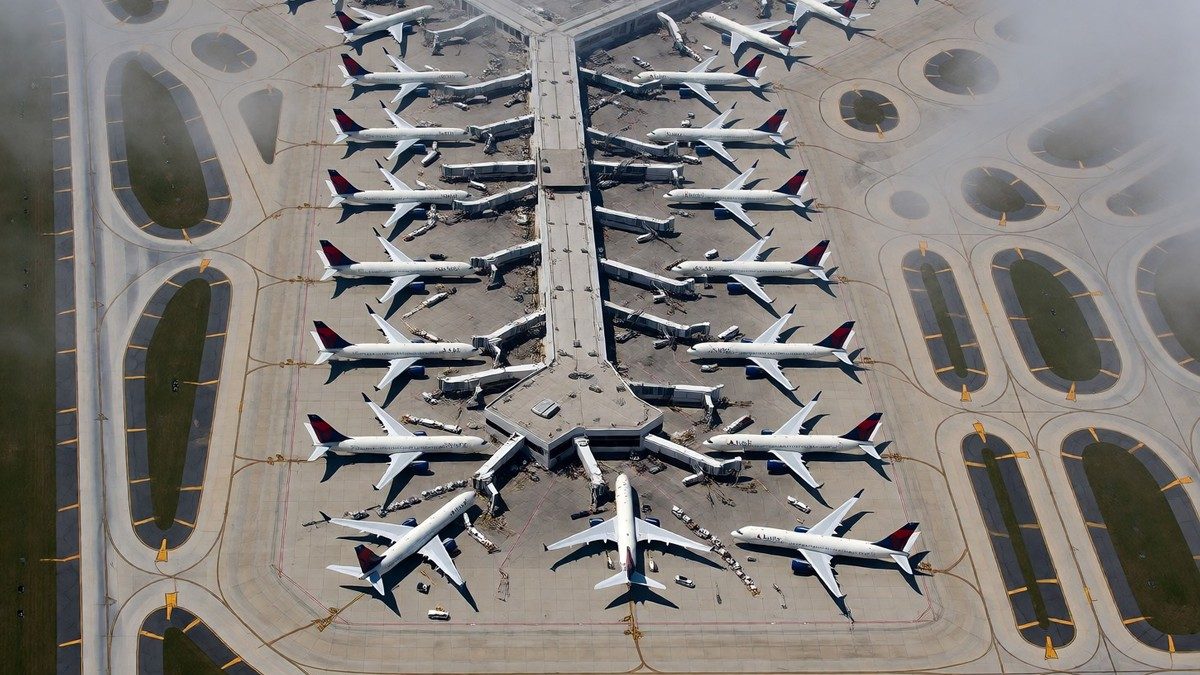
The shift toward AI-driven security validation is the only logical response to the massive failures seen in recent years. Delta Air Lines lost $550 million because of the July 2024 CrowdStrike outage. This total includes $380 million in lost revenue and $170 million in expenses. Ed Bastian, the Delta CEO, said this figure includes tens of millions of dollars per day in compensation and hotels, though $50 million in fuel savings partially offset the costs. The outage canceled over 7,000 flights and affected between 1.3 and 1.4 million passengers. The disruption lasted five days and made Delta the hardest hit of the major U.S. airlines.
A mistake in the sensor logic
The failure stemmed from a mistake in a Rapid Response Content update. CrowdStrike calls this the Channel 291 Incident. The update introduced a new capability into the Falcon sensors. The Content Interpreter expected 20 input fields but instead received 21. This count mismatch caused an out-of-bounds memory read beyond the end of the input data array. This error produced a system crash. Because the Falcon sensor sits at the kernel level of Windows, it sits as close to the engine of the operating system as possible. The sensor acts as the traffic police for the system. When the sensor tried to access the 21st location, it triggered an exception. This exception caused the Blue Screen of Death on 8.5 million Windows systems globally. This error happened despite the fact that the update passed multiple levels of testing. A bug in the Content Validator allowed the defective content to pass through the validation checks.
The courtroom fight between Delta and CrowdStrike
Delta filed a lawsuit in Georgia state court on October 25, 2024. The airline alleges breach of contract, gross negligence, and deceptive business practices. It also claims computer trespass. On May 16, 2025, Judge Kelly Lee Ellerbegrant granted Delta permission to pursue its lawsuit on claims of negligence and computer trespass. She dismissed the counts for intentional misrepresentation and fraud. The case remains in the legal system. The judge’s ruling represents a procedural advancement for Delta rather than a final determination, because it only allows the airline to attempt proving its claims in court without deciding if the vendor is actually liable. CrowdStrike filed its own suit in the U.S. District Court for the Northern District of Georgia for a declaratory judgment. CrowdStrike claims Delta’s negligence caused the excessive number of cancellations and delays. The firm also points to its contract, which includes provisions for limits of liability.
Why Delta struggled to recover while others did not
Delta’s recovery took five days, which was longer than its competitors. American Airlines and United Airlines recovered within three days. Delta’s delay resulted from its heavy reliance on Microsoft Windows. Approximately 60% of Delta’s mission-critical systems, including backups, operate on Windows. This meant the airline had to manually reset approximately 40,000 servers. The outage also broke a critical crew-tracking software program. This program could not process the unprecedented number of changes triggered by the system shutdown. Without crew location data, the airline struggled to assemble enough pilots and flight attendants at airport gates. Many crew members hit their legal flight time limits before the airline could staff the flights. This caused the crisis to snowball. You likely know that a single software error can ground an entire fleet.
| Event | Date | Flights Cancelled | Disclosed Cost |
|---|---|---|---|
| Southwest Airlines Meltdown | December 21-29, 2022 | 16,700 | $1.1B + $140M DOT fine |
| Delta Data Center Failure | August 8, 2016 | 2,300 | $150M |
| British Airways Data Surge | May 27, 2017 | 672 | £80M |
| Delta CrowdStrike Outage | July 19, 2024 | 7,000+ | $500M |
The financial fallout across different sectors
The outage caused massive financial damage across many industries. While airlines had the highest loss per company, other sectors saw much larger total losses. The error in the software update disrupted banks, hospitals, emergency services, and retailers. Different industries experienced different levels of impact based on their reliance on Windows-based systems and their ability to absorb sudden losses.
| Industry | Estimated Direct Loss | Average Loss per Company |
|---|---|---|
| Healthcare | $1.94 billion | $64.6 million |
| Banking | $1.15 billion | $71.84 million |
| Airlines | $860 million | $143.48 million |
Parametrix, a provider of cloud outage analytics, estimates that 125 U.S. Fortune 500 firms experienced disruptions. The collective direct losses for these firms are likely around $5.4 billion. The airline sector had lower overall losses at $860 million, but the highest loss per company at $143.48 million. Healthcare is estimated to have suffered direct losses of $1.94 billion, with an average estimated loss of $64.6 million per company. The banking sector also experienced high losses of $1.15 billion, with an average loss of $71.84 million per company.
Passenger rights and government oversight
The U.S. Department of Transportation classified the event as a controllable delay or cancellation. The department opened an investigation into Delta’s response to the outage. US Secretary of Transportation Pete Buttigieg said the department received hundreds of complaints about Delta. A new Department of Transportation rule from this year allows for full refunds when a flight is canceled, regardless of the reason. Passengers can also choose rebooking, travel credit, or alternative transportation. A flight is considered significantly changed if the departure or arrival time changes by 3 hours for domestic flights or 6 hours for international flights. Delta, United, and American issued travel waivers on the Friday of the outage to waive change fees.
Building better AI defenses for the future
The industry is moving toward AI-driven security operations to prevent these errors. Security operations centers use AI for alert triage, case summarization, and threat-intel enrichment. To avoid the type of mismatch seen in 2024, companies are focusing on AI-driven validation. This includes automated testing and better data pipelines. Modern security tools use AI to distinguish between standard and unusual activity. This helps reduce the false positive rate, which is the ratio of incorrect alerts to the actual number of safe data packets. A high false positive rate leads to alert fatigue, where analysts miss real threats because they are overwhelmed by noise. Effective AI implementations use rules to prioritize high-ROI use cases, such as phishing intake labeling and knowledge retrieval.
| Security Metric | Definition |
|---|---|
| False Positive Rate | False Positives / (False Positives + True Negatives) |
| True Positive Rate | Sensitivity of the detection system |
| True Negative Rate | 1 minus the False Positive Rate |
| Balanced Accuracy | (True Positive Rate + True Negative Rate) / 2 |
The precedent for vendor accountability
The Delta case may change how courts distribute risk in technology relationships. If Delta proves gross negligence, the precedent could change how vendors handle testing. Liability caps in contracts typically do not apply when gross negligence or willful misconduct is proven under Georgia law. This means a vendor could face unlimited damages if its failure to test an update is found to be extreme. The case shows that organizations cannot outsource accountability for their operational resilience. As companies move toward more automated systems, the need for rigorous vendor oversight grows. Will the precedent of the Delta case lead to a mandatory global standard for automated pre-deployment testing for all cybersecurity vendors?