
The iPhone 17 and the shift to Qi2.2
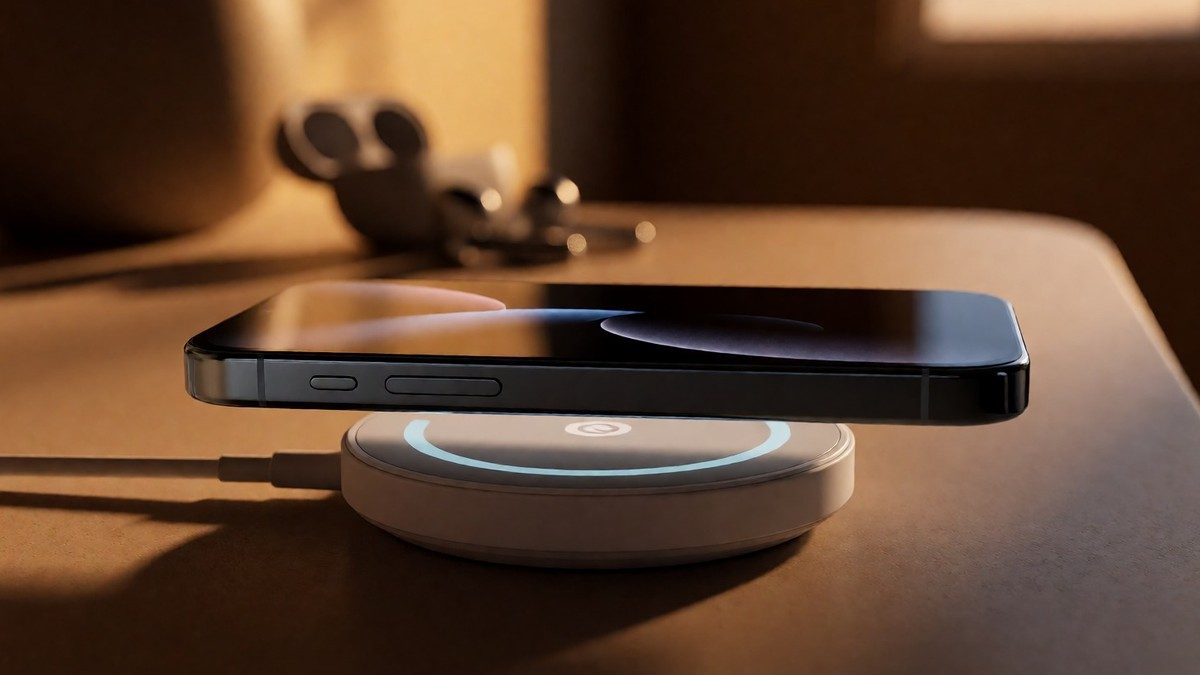
The iPhone 17 adopts Qi2.2 wireless charging with a 25W power ceiling. This adoption provides a standardized, high-power, magnetic-friendly ecosystem. The Wireless Power Consortium formalised Qi2.2 to build on the Qi2 concept of magnetic alignment and accessory identification. This latest iteration of the Qi family adds a certified higher-power profile that delivers nearly 70% more charging power over earlier Qi profiles. I find that the shift to Qi2.2 removes the previous limitation where non-MagSafe chargers remained stuck at 15W or lower.
Apple implemented the magnet array and accessory ID hooks that the Wireless Power Consortium specifies. The iPhone 17 can negotiate higher-power wireless sessions when it pairs with a compatible Qi2.2 charger and receives adequate input power from the charger side. You know the frustration of a misaligned charger. To reach the 25W specification, users need a certified charger and must manage thermal behavior. High ambient heat or thick cases can cause the device to throttle.
The iPhone 17 series explicitly lists MagSafe wireless charging up to 25W and Qi2 wireless charging up to 25W in its official technical specifications. This means the iPhone 17 can accept higher-power wireless sessions through both systems. The move to Qi2.2 helps bridge the gap between proprietary MagSafe hardware and open standards. This standard brings magnetic alignment and higher-speed wireless charging to more devices.
Magnetic alignment and the WPC standard
MagSafe is the Apple implementation of magnetic charging. Qi2 and Qi2.2 are open standards governed by the Wireless Power Consortium. The Magnetic Power Profile is the core of the Qi2 standard. This profile uses magnets around the charging coil to keep the transmitter and receiver precisely aligned. Proper alignment minimizes energy loss and improves efficiency. It also reduces the heat that results from misalignment.
The Wireless Power Consortium credits Apple with providing the basis for the new Qi2 standard. Qi2.2 refines the wireless stack through magnetic alignment, accessory identification, and stricter thermal rules. Accessory identification via NFC in iPhone 17 hardware allows the device and charger to exchange capability information. The charger then supplies the highest safe power level. This negotiation ensures the device receives the correct wattage.
The magnetic ring design works across Samsung, Apple, and Google devices. This cross-platform capability means a single multi-device charger serves everyone in a household. Qi2.2 is backward-compatible with all Qi and Qi2 devices. Your older earbuds case or previous-generation phone will still charge on a Qi2.2 pad. This interoperability helps create a single charging ecosystem for different operating systems.
Speed differentials between 15W and 25W
Speed varies significantly depending on the charger and the device. A Qi2 25W charger can replenish a modern smartphone from 20% to 70% in approximately 25 to 30 minutes. This provides a sufficient power boost during a half-time break. In real-world tests, a Qi2 25W charger charges an iPhone 16 Pro from 0% to 50% in just over 30 minutes. A Qi2 15W charger takes about 45 minutes to reach the same level.
The 25W option is approximately 45% faster than the 15W chargers. However, the iPhone 17 will likely encounter thermal management limits during long sessions. Users can expect to hit near-peak rates for short top-ups, but sustained 25W or 15W charging for a full 0 to 100% charge is less common. Thermal limits cause the charging speed to taper off.
| Charger Type | Maximum Wireless Power | Best Use Case |
|---|---|---|
| Qi 1.0/1.3 | 5W to 7.5W | Legacy devices and overnight charging |
| Qi2 (Standard) | 15W | Daily convenience and moderate speeds |
| Qi2.2 (Newer) | 25W | Fast top-ups and high-performance needs |
| MagSafe (iPhone 16) | 25W | Optimized Apple ecosystem charging |
A user can avoid slow charging by using a high-quality USB-C PD adapter. The adapter should provide sufficient power to feed the wireless pad. If the power supply is insufficient or defective, the charger’s indicator will flash. For the best results, use a PD USB-C wall charger rated at 40W or higher.
The Android ecosystem and the Qi2 gap
Android adoption of Qi2 remains inconsistent. The Pixel 10 series was the first Android phone to embrace Qi2. The magnetic alignment on the Pixel 10 works with a whole host of other Qi2 and MagSafe accessories. Most other major Android brands have not acknowledged Qi2 at a hardware level. Samsung has ignored the standard for the Galaxy S25 and Galaxy S26 series.
Samsung prioritizes making its devices thinner over integrating the magnetic ring. This decision contradicts the industry trend toward magnetic wireless ecosystems. The vast majority of new wireless chargers now embrace Qi2. Many accessories, such as battery banks, also adopt this standard. Because Samsung phones lack the internal magnets, they cannot use Qi2 accessories without a specific case.
The HMD Skyline and the Clicks Communicator provide some Qi2 support. However, these represent only a small fraction of the Android market. Most Android phones still rely on Qi 1.3.3. These devices miss out on faster charging speeds and rely on casemakers to get the alignment right. Will Samsung eventually integrate the magnetic ring into its next flagship to end this industry divide?
Automotive integration and Nissan’s solution
Nissan is the first automaker in the United States to offer Qi2 wireless charging. This technology is available on the 2026 Pathfinder and the 2026 Murano. These vehicles include a raised magnetic circle that holds phones in place. This holds iPhones 12 and newer, Google Pixel 10 and newer, and Android devices with compatible cases.
Proper alignment is critical for wireless charging performance. Even a few millimeters of misalignment can cause a significant drop in performance. The magnetic puck ensures the phone is properly aligned to receive optimal charging. Nissan also included a fan in the charger to manage heat. This fan helps keep both the charging pad and the phone cooler.
Lower temperatures help a phone charge faster. A phone can stop charging if it gets too warm. Thermal management reduces the need for power fluctuations. The Nissan charger delivers consistent power up to 15W. In internal testing with an iPhone 14 Pro, the time to go from 10% to 90% charge dropped from four hours to just over 90 minutes. The charger uses an LED light to show status. A solid orange light indicates charging is underway. A green light indicates the device is fully charged. A flashing orange light signals that a foreign object is detected.
Travel charging for the 2026 World Cup
The 2026 FIFA World Cup features 16 host cities across the United States, Canada, and Mexico. The tournament includes 48 national teams and 104 matches. Fans must manage multiple devices including smartphones, smartwatches, and earbuds. A compact magnetic power bank is more practical than a desktop station when you are away from a wall outlet for several hours.
The official adidas TRIONDA match ball used in the tournament features Connected Ball Technology to provide ball data to match officials. FIFA does not describe the match ball as a consumer Qi2 or MagSafe charging device. For mobile users, the Elecdov W103S is a compact Samsung portable charger. It delivers 15W fast wireless charging and acts as a power bank. It weighs under 200g, which helps it pass stadium bag inspections.
The Elecdov W98S provides 15W charging for Samsung Galaxy devices. The Elecdov CE19S is a 25W option for users needing more power. Travelers can also use the WC01S foldable 3-in-1 hub for hotel charging. For fans with Samsung devices, the CE19S 3-in-1 station charges a phone, smartwatch, and earbuds simultaneously.
Technical specifications for mobile charging
Effective wireless charging depends on the hardware stack. A charger must have a high-quality USB-C PD adapter. The charger should have PD 3.0 or PD 3.1 support. Users should use a certified 5A USB-C cable to handle the load. A 100W charger is ineffective with a 3A cable.
Compatibility also depends on case thickness. Anker recommends using cases that are not thicker than 2.5 mm. Thick or non-magnetic cases reduce charging efficiency and coupling. For the best wireless performance, remove any protective cases from the earbuds case before charging.
| Accessory Type | Model Example | Max Wireless Power | Key Feature |
|---|---|---|---|
| Portable Power Bank | INIU SnapGo P73-E1 | 15W | 10,000mAh and foldable stand |
| 3-in-1 Station | INIU W31-E1 | 15W | Pocket-sized and includes 30W adapter |
| Cooling Stand | INIU W21-E1 | 15W | 23-fin turbo cooling fan |
| Car Charger | INIU V11-E1 | 15W | Dual-lock security and cooling fan |
I recommend the INIU SnapGo P73-E1 for users who need a portable option. It is 0.5 inches thick and weighs 189g. It supports 15W wireless charging and 45W wired PD. The INIU W21-E1 is a good choice for a desktop setup because it includes a 23-fin turbo cooling fan. This fan reduces heat by up to 15 F compared to fanless designs. The 12.5N magnetic grip keeps the iPhone 17 secure.
Buying recommendations for magnetic chargers
The market for magnetic chargers is growing. You should look for the official Qi2 logo to ensure the device meets Wireless Power Consortium standards. This certification guarantees specific charging rates and magnet strength. Avoid proprietary fast-charge bricks that do not use USB-IF certified protocols.
I suggest prioritizing thermal management when you buy a charger. Look for products that include thermal sensors or vented designs. Real 15W or 25W operation generates heat. Good design helps mitigate the effects of heat. For nightstand or desk use, a Qi2 wireless pad is a good choice. For travel, a GaN adapter with at least two USB-C ports is better.
If you use an iPhone 17, ensure your charger is Qi2.2 compatible to reach the 25W speed. For Samsung users, look for chargers that specifically support the Galaxy S25 or S26 series. Always use a high-quality USB-C PD adapter to feed your wireless pad. This ensures the charger has enough input power to deliver the rated wattage.