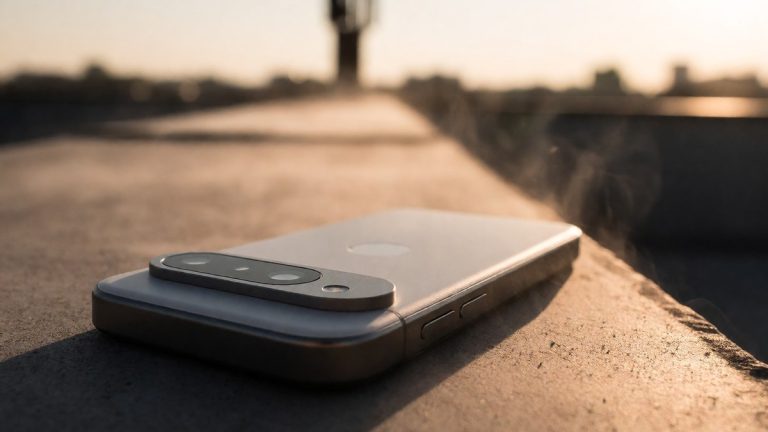

Apple drastically cut production orders for the iPhone Air. Nikkei Asia reports an 80% reduction in production for this model. This decision follows the release of the iPhone 17 lineup on September 9. While the overall sales of the iPhone 17 series defy a sluggish smartphone market and a tariff war, the Air model specifically faces a massive drop in orders. Apple is boosting orders for other iPhone 17 models to compensate for this decline. This shift suggests the company sees more success with its standard and Pro models. The decision to slash Air production comes as the company manages a complex supply chain.
The DRAM shortage and the A20 Pro
The global DRAM shortage creates a massive hurdle for Apple’s 2026 hardware plans. Samsung, SK Hynix, and Micron steer their memory output toward data centers building large language models. Because memory suppliers prioritize high-margin server DRAM for AI data centers, smartphone manufacturers like Apple face a capacity contest that leaves them standing at the back of the line for necessary components. This shortage affects the A20 Pro processor used in the new devices. The A20 Pro uses an integrated design that places memory closer to the processor on the same wafer to increase efficiency. This engineering choice prevents Apple from swapping in different DRAM if the primary supply fails. One report claims that TSMC holds $1 billion in unpackaged A20 Pro processor wafers because Apple cannot secure enough mobile DRAM. Ming-Chi Kuo disputes this specific figure, stating that Apple and TSMC coordinate closely to prevent such a massive backlog of work-in-progress. However, Kuo does confirm that the tight LPDDR memory supply is real and affects Apple’s 2026 shipment plans. SK Hynix told investors its capacity is essentially sold out for 2026. This supply squeeze forces manufacturers to absorb higher costs or reduce specifications. For example, 32GB DDR5 modules that sold for $149 in September 2025 reached $239 by early 2026. Contract pricing for DDR5 moved even further, surging past 100 percent to reach $19.50 per unit compared with around $7 earlier in 2025. Tim Cook told analysts on a July 2026 earnings call that the company sees significant constraints with limited flexibility in the supply chain.
The shortage also impacts the upcoming iPhone 18 and the rumored foldable iPhone Ultra. Apple is scaling back 2026 hardware shipments across the board. This decision follows the news that the M5 Ultra Mac Studio launch moved from June to October 2026 due to DRAM shortages. The impact is most visible in high-volume, thin-margin products like the Mac Studio, Mac mini, and MacBook Air. These devices rely on Apple Silicon’s unified memory architecture, which requires specific memory allocations before production. Because the memory is soldered in at the factory, Apple cannot fall back on lower-memory configurations if the supply of high-capacity chips fails.
Battery capacity and charging limitations
The iPhone 17 Air includes a 3,149 mAh battery. This capacity is much smaller than the 5,000mAh cells found in many Android phones. While battery capacity has grown significantly from the 1,400mAh capacity of the original 2007 iPhone, the Air’s slim profile necessitates smaller cells. The device reaches 33% charge in 15 minutes and 57% charge in 30 minutes. A full charge requires 1 hour and 33 minutes. The phone lacks support for the PD 3.2 + AVS charging found in other iPhone 17 models. During testing, the charging rate never exceeded 18W. The software includes an optimized charging toggle to manage battery health. This toggle can stop charging at 80% to preserve the battery. The A19 Pro chip and the 6.5-inch screen help the battery last longer than the capacity suggests. The device earned a 12:44h Active Use Score.
| iPhone 17 Air Battery and Charging | Value |
|---|---|
| Capacity | 3,149 mAh |
| 0-33% Charge Time | 15 minutes |
| 0-57% Charge Time | 30 minutes |
| Full Charge Time | 1 hour 33 minutes |
| Max Charging Rate | 18W |
Display and audio compromises
The 6.5-inch LTPO Super Retina XDR OLED screen has a resolution of 1260 x 2736px. It has a 19.5:9 aspect ratio. The panel reaches 780 nits in manual mode and 998 nits in auto mode. Under strong, direct light, the display almost achieves 3,000 nits for a brief period. The screen includes an anti-reflective coating to improve sunlight legibility. The display supports HDR10 and Dolby Vision.
The device has only one speaker located in the earpiece. This single speaker results in thin audio that lacks bass. The phone earned an average loudness score of -29.8 LUFS. The thin chassis leaves little room for proper echo chambers. This lack of space limits the audio quality compared to other models.
Reliability and thermal performance
Some users reported a 0% charging bug on the iPhone 17 Air. Apple addressed this issue through software updates. Thermal concerns also surfaced during the initial announcement. Users expected the thin design to struggle with heat. However, a reader poll showed only 1% of respondents blamed poor thermal performance for the device’s struggles. Most users focus on other trade-offs. The titanium frame and internal reinforcement help the phone withstand everyday use. Will the extreme focus on thinness eventually compromise the structural integrity of the titanium frame?
Repair costs and availability
Apple provides several ways to fix the iPhone 17 Air. The company offers genuine parts through its Self-Service Repair Store. A battery replacement costs $119. Replacing the enclosure with the battery costs $299. The display replacement costs $329. Apple guarantees these parts for 90 days or the remaining warranty term. If a user has AppleCare, they can get a replacement iPhone even before they send their current one back. Apple also replaces the battery for no extra charge if the capacity drops below 80%.
| iPhone 17 Air Replacement Costs (Apple) | Price |
|---|---|
| Battery | $119 |
| Back Glass | $159 |
| Front Camera | $199 |
| Enclosure with the Battery | $299 |
| Display | $329 |
Third-party shops like Cell N Comp provide different options. They charge $149 for a battery replacement. Their screen replacement for OLED panels ranges from $129 to $159. They also offer charging port replacements for $79 to $139. These services typically include a 30-day warranty.
| iPhone 17 Air Repair Estimates (Third-Party) | Price |
|---|---|
| Screen Replacement (OLED) | $129 – $159 |
| Battery Replacement | $149 |
| Charging Port Replacement | $79 – $139 |
| Back Glass Replacement | $139 |
Economic pressure from component costs
Rising component costs pressure Apple’s margins. Apple raised prices for Macs, iPads, and Apple TV in June 2026. The entry-level iPad saw a 29% price increase. This was the largest jump in that category. The MacBook Air saw an 18.2% increase. The cost of components like memory and storage affects all hardware. In the case of the iPhone 17 Air, the thin design requires specific components that are difficult to source. Apple’s decision to boost other models suggests the company wants to protect its total revenue against these rising costs.
The final verdict on the Air
The iPhone 17 Air attempts to capture new territory with a super-thin design. It succeeds in maintaining a slim feel. However, the hardware requires significant compromises. The 3,149 mAh battery and the single earpiece speaker limit its utility compared to Pro models. You should evaluate whether the thin design justifies the battery trade-offs.