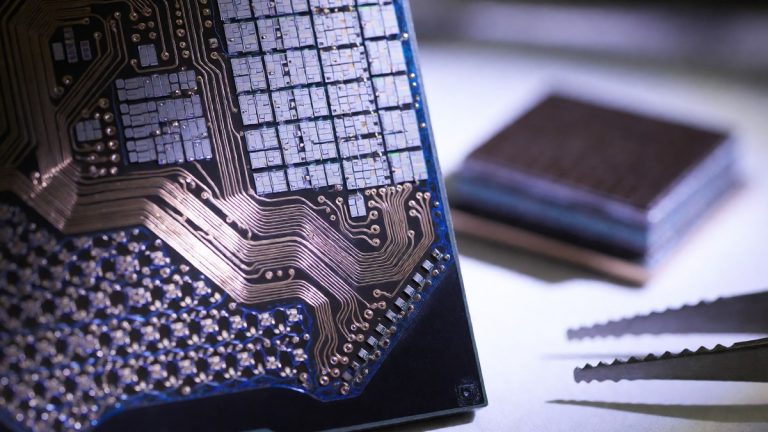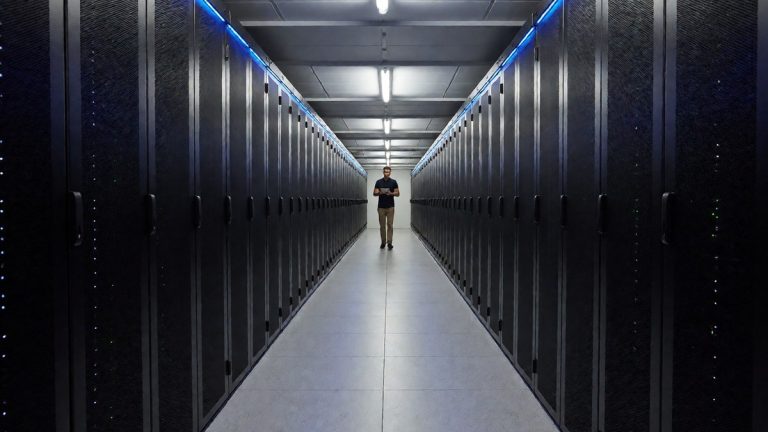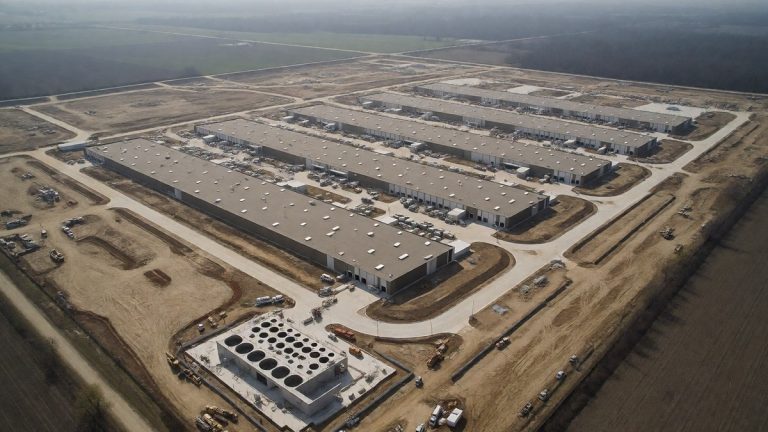
NVIDIA announced its new AI chip and microarchitecture, named after mathematician David Blackwell, on March 18. The company subsequently released GB300 data center servers based on these GPUs to run on Intel’s x86 architecture following a $5 billion investment in the chipmaker. These systems now power massive facilities, including a server farm in Bet Yehoshua secured with approximately $30 billion in funding. That site will feature tens of petabytes of data infrastructure along with thousands of Blackwell GPUs and network processors. Developers frequently misconfigure the memory hierarchy when migrating workloads from previous generations, leading to significant performance bottlenecks that are hard to diagnose without specialized tools.
Hardware integration pitfalls
The primary error involves ignoring the specific interconnect requirements for the GB300 servers. Since these units rely on Intel’s x86 architecture rather than a proprietary CPU design, standard driver configurations often fail to optimize data transfer rates between the host and the accelerator. Engineers must ensure their software stack supports the exact hardware topology used in large-scale deployments like the one in Virginia. That facility, dubbed "Aurora," is expected to set a new flexible power standard by adjusting energy draw in real time using software developed by Emerald AI. Failing to account for this dynamic power management can result in thermal throttling that severely impacts sustained inference tasks.
You likely know the basics of GPU scheduling, but you might be overlooking how the "circularity" of recent deals affects availability. OpenAI agreed to build new AI data centers using NVIDIA systems amounting to at least 10 gigawatts of system power. This capacity is equivalent to the energy produced by more than four Hoover Dams. For every $10 billion NVIDIA invests in OpenAI, the arrangement estimates $35 billion in new chips purchased back by the AI firm. Such massive procurement cycles mean that supply allocation becomes a critical variable in any long-term project planning. If your organization relies on immediate access to these high-end accelerators, you need to factor in the potential delays caused by export restrictions and regulatory hurdles.
Software and workflow errors
Developers also make critical mistakes when adapting existing codebases for the new multimodal capabilities introduced alongside the hardware. NVIDIA released a family of open-source multimodal large language models called NVLM 1.0 in October 2024, featuring a flagship version with 72 billion parameters. Integrating these models requires careful handling of memory buffers to prevent overflow during complex reasoning tasks. The Nemotron 3 family, which includes Nano, Super, and Ultra models built on a hybrid mixture-of-experts architecture, adds another layer of complexity. The Nano model alone has around 30 billion parameters, demanding precise resource allocation to avoid latency spikes.
Ignoring the specific licensing terms for open-source components is another common oversight. While NVIDIA provides many tools under open licenses, enterprise deployments often require compliance with additional security protocols. The partnership with Trend Micro to develop AI-driven security tools highlights the need for integrated protection in data centers where these workloads are processed. Without proper security layers, the rapid threat mitigation capabilities of the hardware remain unused. Teams should verify that their monitoring systems can handle the out-of-band agent monitoring provided by NVIDIA Sentry and BlueField on the OpenShell runtime. This ensures that policy enforcement does not become a bottleneck during peak usage periods.
What happens when the physical constraints of power grids collide with the exponential growth of compute demand? The answer remains unclear as facilities continue to expand.