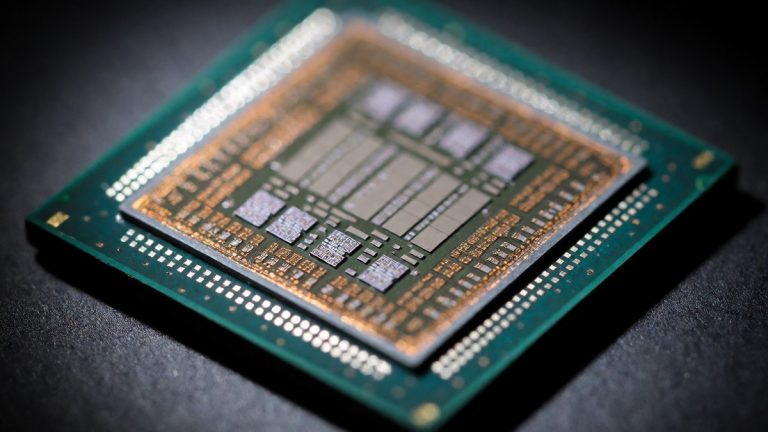
The Snapdragon 8 Elite series introduced custom Oryon cores to the flagship segment, reaching clock speeds of up to 4.3 GHz in its initial release. The subsequent Gen 5 model pushed this limit further by increasing the maximum frequency to 4.6 GHz. These high-performance ARM-based System-on-Chip designs integrate the CPU, Adreno graphics, Hexagon NPU, camera processor, and cellular modem onto a single piece of silicon. This consolidation reduces the total component count significantly, which simplifies the overall device architecture and lowers manufacturing complexity. However, packing such dense computational power into a thin smartphone chassis creates severe thermal constraints that manufacturers must manage carefully to prevent performance degradation.
Core Efficiency and Heat Management
Qualcomm follows a fabless business model, relying on specialized foundries like TSMC and Samsung Foundry for actual chip fabrication. TSMC’s annual capacity surpassed 16 million 12-inch equivalent wafers in 2024, with production facilities located in Taiwan, China, and the United States. The physical integration of all critical components onto one die means that heat generation is concentrated in a very small area. Traditional x86 laptop processors often rely on active cooling fans to dissipate this heat, but mobile devices require passive or minimal active solutions to maintain their sleek form factors. The power-efficient nature of ARM’s RISC design helps mitigate this issue, as simpler instructions execute rapidly and require far less wattage than complex CISC counterparts during light tasks. This efficiency allows for longer battery life and lower baseline heat output, which is essential for maintaining consistent performance without triggering aggressive throttling mechanisms.
| Component | Function | Impact on Thermals |
|---|---|---|
| Oryon Cores | High-speed CPU processing | Primary heat source at 4.3-4.6 GHz |
| Adreno GPU | Graphics rendering | Significant load during gaming |
| Hexagon NPU | AI and ML workloads | Dedicated offload from CPU/GPU |
| Modem | 5G/LTE connectivity | Integrated power draw |
The dedicated Neural Processing Unit handles matrix math for AI workloads, effectively offloading these intensive tasks from the general-purpose CPU and GPU. By isolating these specific calculations, the system achieves improved efficiency and reduces the sustained thermal load on the main processor clusters. Manufacturers can now design thinner, lighter devices that remain responsive under heavy use, though the peak thermal output still demands robust internal cooling structures. The shift to higher clock speeds in the Gen 5 variant clearly increases the demand on these cooling systems, making the balance between raw speed and thermal stability a defining challenge for current flagship hardware. How long will users be able to sustain peak performance before the system begins to throttle?