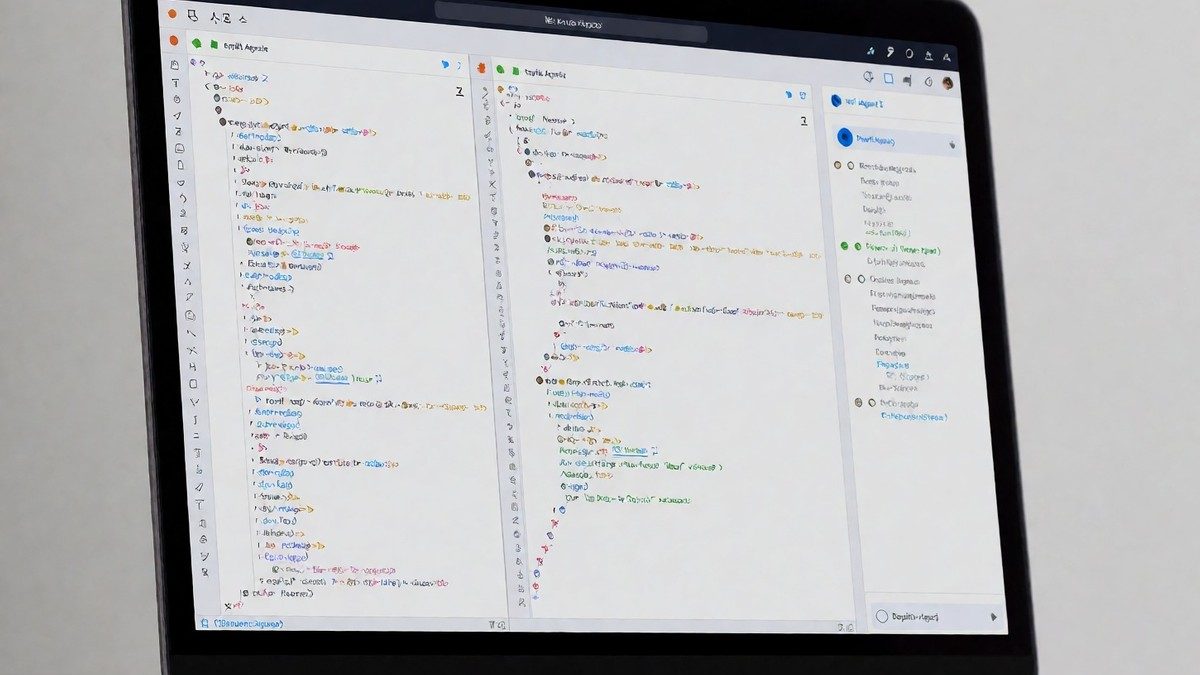
Rapid prototyping with Agent 3
Replit Agent 3 builds and deploys full-stack applications from text instructions. The agent provisions databases, manages secrets, and handles authentication within a single browser tab. It performs autonomous coding, debugging, and testing for sessions lasting up to 200 minutes. While the tool provides speed, the agent occasionally applies codebase refactors that users did not request. One user reported losing one-third of a $100 Pro budget in an overnight session when the agent entered a failed retry loop. Replit supports over 50 programming languages and reached an annual recurring revenue of $150 million recently. The company reached a $3 billion valuation following a $250 million funding round. Agent 3 is 10x more autonomous than prior versions and uses models like Claude Sonnet 3.5, GPT-4, and Gemini.
| Plan | Price | Key Features |
|---|---|---|
| Starter | $0 | Daily Agent credits, one published app |
| Core | $20/month | $20 monthly credits, 5 collaborators |
| Pro | $100/month | 15 builders, pooled credits, 1-month rollover |
| Enterprise | Custom | SSO, SCIM, RBAC, audit logs |
The Pro plan supports up to 15 builders with pooled credits and one-month rollover, making it a functional choice for small teams that require access to premium AI models and priority support during intense development cycles. Users select between Economy, Power, and Turbo modes, which change how quickly the system consumes credits. The Pro plan also includes 10 parallel agent tasks for more intensive workflows.
Managing enterprise AI adoption
Organizations control AI adoption through the Admin API, Audit Logs, and Workspace Settings. Admins use the Admin API beta to pull workspace, member, and project data into tools like Slack or Datadog. This beta release includes five endpoints for getting usage data, workspaces, members, and projects. Audit logs provide more than 50 events covering deployments, identity, secrets, and agent activity. Replit retains these logs for 30 days by default, and admins can view, filter, or bulk-export these events via the dashboard. Administrators use Workspace Settings to set a company-wide policy or delegate specific settings to workspace admins. This allows a firm to opt in to using open source models or configure specific model providers for the Replit Agent. The Compliance API allows users to fetch the full contents of user messages for auditing.
Enterprise users can choose self-serve purchasing for contracts up to $200,000 or contact sales for larger deals. The platform supports SAML single sign-on with providers like Okta, Azure AD, Google Workspace, and OneLogin. Administrators also manage SCIM provisioning and use role-based access controls to ban public apps or require private deployments. The Enterprise Security Center detects CVEs across dependencies and exports SBOMs for compliance. This tier also provides single-tenant infrastructure with machines featuring up to 64 vCPUs and 128 GiB of RAM.
Comparing the coding landscape
The shift toward vibe coding places Replit in competition with GitHub and desktop tools like Cursor. GitHub Education provides students and teachers with access to the Student Developer Pack and Copilot Pro after verification. Some students experience delays of several weeks or issues accessing private pages after they receive approval for these benefits. GitHub Free users cannot use private pages from private repositories, even after receiving education benefits, without upgrading to GitHub Pro. You might find that manually claiming offers on the GitHub Education page is a necessary step to unlock benefits. One student resolved a blocked application in four hours by submitting a support ticket to GitHub. Replit is clearly the best tool for rapid prototyping and internal tools where infrastructure must be handled automatically.
The platform targets developers who want to bypass local setup, yet the agent still requires human oversight to manage code quality and architecture. Claude Code reached $1 billion in annualized revenue within six months of launch, while Cursor holds a $10 billion valuation. Replit Agent 3 is powerful, but the credit burn remains a significant concern when the agent executes unplanned tasks or enters fix-fail-retry loops. Will developers eventually rely entirely on autonomous agents for production-grade maintenance?