
The strategic shift toward AI-native hardware
Carl Pei leads Nothing toward a strategy centered on AI-native devices. The company raised $200 million in Series C funding to support this shift. This investment comes from Tiger Global, GV, Highland Europe, EQT Group, Latitude, I2BF Global Ventures, Tapestry VC, Qualcomm Ventures, and Nikhil Kamath. While smartphones remain part of the lineup, the company is moving focus toward AI wearables, headphones, and smart speakers. Reports from mid-2026 suggest that smartphones are now a secondary strategic priority. Nothing plans to release AI-enhanced smart glasses in the first half of 2027. The company also works on a smartwatch for a potential September launch.
This approach allows the brand to spread its bets. The company aims to launch products under both the main Nothing label and the CMF sub-brand. Rumored items include CMF ear-clip buds, a second-generation pair of headphones, a Nothing smartwatch, and CMF speakers. This expansion into speakers marks the first time the company enters that category. All products will use the transparent design language that established the brand. The company wants to move past basic tracking and playback into smarter capabilities. This transition occurs as smartphone margins shrink and competition intensifies.
The hardware team and the Phone 3 series
Akis Evangelidis stated that Nothing launched three smartphones in 2026: the Phone (4a), Phone (4a) Pro, and Phone (4b). The company plans to launch twice as many models in 2027. The Phone (3) introduces Essential Space, which is a dedicated space to store screenshots for AI to mine for data. This feature uses a physical hardware button. The Phone (3) is a device that aims to move the smartphone past an app-centric model. It uses AI to grab information like QR codes for tickets or weather updates.
The Phone (3a) is a more affordable option. It has a 6.7-inch AMOLED display with a 120Hz refresh rate. The Snapdragon 7s Gen 3 processor manages multitasking and app launches. The battery is 5000mAh and supports 50W wired charging. The camera system includes a 50MP primary sensor and a 50MP telephoto sensor. An 8MP ultra-wide sensor completes the set. You know it is a Nothing phone the second you see it, given the transparent back and flat frame. The telephoto lens is positioned off-center and looks wrong.
The Phone (3a) provides a reliable experience for users under ₹30,000. The display remains visible even in direct sunlight. The 50W wired charging fills the battery in about one hour. The device stays cool during the charging process. Users can use the monochrome app icons to reduce visual clutter.
Audio engineering and the Ear series
Nothing works with partners like Teenage Engineering to develop audio hardware. Teenage Engineering helped design the software and hardware for the Ear 1. The Ear (3) is the flagship model. It has a 12mm dynamic driver and 45dB hybrid ANC. It also includes LDAC and Hi-Res audio support. Six microphones provide clear audio. The charging case has a built-in Super Mic for outdoor calls. The Ear (3) launched in late 2025 for $179.
The Ear (3a) is the volume driver. It launched on July 7, 2026, at $99. It has 32MB of built-in flash storage, which provides 16MB of storage per earbud. This model includes a 12mm driver and 45dB wideband ANC. The Ear (3a) includes Bluetooth 6.0 and an IP54 rating. Users can pinch both earbuds to use the Audio Snapshot function, which saves up to 60 seconds of audio with a configurable pre-roll buffer of 0, 15, or 30 seconds. The battery provides 10 hours of playback when ANC is off.
The Ear (open) is available in a new blue color. This color was added on May 11. The design stays the same with 14.2mm drivers and AI-powered microphones. It has 30 hours of battery life and an IP54 rating. The earbuds sit outside the ear to let ambient sound pass through. This makes them suitable for runners and commuters. The Nothing Headphone (1) costs $299. It has 40mm custom dynamic drivers and 80 hours of battery life. KEF assisted with the sound tuning. The design uses a cassette-inspired look with physical controls.
Technical specifications of the 2026 lineup
The following tables provide the specific technical details for the Phone (3a) and the Ear (3a).
| Specification | Nothing Phone (3a) |
|---|---|
| Processor | Snapdragon 7s Gen 3 |
| Display | 6.7-inch AMOLED, 120Hz |
| Battery | 5000mAh |
| Wired Charging | 50W |
| Primary Camera | 50MP |
| Telephoto Camera | 50MP |
| Ultra-wide Camera | 8MP |
| Price | Under ₹30,000 |
| Specification | Nothing Ear (3a) |
|---|---|
| Driver Size | 12mm |
| ANC | 45dB wideband |
| Bluetooth | 6.0 |
| Flash Storage | 32MB (16MB per bud) |
| Battery (ANC off) | 10 hours |
| Battery (ANC on) | 6 hours |
| Charging Speed | 5 mins for 1 hour playback |
| IP Rating | IP54 |
| Price | $99 |
Expanding the presence in India
Manu Sharma leads the India business. He was a Vice President at Samsung and worked at Hewlett-Packard. He manages marketing, sales operations, and regional product strategy in India. Akis Evangelidis also manages the expansion of the CMF sub-brand. The company is establishing the global headquarters of CMF in India. This move uses local talent to anchor operations in a high-momentum market. Nothing is opening its first flagship retail store in India later this year. This follows the expansion of Apple’s retail presence in Bangalore and Pune.
The company manufactures several products in India, including the Phone (3) series and various wearables. The Phone (4b) launched in India with a larger battery than the international version. Nothing also released a limited Royal Challengers Bengaluru Edition of the Phone (4b) to target cricket fans. The company uses India as a manufacturing hub for exporting the Phone (3) to other regions. India is a priority market for the brand.
The economic impact of AI component demand
Carl Pei stated that 2026 is a year where the specs race ends. Smartphone makers face direct competition from AI data centers for components. Memory prices for silicon wafers are increasing. Some memory modules that cost $20 a year ago might exceed $100 by the end of the year. This competition forces a choice between raising prices or downgrading specifications.
Lu Weibing from Xiaomi also noted that rising memory chip costs will push prices higher. The International Data Corporation published a report in December 2025 regarding a memory chip shortage. The demand for high-bandwidth memory for AI workloads forces the three biggest memory manufacturers to pivot their limited cleanroom space and capital expenditure towards higher margin enterprise-grade components. This is a zero-sum game for wafer allocation. This shortage affects the availability of LPDDR5X modules for mid-range smartphones.
Restructuring the global workforce
Nothing reduced its workforce on July 24, 2026. The company cut an undisclosed number of employees across global operations. These layoffs happened ahead of the Phone 4b release. The restructuring allows the company to reallocate resources toward hardware engineering and software teams. The cuts affect marketing, operations, and non-core product development. The company operates in London and New Delhi.
The company aims to build a runway for the Phone 4b launch. The workforce reduction follows a pattern seen in the consumer hardware sector. Companies that expanded during the post-pandemic boom are now trimming headcount to align costs with revenue targets. The reduction helps Nothing focus spending on its core hardware. The brand still has a vocal community and a distinctive design.
Competitive positioning in the market
Nothing competes by focusing on design and software. The company does not try to beat Sony on audio engineering. Sony released the WF-1000XM6, which reviewers rate as the best for ANC and microphone quality. Nothing instead competes on the price-to-feature ratio. The Headphone (1) is priced at $299, which is below some high-end ANC rivals.
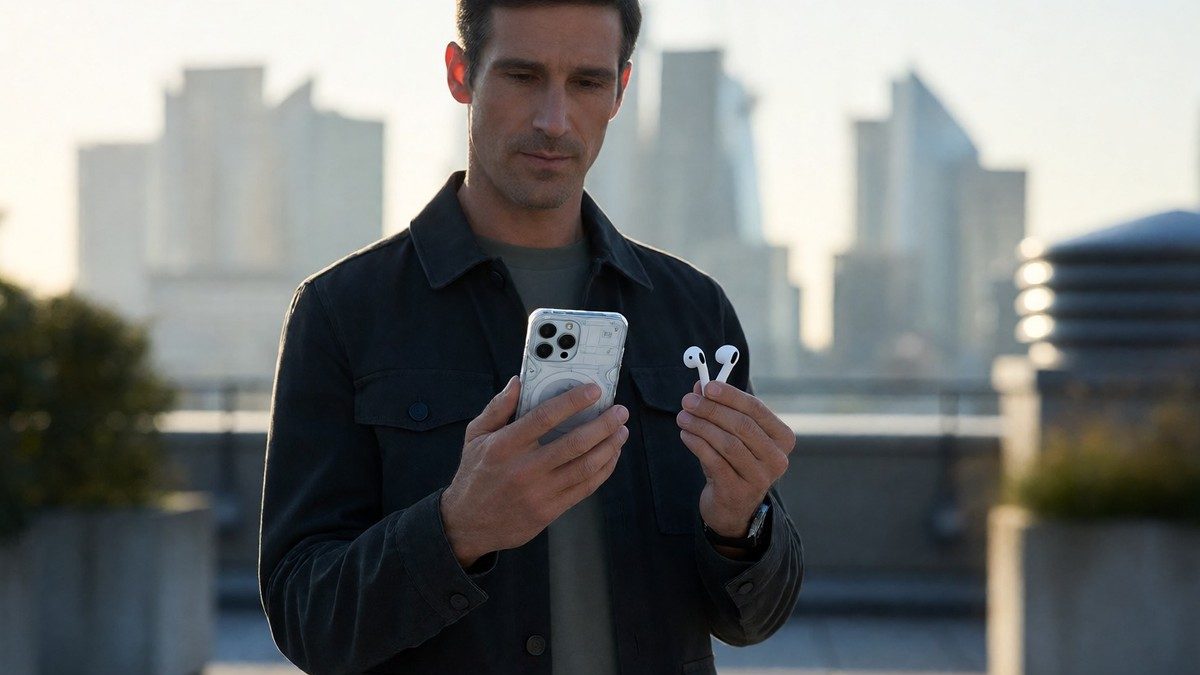
The brand faces a different challenge with Apple. If a user owns an iPhone, Apple Watch, and MacBook, AirPods provide ecosystem integration that Nothing cannot match. For Android users, Nothing is a viable alternative. The company focuses on making tech feel exciting through design. Will the AI integration eventually replace the need for traditional apps? The Phone (4b) is the next attempt at the mid-range market.