Hardware and pricing differences
The Rabbit R1 and the Humane AI Pin exist in different price tiers. The Rabbit R1 costs $199 and includes a 2.88-inch touchscreen and a spinning camera. This device uses a 3.85 Wh battery that is glued to the backplate. This battery is too small for prolonged use as an AI companion. The Rabbit R1 also has a rotary encoder input wheel and a speaker secured by a screw. The haptic motor is glued against the front half of the case. The internal components include large motors and gears. The Rabbit R1 mainboard does not contain the AI capabilities, as the system relies on cloud-based operations instead of local processing. In contrast, the Humane AI Pin costs $699 and requires a $24 monthly subscription. The original AI Pin, which costs $699 and requires a $24 monthly subscription, includes a 1.1 Wh internal battery and a 1.79 Wh external battery that are both firmly glued in place. I would suggest you check the repairability of these glued components before you buy. The Rabbit R1 relies on a Large Action Model to navigate interfaces, while the AI Pin uses the Cosmos service layer to route requests to various models.
Interaction and thermal limitations
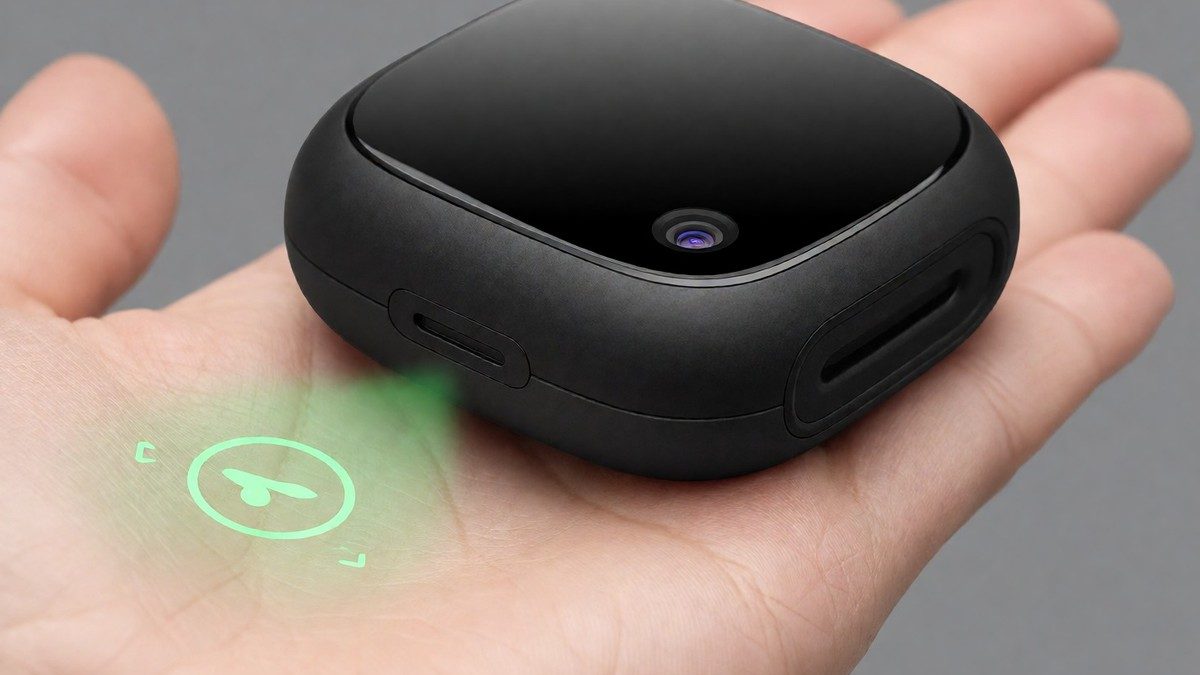
Usability issues with the original AI Pin hardware defined its reception. The laser projector on the Pin is difficult to read in bright sunlight, which makes visual tasks like entering passwords through a tilt-forward motion frustrating. Scott Stein from CNET observed that the Pin needed cooldowns after using the laser display for a few minutes. Cherlynn Low from Engadget reported that the chrome edges of the device felt hot against the skin. The battery life on the AI Pin ranges from two to four hours without the magnetic battery booster, or up to nine hours with the accessory. I would skip any device that lacks the ability to manage these thermal limits during sustained use. The response times for the AI Pin often exceeded ten seconds due to lag in cloud software. The device also struggles with basic tasks like setting timers or making phone calls. The AI also hallucinated facts, such as a claim about California banning high-fructose corn syrup. The Pin includes an eight-core Qualcomm processor and a 13MP camera. It also includes a Trust Light to show the recording status. The interface uses a touchpad and a laser projector to cast information onto your palm. The wireless charging coil has complications related to heat dissipation. You already know that hardware is harder than software, so focus on the physical constraints of these devices.
Market outcomes and company status
The financial outcomes for both companies show the difficulty of this hardware category. Humane raised $230 million but sold its assets to HP for $116 million in February 2025 after shipping fewer than 10,000 units. HP plans to integrate the technology into its new HP IQ division. Existing AI Pins will lose access to cloud-based features like calling and messaging after February 28. Rabbit R1, which was funded with $30 million, sold 100,000 units at $199 each but faced mass returns when the device failed to deliver on its demo promises. The company now struggles to make payroll because it lacks a recurring revenue model to supplement its one-time hardware sales. The Rabbit R1 was designed as a small, orange, walkie-talkie style device. The AI Pin was designed as a minimalist alternative to smartphones. Which company will eventually find a way to make these devices last longer than a single season?