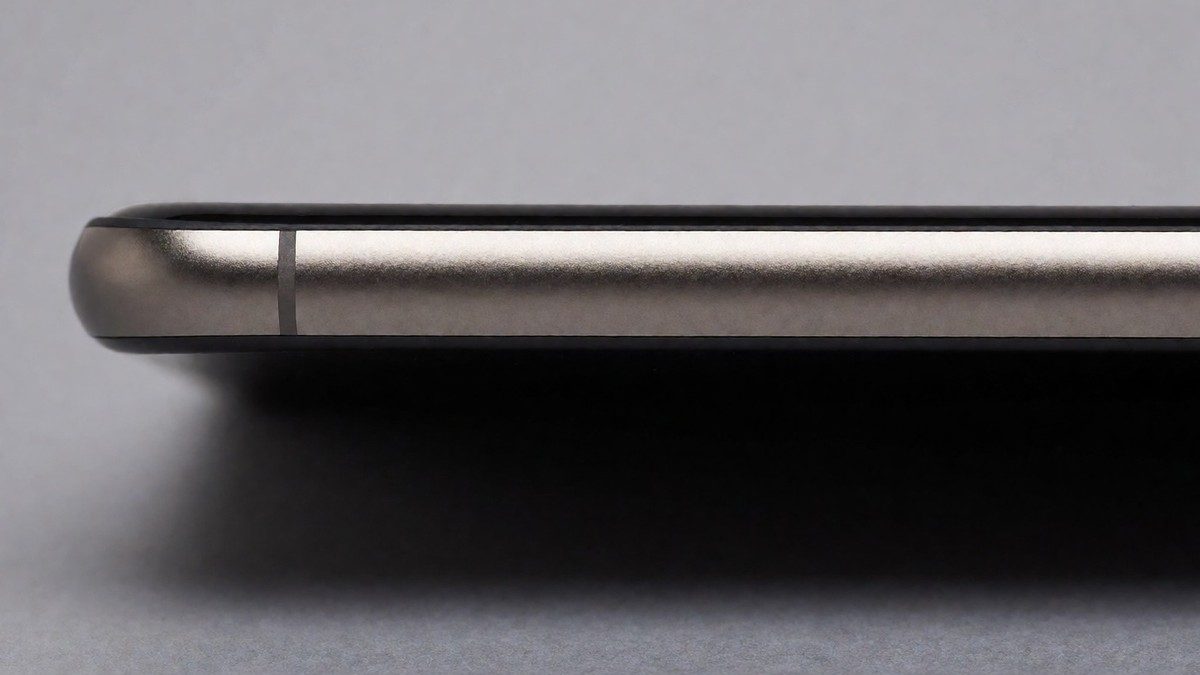
Apple’s iPhone Air returns to its original shape after a machine applies 130 pounds of force to the center of its 5.6mm chassis. This Grade 5 titanium frame meets Apple’s bend strength requirements. The front cover uses Ceramic Shield 2, which provides 3x better scratch resistance than the Ceramic Shield in the iPhone 16 series. Apple also applies Ceramic Shield to the back of the device to provide 4x better resistance to cracks than previous back glass models. This combination of a titanium frame and upgraded glass makes the iPhone Air more durable than any previous iPhone. The device uses an A19 Pro chip and an N1 wireless networking chip to support Wi-Fi 7 and Bluetooth 6. A new C1X cellular modem provides speeds up to 2x faster than the C1 modem while using 30 percent less energy. The 48MP Fusion camera system uses a 26mm focal length and an f/1.6 aperture to provide the equivalent of four lenses. The 18MP Center Stage front camera uses an f/1.9 aperture to capture high-quality video. The display’s 3000 nits peak brightness provides 2x better outdoor contrast, and the 6.5-inch screen uses ProMotion to reach a 120Hz refresh rate.
Users debate whether the titanium frame on the iPhone Air justifies its $999 price over aluminum models. Some users claim that aluminum remains a softer metal that suffers dents if the frame hits hard concrete during a drop. You should consider if the 5.6mm thickness compromises the structural integrity of the device despite the titanium build. The iPhone 17 Pro reaches $1,099, while the Samsung Galaxy Z Fold7 reaches $2,10,999.
| Spec | iPhone 17 Air | iPhone 17 Pro | Galaxy Z Fold7 |
|---|---|---|---|
| Thickness | 5.64 mm | 71.9 mm (width) | 8.9 mm |
| Height | 156.2 mm | 150.0 mm | 158.4 mm |
| RAM | 8 GB | 12 GB | 16 GB |
| Price | $999 | $1,099 | $2,10,999 |
The iPhone 17 Air uses an A19 Pro chip and 8 GB of RAM, while the iPhone 17 Pro uses an A19 Pro chip and 12 GB of RAM. The Samsung Galaxy Z Fold7 uses a Snapdragon 8 Elite for Galaxy processor and 16 GB of RAM. The iPhone 17 Air weighs 165 grams, whereas the Samsung Galaxy Z Fold7 weighs 215 grams. The iPhone 17 Air uses a 6.5-inch Super Retina XDR display with a 120Hz refresh rate. The iPhone 17 Air is the most durable ultrathin smartphone currently available.
Samsung’s Galaxy Z Fold7 competes with Apple’s thinnest model, but foldable durability relies on different mechanical components. Samsung rates the Galaxy Z Fold 8 hinge at 200,000 folds, while the Z Fold 7 uses a single-rail hinge design. The Galaxy Z Fold 7 carries an IP48 rating that protects against objects larger than 1mm, though this rating does not prevent fine dust or sand from entering the hinge gap. This dust ingress remains a primary cause of hinge damage in the field. The Samsung Galaxy Z Fold 7 hinge is made of aluminum alloy. One user reported that their Galaxy Z Fold 7 would not close fully after a Samsung repair. Repair costs for a hinge range from $350 to $500. If the inner display also requires replacement, the cost rises to between $400 and $700. The probability that phone B has more damage in 7 or more drops by chance is approximately 0.0742, which results in odds of about 1:12.5 against this happening by chance. Does the move toward titanium unibody designs address the mechanical vulnerabilities found in foldable hinges?