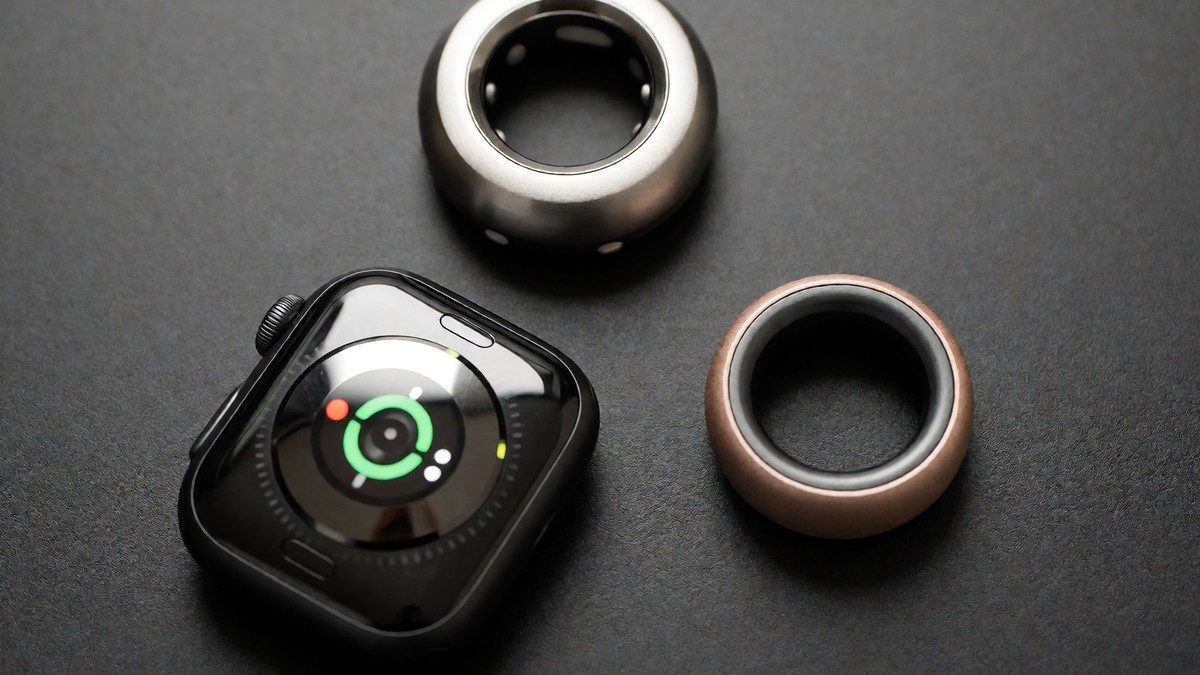
Samsung Galaxy Ring users report significant discrepancies in sleep data and heart rate monitoring. One user found that a May 2025 software update caused sleep metrics to invert, reporting only fifteen minutes of REM sleep when they actually slept for much longer periods during the night. The ring struggles with sensor contact. The device often rotates on the finger or moves during the night. This movement causes significant gaps in data. One user reported that the ring misses large chunks of sleep time. The light from the LEDs also bothers users in dark rooms. Heart rate performance outside of exercise remains inconsistent, with spotty readings and unreliable SpO2 data. Step counts also show errors; on one busy Saturday, the ring recorded only 16,000 steps while the Apple Watch Ultra tracked 22,000 and the Oura Ring Gen 3 tracked 26,000. The ring looks like "Iron Man’s toe ring" and feels chunky on the finger. Users often find the Galaxy AI advice blunt, such as when it suggests movement to avoid weight gain. The ring reaches size 13, but Samsung will release sizes 14 and 15 in the coming weeks. Additionally, the ring lacks the baseline establishment found in Oura or Whoop, which require two weeks of use to define normal ranges. The battery lasts about seven days on one charge.
Apple Watch Series 12 competes in the high-end health market with its new Health Sensing System. The S11 chip powers the optical and electrical heart sensors to provide the most accurate heart rate sensing in a wearable. A study of 1,000 participants showed the Apple Watch outperformed other leading wearables in heart rate accuracy. The optical sensor measures heart rate every five seconds. HRV measurements occur up to 24 times more often than before.
| Specification | Samsung Galaxy Ring | Apple Watch Series 12 |
|---|---|---|
| Price | $399 | Varies |
| Subscription | None | None |
| Sleep Stages | Yes | Yes |
| Blood Oxygen | No | Yes |
| ECG | No | Yes |
| Hypertension Detection | No | Yes |
The Apple Watch calculates a readiness score from 0 to 10 to help users manage daily activity. This score analyzes training load, sleep, and vitals. The watch also detects sleep apnea by monitoring breathing interruptions via an accelerometer. Apple provides a daytime vitals view and overnight vitals. The Apple Watch Series 12 also detects high and low heart rates and abnormal rhythms like atrial fibrillation. Temperature sensors measure wrist temperature every five seconds while a user sleeps. The watch battery lasted 54 hours in testing. A redesigned Health app on iPhone includes a Longevity tab that shows Health Age based on user metrics. New Audio Intelligence features like Siri Recap provide summaries of conversations. Can Samsung close the gap with its upcoming 2027 release?
Samsung faces pressure from the Apple Watch Series 12 and the Oura Ring. While the Galaxy Ring is $399 without a monthly fee, the Oura Ring Gen 3 is $299 plus a $5.99 monthly subscription. The RingConn Gen 3 is $269 and includes blood pressure monitoring and haptic alerts. The Ultrahuman Ring Pro promises a 15-day battery life. You might find the Samsung price too high if you seek the most reliable metrics. Samsung’s delay of the Galaxy Ring 2 until early 2027 leaves current users with a first-generation product. The ring lacks the advanced medical-grade tools like ECG or high-fidelity heart rate sensing found in the Apple Watch. The Samsung Galaxy Ring fails the accuracy test for serious health monitoring. The ring is not a good gym companion because the extreme movement of running creates noise for the sensor. Using the ring for running requires a smartphone to provide GPS data. For those who want more durability, the Apple Watch Ultra 4 is the best option. It provides 74 hours of battery life and 5G connectivity. It also has a ceramic shield that is 60 percent tougher than Ion-X.