Power and thermal management
The OnePlus 13T uses the Qualcomm SM8750-AB Snapdragon 8 Elite chipset. This octa-core processor uses two Oryon V2 Phoenix L cores at 4.32 GHz and six Oryon V2 Phoenix M cores at 3.53 GHz. The Adreno 830 GPU handles the graphics. The Xiaomi 15 also uses the Snapdragon 8 Elite and includes 12GB of LPDDR5X RAM and up to 512GB of UFS 4.0 storage. A recent leak regarding the Snapdragon 8 Elite Gen 2 suggests Qualcomm aims for 5GHz clock speeds as a minimum. This higher frequency might increase heat, so Qualcomm may use Heat Path Block technology to move internal heat outward more quickly. The OnePlus 13T carries a 6280 mAh battery and the Xiaomi 15 uses a 5240 mAh cell. The 1040 mAh difference gives the OnePlus 13T a clear advantage for users who demand longevity. The OnePlus 13T supports 80W wired charging and 50W wireless charging. The Xiaomi 15 provides 90W HyperCharge and 50W wireless charging. The Snapdragon 8 Elite outperforms the Snapdragon 8 Gen 5 in benchmarks. The Snapdragon 8 Elite scores 3602 single-core points and 10856 multi-core points. The Snapdragon 8 Gen 5 scores 2837 single-core points and 9352 multi-core points. The OnePlus 13T includes 12GB or 16GB of RAM and storage options up to 1TB.
Display and camera systems
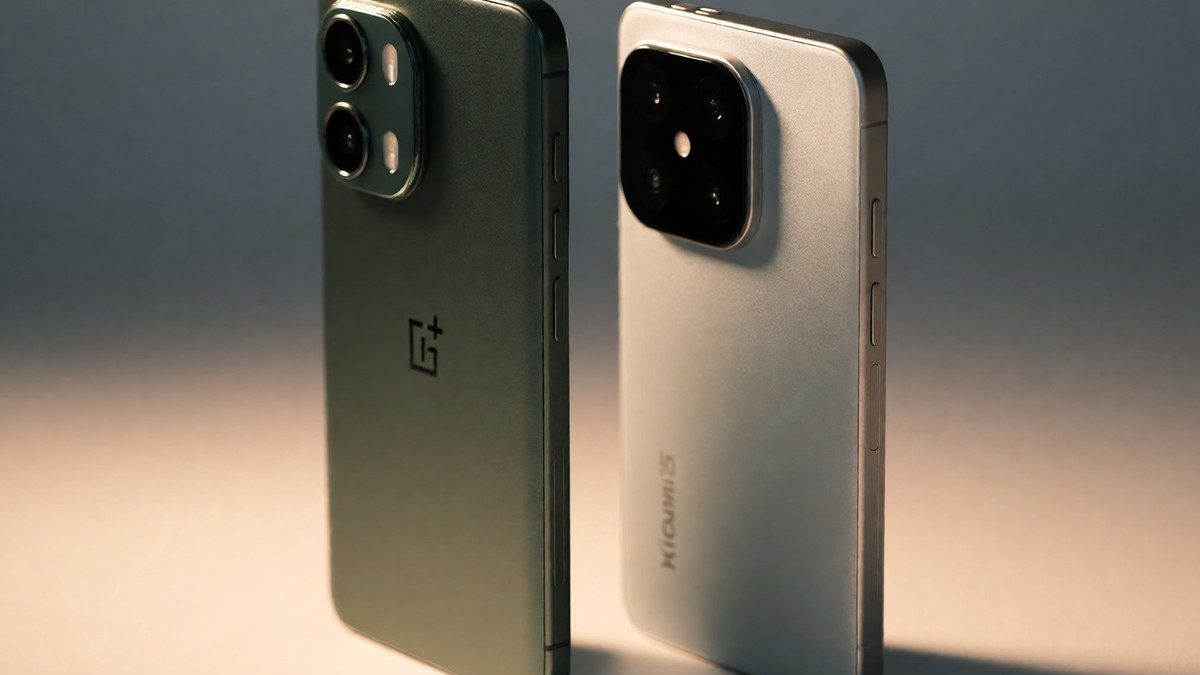
The camera systems differ between these models. The OnePlus 13T uses a dual 50MP setup. The main sensor is a 1/1.56" wide lens with 1.0um pixels and multi-directional PDAF. It also includes OIS. The second 50MP sensor is a telephoto lens with 2x optical zoom and PDAF. It lacks an ultrawide lens. The Xiaomi 15 has a triple 50MP system co-engineered with Leica. This setup includes a 23mm main shooter with the Light Fusion 900 sensor, a 14mm ultrawide lens with a 105-degree field of view, and a 60mm telephoto lens that supports macro photography.
| Specification | OnePlus 13T | Xiaomi 15 |
|---|---|---|
| Display Size | 6.32-inch | 6.36-inch |
| Display Type | LTPO AMOLED | AMOLED |
| Peak Brightness | 1600 nits | 3200 nits |
| Battery | 6280 mAh | 5240 mAh |
| Wired Charging | 80W | 90W |
| Weight | 185 g | 191 g |
| IP Rating | IP65 | IP68 |
The Xiaomi 15 display has a 6.36-inch size and a 1.5K CrystalRes resolution. It reaches 3200 nits peak brightness and uses 3840Hz PWM dimming. The OnePlus 13T has a 6.32-inch display with 460 ppi density and a 1216 x 2640 resolution, while the Xiaomi 15 has a 6.36-inch display with a 1.5K CrystalRes resolution and 3200 nits peak brightness. The OnePlus 13T display provides 1B colors and Dolby Vision. The Xiaomi 15 display provides 68 billion colors and Corning Gorilla Glass 7i protection. Both displays use 120Hz refresh rates and 460 ppi density. I find the Xiaomi 15 display more capable for bright outdoor use.
Physical build and verdict
I compare the physical dimensions and durability to see which device fits better in a pocket. The OnePlus 13T weighs 185 g and measures 150.8 x 71.7 x 8.2 mm. The Xiaomi 15 weighs 191 g and measures 8.08 mm in thickness. It also has an IP68 rating for water resistance, which provides a higher level of protection than the IP65 rating on the OnePlus 13T. The OnePlus 13T has a 6.32-inch display, but the Xiaomi 15 has a 6.36-inch display. The Xiaomi 15 delivers superior imaging because it includes the 14mm ultrawide lens that the OnePlus 13T misses entirely. The OnePlus 13T wins the endurance battle because the 6280 mAh battery exceeds the Xiaomi 15 cell by a wide margin. You should consider the trade-off between battery life and camera versatility. Does the superior camera of the Xiaomi 15 justify the smaller battery?