Meta expanded its live translation capabilities this month to include 14 new languages. This update adds support for Hindi, Japanese, Mandarin, and Korean. The integrated Meta AI uses MuseSpark to provide smarter responses regarding sports scores or restaurant recommendations. This multimodal AI also interprets what the wearer sees to assist with daily tasks. You might find the voice commands easier to use when your hands are occupied. The AI can now assist with tasks ranging from managing calendars to navigating busy schedules. This software helps the device function as an ambient computing tool. The AI can also play music recommendations from Spotify based on what the wearer sees. Users can use the "Hey Meta" command to dictate messages or ask questions. For athletes, the Oakley Meta Vanguard allows for voice shortcuts to trigger commands without saying "Hey Meta". These glasses also connect to Garmin or Strava to provide real-time insights on workouts.
Scaling Production and Market Share
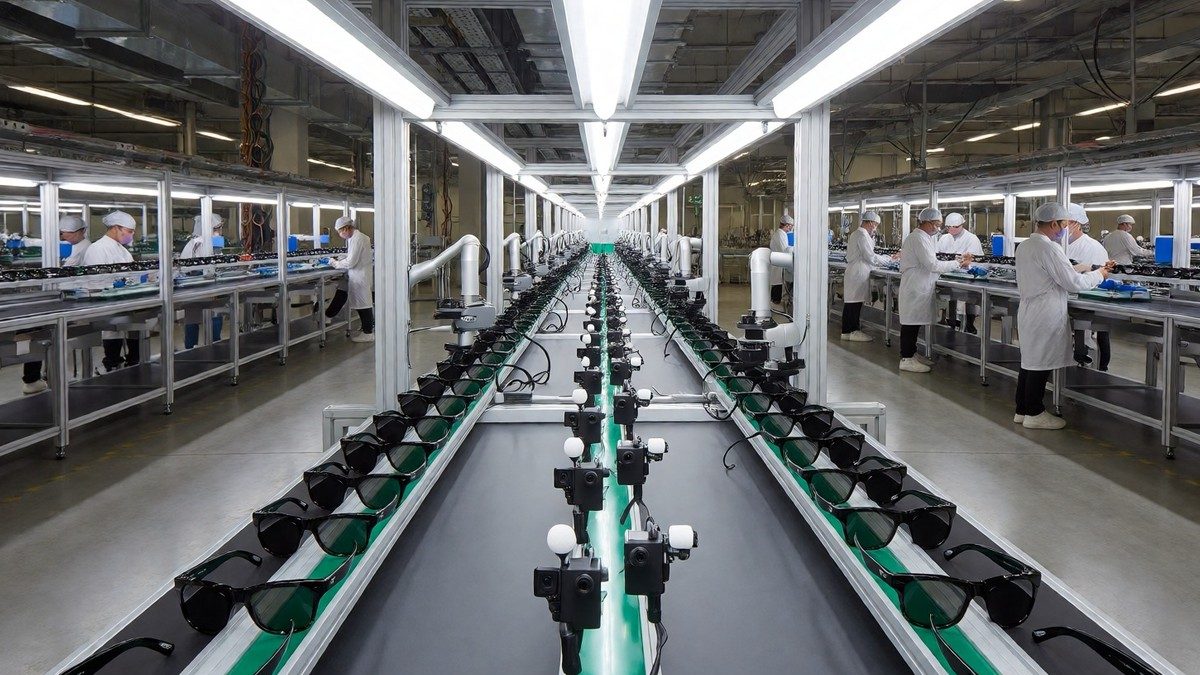
Meta and EssilorLuxottica aim to reach an annual production capacity of 20 million units by the end of 2026 after they sold 7 million units throughout the entire year of 2025. This target follows the sale of 7 million units in 2025, which tripled the sales volume from 2024. According to IDC data from April 2026, Meta holds 76.1 percent of the global smart glasses market. Bloomberg reported in January 2026 that the partners discussed doubling or tripling production to handle high demand. In July, EssilorLuxottica reported that sales of Ray-Ban Meta glasses grew more than 200 percent in the first half of the year. The global eyewear market reached $172.92 billion in 2026, according to Mordor Intelligence. The market shipped 9.6 million units in 2025 and the forecast for 2026 is 13.4 million units, according to Smart Analytics Global. Google is working with eyewear companies like Gentle Monster and Warby Parker to develop Gemini smart glasses to compete in this market. Samsung plans to launch a Meta Ray-Ban Display competitor this year, powered by Google software. Apple also moved staff off the Vision headset project to prioritize shipping smart glasses sooner. Despite this growth, privacy issues persist. In January 2026, BBC News reported that individuals used Ray-Ban Meta glasses to film women without their knowledge. How will regulators respond to these privacy concerns?
Hardware Specs and Design
Meta released the Meta Glasses at a $299 price point to provide a cheaper alternative to the $379 Ray-Ban Meta lineup. The product line includes the Meta Adventurer, the Meta Fury, and the Meta Glasses by Kylie. These frames have different silhouettes and three adjustable nose pad positions for better fit. The Ray-Ban Meta models utilize a Qualcomm AR1 Gen 1 platform. These glasses also include a 12MP camera, a five-microphone array, and 32GB of storage. The improved camera captures 1920 x 1440 video, which is an upgrade from the 780p video in previous versions. The storage capacity also increased from 4GB to 32GB. The speakers produce audio that is 50 percent louder than previous models. The Ray-Ban Meta glasses provide 36 hours of battery life with the included charging case. The charging case brings the battery to 50 percent charge in 20 minutes. These glasses also have IPX4 water resistance and use Wi-Fi 6 and Bluetooth 5.3 for better performance. The camera sensor provides a 12MP resolution, which is a significant leap from the 5MP sensor found in Ray-Ban Stories. The Ray-Ban Meta remains the most functional smart glasses for daily use.
| Feature | Ray-Ban Meta | Meta Glasses |
|---|---|---|
| Base Price | $379 | $299 |
| Camera Resolution | 12MP | Camera included |
| Battery (with case) | 36 hours | 40 hours additional |
| Voice Assistant | Meta AI with MuseSpark | Meta AI |