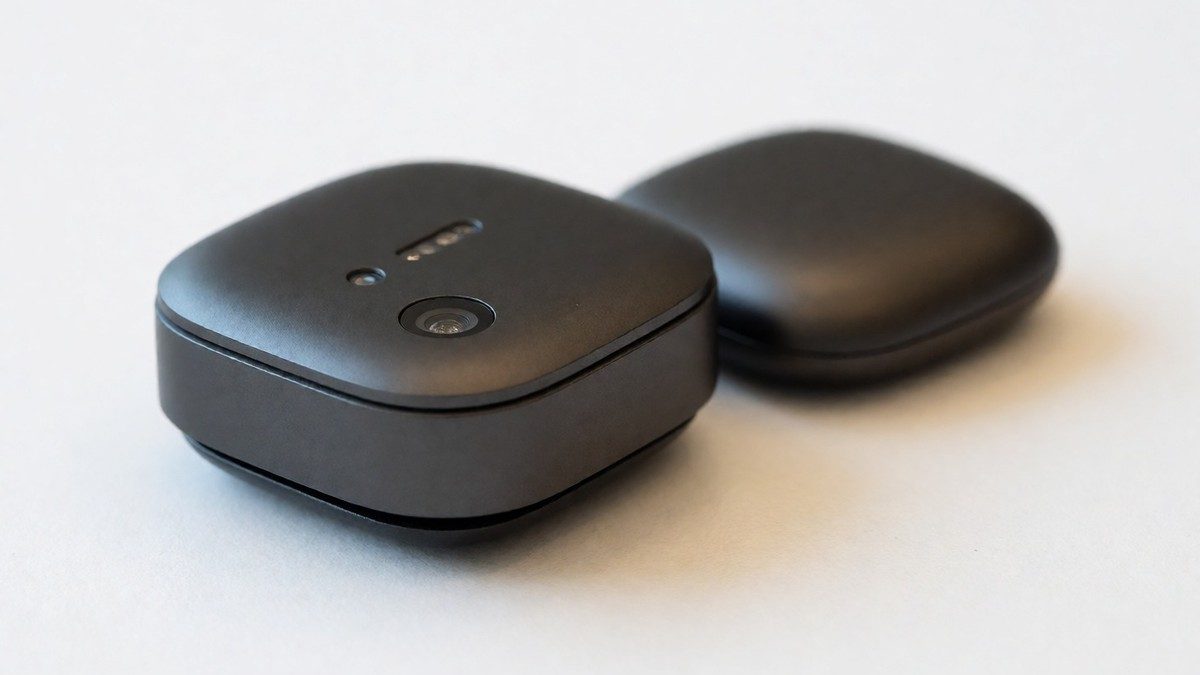
HP’s attempt to integrate the Cosmos operating system into an enterprise division faces immediate technical hurdles. The original AI Pin, which launched in April 2024, suffered from severe thermal constraints and poor battery performance. The device’s small form factor prevented it from dissipating heat during intensive AI tasks, which led to frequent shutdowns. Critics from The Washington Post and The Verge reported that the 720p laser projector became invisible in sunlight and the interface felt slow. The interface relied on gestures like pinching and tilting, which reviewers from CNET and The Verge found awkward and difficult for passcode entry. The device weighed 34.2 grams and used a Qualcomm Snapdragon processor with a 12MP wide camera and a time-of-flight sensor. The original hardware issues involving heat and battery life stem from physics. The device overheated during extended use, and the battery drained too quickly for reliable daily application. Furthermore, fire concerns with the charging case led Humane to tell customers to stop using it. The original product came in three finishes: Eclipse, Equinox, and Lunar. The laser projection used a custom-color single-diode laser with a 720p resolution and a 18.2 degree field of view. The original Humane AI Pin required a $24 monthly subscription to T-Mobile’s network to maintain its cellular connection, which many reviewers described as an annoying and unnecessary additional cost for a device already priced at $699. The device shipped with two battery boosters and a dual microphone array.
The cloud dependency risk
The collapse of the consumer model reveals a critical risk for hardware that depends on a hosted AI backend. When Humane terminated its cloud AI service on February 28, 2025, the AI Pin ceased all core functions like messaging and AI queries. This shutdown turned the hardware into a non-functional object for all owners. The enterprise transition must avoid this total dependency on a single, fragile cloud connection. The massive discrepancy between the $230 million Humane raised and the $116 million HP paid for the assets signals a significant loss in value for the company’s original vision. The original company sought a buyer for $750 million to $1 billion in May 2024. You should remember that hardware loses its purpose if the software backend vanishes. Will the enterprise market tolerate a device that functions only when connected to a specific proprietary cloud?
| Feature | Original AI Pin Details |
|---|---|
| Hardware Price | $699 |
| Monthly Fee | $24 via T-Mobile |
| Acquisition Price | $116 million |
| Patent Portfolio | Over 300 patents |
Competition and the ecosystem
The failure of standalone AI devices highlights the difficulty of competing with established mobile ecosystems. The original AI Pin attempted to replace the smartphone, but it provided less utility at a higher price point. The Rabbit R1, which launched at $199 in April 2024, also struggled with being a prototype rather than a finished product. This orange handheld device, led by CEO Jesse Lyu, faced criticism for being clunky and inessential. The device relies on a Large Action Model to perform tasks, but early users found the experience unreliable. Competitors like Apple plan to release AI hardware in 2027 that tethers to the iPhone to solve the battery and processing problems. Apple’s rumored design includes a thin, circular disc with dual front-facing cameras and a three-microphone array, targeting a production of 20 million units. The Apple device will use Ultra-Wideband to offload heavy processing to the iPhone. HP’s new division, HP IQ, intends to use the acquired Cosmos platform to improve AI PCs, printers, and connected conference rooms. The division includes founders Imran Chaudhri and Bethany Bongiorno. This strategy moves the technology toward tools that complement existing workflows.