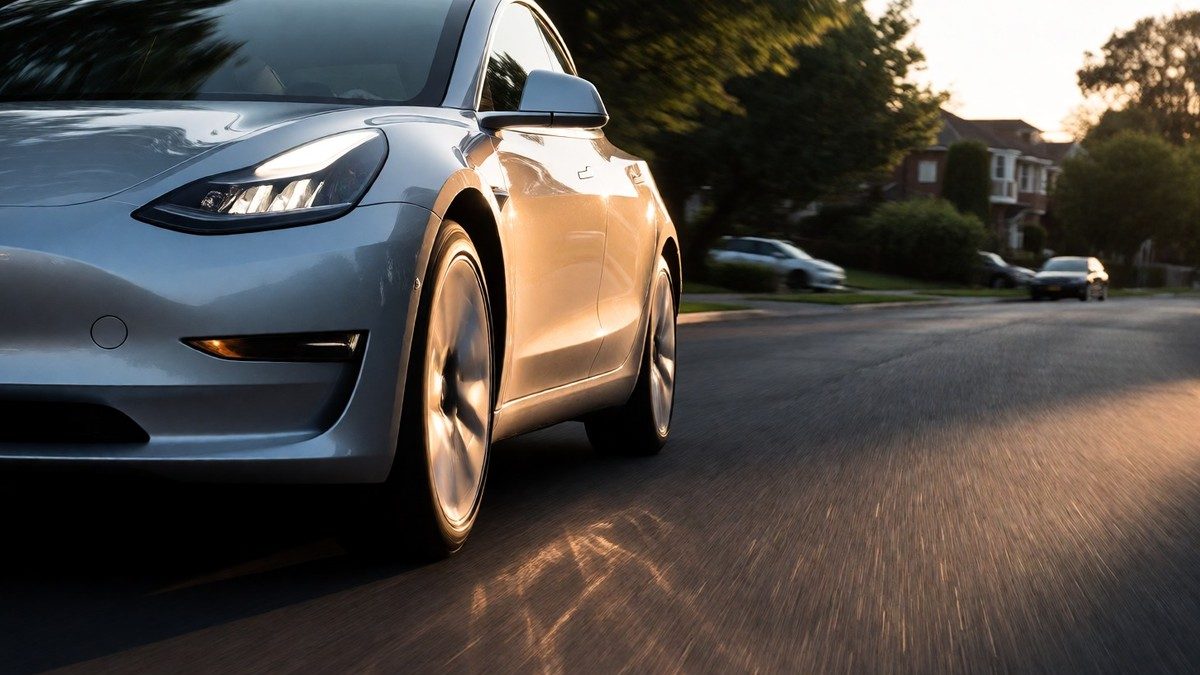
Grok-3 provides advanced logical deduction and deeper contextual understanding. This xAI platform handles complex coding and media generation. Grok-3 also performs mathematical problem-solving. The system surpasses its predecessors in efficiency. Grok provides real-time internet access for up-to-date insights. I see Grok’s reasoning capabilities as a way to augment the software Tesla already produces. Martin Eberhard and Marc Tarpenning incorporated Tesla in July 2003. In 2024, Tesla led the battery electric vehicle market with a 17.6% share. Tesla’s engineering team designs and manufactures the computer software, the battery, and the proprietary motor that power their battery electric vehicles, which included exactly 1.66 million units during the year 2025 across various global markets. Tesla’s infotainment software provides a natural place for Grok’s deep reasoning. This platform can use DeepSearch reasoning to fetch and cross-reference live information from X and the open web. Grok uses parallel sub-agent tasking to process complex logic. Grok also performs multi-step research. This functionality matches the high-level execution capabilities required for advanced vehicle software. The Model 3 became the world’s best-selling electric car from 2018 to 2021.
Advanced model iterations
Developers use models like Grok 4.7 in API calls to generate text. This model, Grok 4.7, handles complex logic through parallel sub-agent tasking. Grok natively integrates real-time X platform data for users. This integration assists with complex problem solving. Tesla’s software production supports its fleet of Model S, Model X, Model 3, and Model Y vehicles. Tesla’s market capitalization exceeded $1 trillion between May 2025 and July 2026. You should look at how Grok’s background execution might improve Tesla’s autonomous development. Grok’s background cloud tasks and autonomous agents match the software-heavy nature of Tesla. Tesla’s self-driving development relies on specialized AI software. Tesla’s energy segment includes the Powerwall and Megapack, which also require software management. Grok’s ability to execute code debugging across large repositories matches the needs of Tesla’s energy and automotive engineers. Grok offers enterprise-grade API tiers and high-rate-limit plans like SuperGrok Heavy. Users can upgrade to SuperGrok or X Premium for flagship capabilities like DeepSearch and Imagine video/image generation. Grok is available on iOS and Android as a dedicated standalone app. Grok also provides real-time voice translation. This availability matches the software-driven model used by Tesla.
| Feature | Grok AI Capability | Tesla Software Application |
|---|---|---|
| Reasoning | DeepSearch reasoning | Self-driving development |
| Data | Real-time X data | Infotainment systems |
| Automation | Grok Bot cloud agents | Energy storage management |
| Execution | Code debugging | Vehicle control software |
Technical convergence
I believe the integration of Grok’s reasoning into Tesla’s software stack is a logical progression. Grok-3’s ability to handle complex coding and multi-step research fits the technical needs of automotive software. Tesla’s focus on the computer software as a core technology makes this convergence efficient. However, Tesla faces ongoing scrutiny because the company overpromises on its driving assist technology and product release timelines. This history of overpromising contradicts the precision required for high-level AI reasoning. Grok’s real-time web retrieval provides the data necessary for accurate responses. Grok’s sub-second voice mode could change how drivers interact with vehicle infotainment. Tesla’s massive vehicle production and energy storage deployment provide the hardware for such advanced AI applications. Tesla’s software manages its stationary battery energy storage devices from home to grid-scale. Tesla’s product line includes the Roadster, Model S, Model X, Model 3, Model Y, and the Cybertruck. The intersection of xAI’s frontier models and Tesla’s proprietary motor and software technologies is a unique technical path. Will Tesla successfully merge these two distinct AI environments?