Price competition and open weights
DeepSeek V3.2-Speciale attains gold-level results in the 2025 International Mathematical Olympiad and the International Olympiad in Informatics. This reasoning-first model provides a massive economic disruption to the proprietary market. DeepSeek R1 costs $0.55 per million input tokens, whereas OpenAI o1 charges $15 for the same amount of data, making the total cost for high-volume reasoning workflows significantly lower for DeepSeek users. In mathematical reasoning tests, R1 scores 97.3% on MATH-500, beating the 96.4% score of OpenAI o1. I see the availability of open-weights models makes the premium pricing of closed providers look unnecessary for many developers. You should realize that R1 operates at roughly 5% of the cost compared to traditional models because it only processes 37 billion parameters per calculation instead of 671 billion. DeepSeek R1 also scores 79.8% on AIME mathematical tests, surpassing the 79.2% score of OpenAI o1. DeepSeek R1 achieves a 2029 Codeforces rating, which provides a comparison to the 2061 rating for OpenAI o1, and shows that open-source models can perform extremely well in highly competitive programming contests. DeepSeek V4-Pro uses a 1.6 trillion parameter architecture, while V4-Flash uses 284 billion parameters. The V4.1-Flash model delivers an HLE score of 36.8 and a ProgramBench score of 20.3.
Hardware constraints and export rules
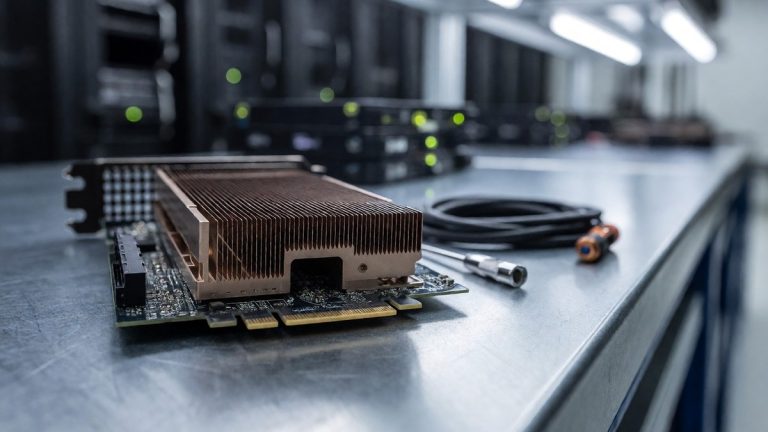
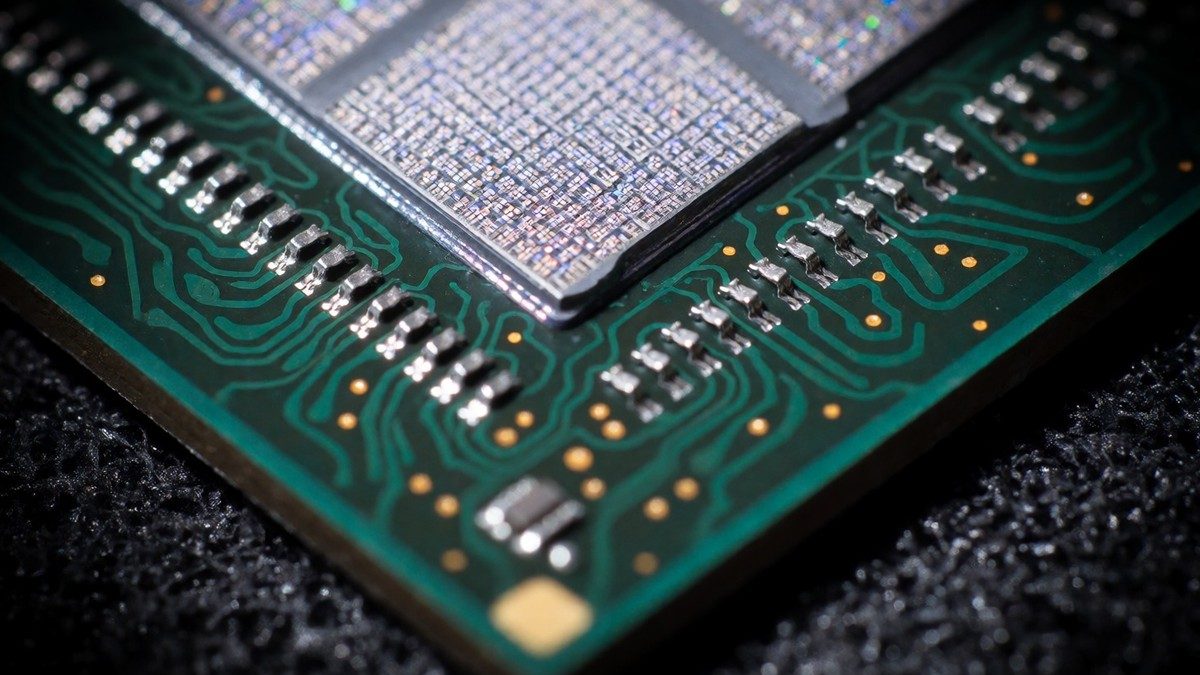
The US Commerce Department investigates whether DeepSeek used restricted US chips to develop its high-performance models. DeepSeek trained its R1 model using 2,000 H800 chips, which provide performance similar to US-available H100s for their specific workloads. Nvidia develops the B20 chip to navigate these export controls, targeting the Chinese market with slower processing speeds. DeepSeek maintains 50,000 "Hoppers" including H100, H800, or H20 models. DeepSeek founder Liang Wenfeng states the company requires 4x the computing power to reach comparable outcomes because of a 2x gap in data efficiency and a 2x gap in computing power. While the US administration tightens restrictions on high-powered chips, DeepSeek manages to mitigate the impact through algorithm refinement and the use of legally available hardware like the H800. DeepSeek also operates the first 10,000 A100 cluster in Asia. US companies currently build data centers with hundreds of thousands of chips, while Chinese firms remain constrained by deployment capabilities. Before the export rules arrived, Chinese customers stockpiled chips to maintain access to top-level hardware.
Technical efficiency through sparse architecture
DeepSeek utilizes a Mixture-of-Experts architecture where 37 billion parameters activate per request from a 671 billion total. This design allows for significant savings through context caching, where cache hits cost as little as $0.014 per million tokens. The V3.2-Speciale variant reaches reasoning proficiency on par with Gemini-3.0-Pro. DeepSeek V3.2 introduces DeepSeek Sparse Attention, an efficient attention mechanism that reduces computational complexity. DeepSeek R1 training costs approximately $5.6 million. I find that DeepSeek R1 occasionally returns verbose answers or times out, which complicates real-time use. DeepSeek V3.2 introduces a massive agent training data synthesis pipeline that covers 1,800 environments and 85,000 complex instructions, which facilitates scalable agentic post-training in complex interactive environments for various users. DeepSeek V4.1-Flash-1017 uses a causal encoder-decoder architecture and consumes less memory than previous versions, which allows for higher throughput and faster inference during complex multimodal tasks for most enterprise users. DeepSeek Chat cache hits cost $0.07 instead of $0.27, while DeepSeek Reasoner cache hits cost $0.14 instead of $0.55. This model also includes native multimodal visual understanding.
| Feature | DeepSeek R1 | OpenAI o1 |
|---|---|---|
| Input Token Cost (1M) | $0.55 | $15.00 |
| Output Token Cost (1M) | $2.19 | $60.00 |
| Active Parameters | 37B | Undisclosed |
| License | MIT | Proprietary |
Can the current US export restrictions eventually close the gap in training efficiency?