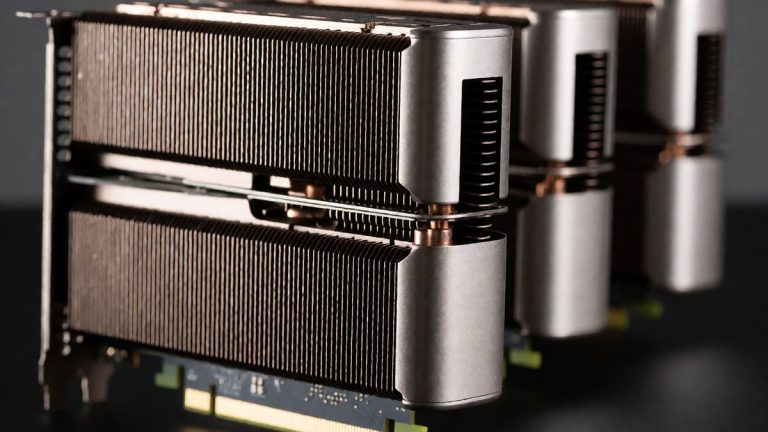
CoreWeave’s $23 billion IPO attempts to capitalize on a revenue surge that hit $1.9 billion in 2024. This growth, an eightfold increase from 2023, masks a staggering capital requirement. Revenue climbed from $16 million in 2022 to $229 million in 2023 before reaching $1.9 billion in 2024. The company needs $35.75 billion to cover capital expenditures, equipment liabilities, and accounts payable through 2026. Management expects 2026 revenue between $12 billion and $13 billion, yet this figure pales against the looming spending requirement. I find the disparity between projected revenue and necessary infrastructure spend alarming. This capital intensity stems from the need to purchase massive GPU clusters and build out data centers. In 2024, capital expenditures surged 180 percent year-over-year, primarily funded by debt. The company’s operating costs totaled $1.6 billion, while technology and infrastructure expenses rose 629 percent year-over-year to $960 million. The company maintains a $15.1 billion remaining performance obligation as of year-end 2024, which grew 53 percent year over year.
The mounting debt burden
The company carries $35.1 billion in total debt as of June 30, 2026. Interest costs reached $640 million in the second quarter of 2026, which exceeded the $626 million net loss for that same period. This interest burden puts immense pressure on the $104.2 billion revenue backlog reported in June. The company’s massive scale forces it to navigate a precarious path where it must deliver huge amounts of computing capacity, absorb heavy operating expenses, service mounting debt, and manage the unpredictable risks of customer contract renewals. CoreWeave utilizes delayed draw term loans, such as the $2.6 billion DDTL 5.5 Facility that pays SOFR plus 5.5 percent. These loans rely on GPU collateral and customer contracts, but the company must maintain a total net leverage ratio below 7.00 to 1.00 to avoid default. If the company misses revenue targets, it faces a liquidity wall that requires issuing massive amounts of new stock to provide equity cures. Failure to keep the total net leverage ratio below 6.00 to 1.00 for four consecutive quarters could trigger a default. This necessitates rapid capital raises to satisfy bank covenants.
| Facility Type | Amount | Maturity | Interest Rate |
|---|---|---|---|
| DDTL 5.5 Facility | $2.6 billion | 2031 | SOFR + 5.50% |
| DDTL 4.0 Facility | $8.5 billion | 2032 | Moody’s A3 |
| DDTL 5.0 Facility | $3.1 billion | 2031 | SOFR + 4.0% |
The debt pile includes $16.6 billion in bonds outstanding as of June 30, 2026. This includes $1.3 billion in bonds due in 2032 at 9.625 percent and $1.8 billion in bonds due in 2031 at 9.000 percent.
Rivalry and customer concentration
Microsoft holds 62 percent of CoreWeave’s 2024 revenue. This concentration creates a single point of failure if the tech giant shifts its AI strategy. Competitors like Lambda Labs and Nebius Group fight for the same enterprise customers. Lambda Labs secured a $1.5 billion deal with NVIDIA in late 2024, while Nebius projects 2026 revenue growth exceeding 520 percent. You should watch how these neocloud rivals erode CoreWeave’s margins by offering cheaper GPU access. For example, renting NVIDIA H100 GPUs from neocloud firms averages $34 per hour, compared to $98 per hour at major hyperscalers. CoreWeave also faces pressure from IREN and Crusoe, which provide specialized AI infrastructure. The company’s reliance on NVIDIA for B200 NVL72 racks creates a tight link between its hardware availability and its primary supplier. CoreWeave also manages massive contracts, such as a $142 billion computing supply deal with Meta and a $6.5 billion capacity purchase from OpenAI. The company serves diverse clients, including IBM for Granite model training and Cohere for Canadian sovereign AI projects. I would skip the IPO if I believed the company could not survive a 10 percent revenue miss. Can the current debt structure withstand a slowdown in AI infrastructure spending?