High margins and steady revenue
I see a company that avoids the hype cycle of general intelligence to capture the specialized enterprise market. Cohere reached $240 million in annual recurring revenue in February 2026, and it maintains a 70 percent gross margin. This margin exceeds OpenAI’s 33 percent from 2025 and Anthropic’s estimated sub-50 percent figures. The company grew revenue from $13 million in 2023 to $30 million in 2024, and it reached $100 million in May 2025. While competitors like OpenAI and Anthropic chase massive valuations of $500 billion and $183 billion, Cohere focuses on reliability and cost. The $500 million Series D in August 2025 brought its valuation to $7 billion, an amount that reflects the company’s focus on capturing high-margin enterprise contracts rather than chasing consumer popularity. The founders, Aidan Gomez, Nick Frost, and Ivan Zhang, established the company in 2019 after Gomez co-authored the 2017 transformer paper. Since its inception, Cohere raised a total of $1.6 billion.
Product specs and the agentic shift
The Command R+ model delivers a 128,000-token context window for complex language tasks. I prefer the Command R+ pricing for high-volume workloads because it stays competitive against the mid-tier models from OpenAI. The Command R+ model remains a flagship, designed for enterprises that want performance without OpenAI-scale budgets.
| Model | Input Price (per 1M tokens) | Output Price (per 1M tokens) | Context Window |
|---|---|---|---|
| Command R+ | $2.50 | $10.00 | 128,000 tokens |
| Rerank 4 | N/A | $2.00 per 1,000 units | 32,000 tokens |
| Aya | N/A | N/A | N/A |
Cohere expanded into agentic workflows with North, its AI workspace platform. The North platform integrates LLMs, search, and agents to automate daily tasks for customers like RBC, Dell, and Ensemble Health Partners. In July 2025, Bell Canada started providing sovereign AI services using Cohere technology on its data center infrastructure. This helps companies that cannot use American-hosted models due to data residency laws. You should observe how this specialization creates a distinct market niche. The company uses Rerank 4 to improve the accuracy of Embed results and provides a 32,000-token context window for complex document analysis. The Embed API produces precise text embeddings for semantic search and classification at $0.10 per 1M tokens. Dell integrated North into its AI Factory stack to allow customers to purchase servers pre-loaded with the platform. However, analysts at Gartner suggest Cohere must still prove its platform can compete with massive agentic ecosystems from Salesforce or Microsoft.
The sovereign AI pivot
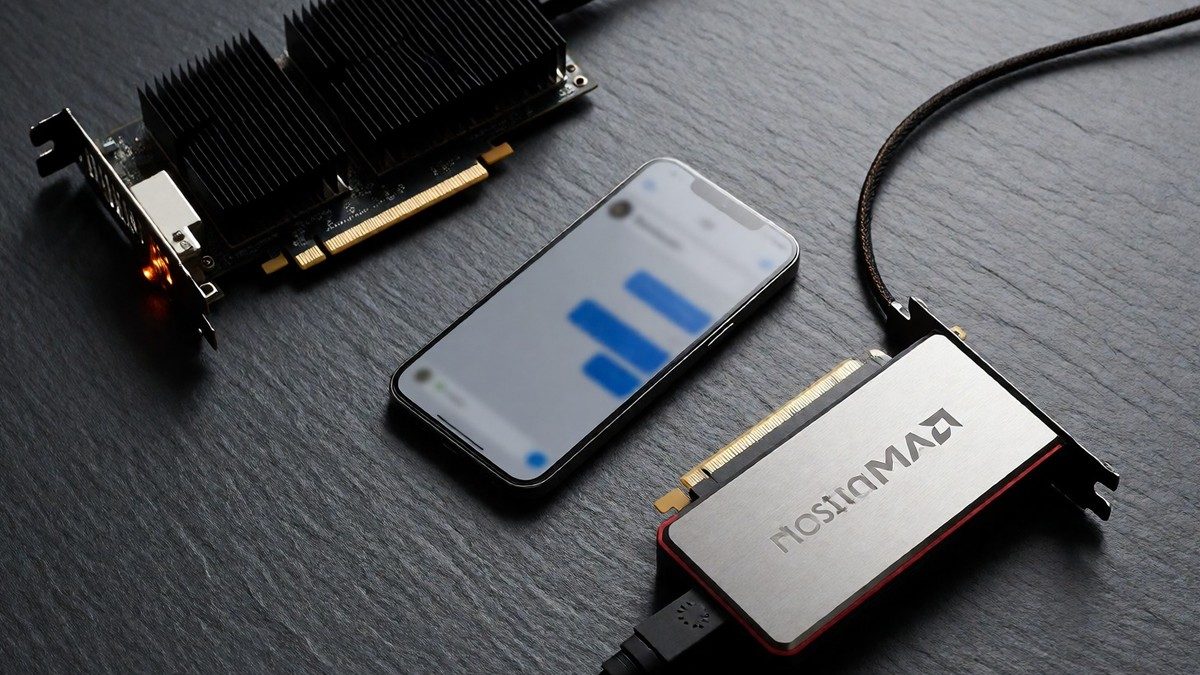
Enterprises avoid single points of failure from big tech platforms. An IDC study commissioned by Cohere found that 52 percent of leaders describe sovereign AI as local or national control. IT leaders prioritize regulatory compliance while business leaders focus on risk management. Cohere targets these needs through private deployment architectures and VPC-isolated hosting. The Aya model family supports 70 plus languages for offline use. This makes it a practical choice for markets with connectivity limits. The company also partners with AMD to reduce its reliance on Nvidia hardware. The Canadian federal government committed $240 million to help cover training costs, which makes the path to net profitability easier. Within regulated industries, 82 percent of financial services leaders and 77 percent of manufacturing leaders identify data leakage and compliance as top concerns. In the telecommunications sector, 75 percent of leaders share this concern, followed by 74 percent in healthcare. I would ignore the noise about AGI to focus on these specialized deployments. Will the current $240 million revenue sustain the $7 billion valuation through a public offering?