Speed defines the SU7 Ultra
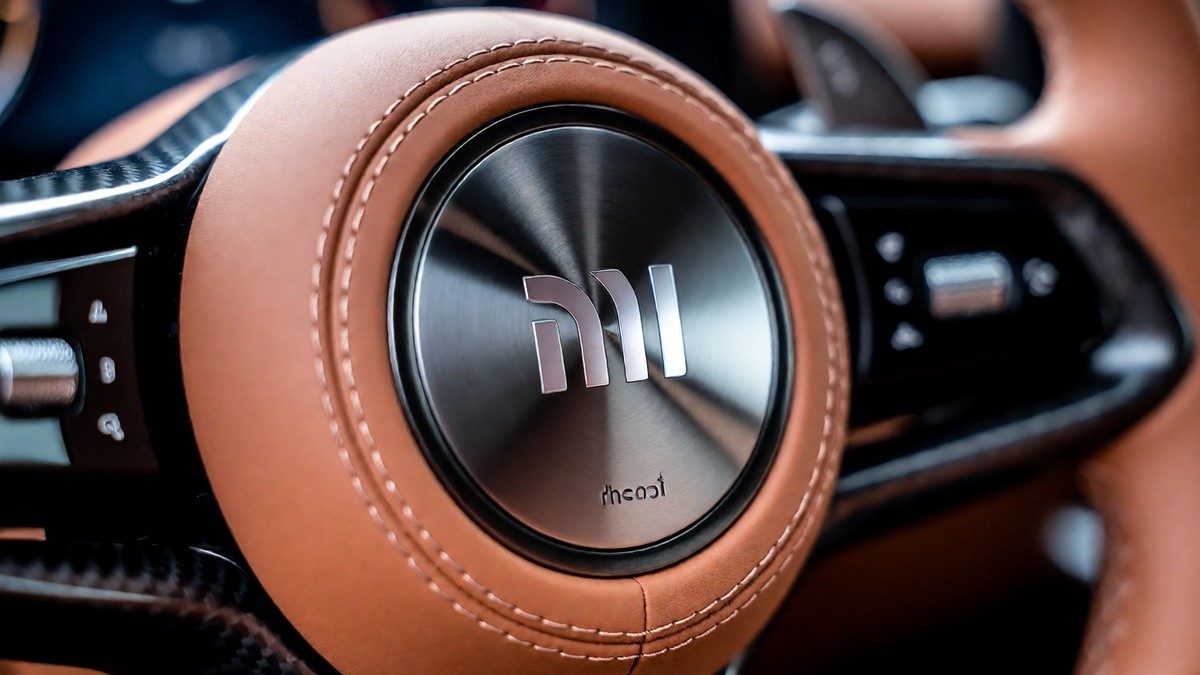
The Xiaomi SU7 Ultra production model completed a 7:04.957 lap at the Nurburgring in 2025, setting the record for the fastest road legal four-door saloon. This time trails the 6:46.874 prototype record from October 2024. Xiaomi remains a premium partner for the German track, which includes the new Xiaomi Curve on the Grand Prix circuit and advertisements on the Nordschleife. The SU7 Ultra produces 1548PS and achieves 0 to 100km/h acceleration in 1.98 seconds without one-foot rollout.
| Specification | Value |
|---|---|
| Max Horsepower | 1548PS |
| 0-100km/h Acceleration | 1.98 seconds |
| 2025 Nurburgring Lap | 7:04.957 |
| 2024 Prototype Lap | 6:46.874 |
Xiaomi clearly dominates the performance sedan segment by pairing hypercar specifications with a premium sedan price. The company uses the Nurburgring as a development platform to advance electric mobility.
Software competition and ecosystem expansion
Xiaomi builds its competitive edge through the HyperOS ecosystem, which connects smartphones, IoT devices, and vehicles through a unified software framework designed to facilitate efficient cross-device collaboration and reliable data sharing across its entire device range. This "Human-Vehicle-Home" strategy relies on the AI subsystem and a highly secure TEE OS (EAL 5+) to protect user data. The system uses a Linux kernel for heavy-load hardware and a Vela kernel for lightweight hardware. It also includes a resource scheduling subsystem and a multimedia subsystem for processing audio, video, and images. The reconstructed file system prevents I/O performance degradation after 50 months of use. The system also includes a flexible framework to optimize window interaction and adaptively arrange layouts. The graphics subsystem manages and controls graphics display and user interface rendering. Huawei competes by combining 5.5G wireless broadband with generative AI to unlock new economic opportunities. HyperOS 4 provides compatibility with the Apple ecosystem, allowing users to sync notifications and share files like photos or browser links. The Xiaomi 18 Pro Max tests an AirDrop-like function for direct file sharing with Apple hardware. You should observe how these software updates change the way your smartphone interacts with your car. Xiaomi also provides "Smart Share Desktop" for transitions between Xiaomi and Apple gear. XiaoAI assists users with AI text creation, while AI Magic Brush transforms doodles into paintings.
Does the reliance on AI-driven communication influence long-term software stability?
Scaling production and deliveries
Xiaomi captured 15,000 non-refundable orders for the SU7 sedan in just 34 minutes this week. The YU7 SUV moved 37,869 units in January, which outsold the Tesla Model Y. Xiaomi delivered 411,000 vehicles in 2025 and aims for 550,000 in 2026. In August 2025, production reached 37,380 units, while August deliveries for the SU7 reached 19,848 units. The YU7 delivered 16,548 units in August, marking a 173.88 percent increase from July. The SU7 launched on March 28, 2024, and the YU7 arrived on June 26. The SU7 sedan competes with the Tesla Model 3 and BYD Seal.
| Model | August 2025 Deliveries | Expected Wait Time |
|---|---|---|
| SU7 Sedan | 19,848 units | 35-38 weeks |
| YU7 SUV | 16,548 units | 51-54 weeks |
September 2026 deliveries hit 40,015 units as production capacity increases. The company plans to shorten delivery cycles, with some models seeing improvements of up to 2 months. In early 2026, BYD deliveries fell 36% for January and February combined, while Tesla gained share in China. Current SU7 customers face wait times between 35 and 38 weeks.