Ethical sourcing and early growth
Fairphone began as a campaign three years before it became a social enterprise in January 2013. In May 2013, the company started a crowdfunding campaign and sold 10,000 phones in three weeks, doubling its 5,000 order target. By November 13, 2013, the company sold 25,000 devices. This total included 15,000 online sales and 1,000 phones sold to a Dutch provider. The company aims to sell 25,000 phones in its first year. It works with NGOs like Action Aid and Somo to source conflict-free tin and tantalum from the Democratic Republic of Congo. In the south, it co-founded the Fair Cobalt Alliance to improve conditions in artisanal cobalt mines. The company also pays a premium to miners through Responsible Gold Credits to support safer working conditions. To support workers, the company puts $2.50 from every phone into a workers’ welfare fund, which the factory matches. This fund creates a dialogue between workers and managers. The company aims to use at least 70% ethical or recycled materials in its construction. In the north-east of the DRC, minerals like tin, tantalum, tungsten, and gold are mined, and Fairphone works to ensure these supply chains are ethical.
Modular engineering and repairability
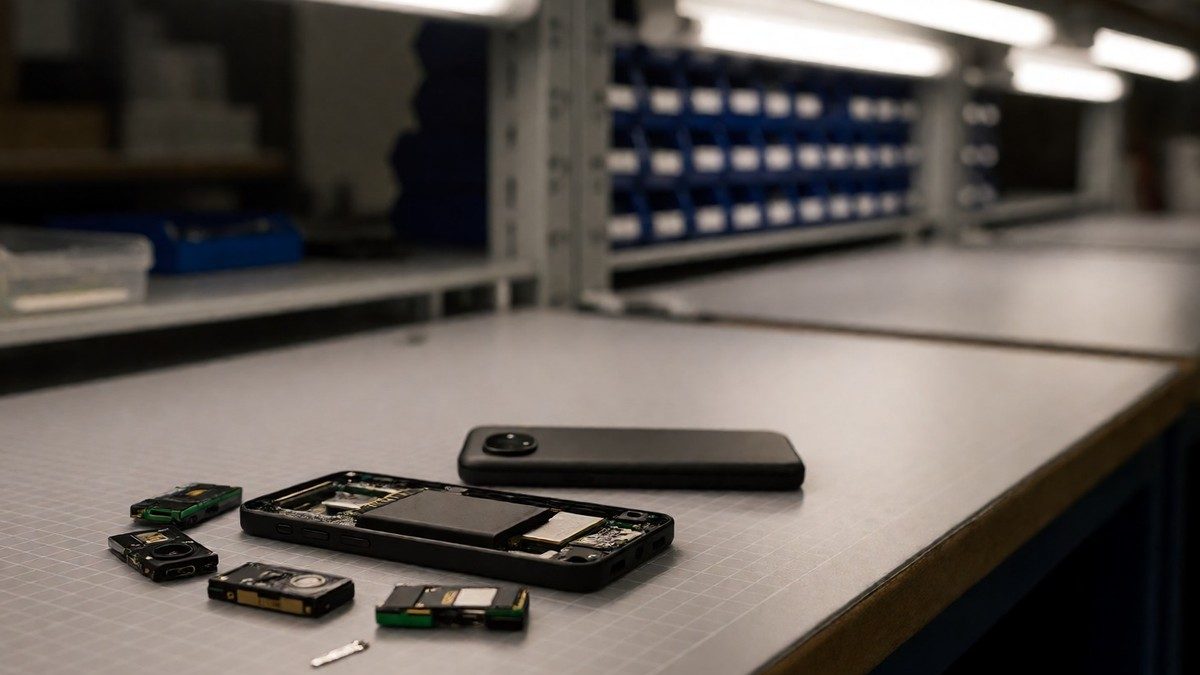
The Fairphone 2, 3, 3 Plus, 4, 5, and 6 all earned 10/10 repairability scores from iFixit. This score is rare because flagship devices like the iPhone 15 or Samsung Galaxy S23 Ultra only earn a 4/10. The Fairphone 6 relies on 12 distinct modular components and T5 Torx screws. The internal parts, like the battery, display, and cameras, remain easily removable. A user can replace the display, battery, and cameras easily with a standard screwdriver. The USB-C port exists as a separate, swappable module that prevents common hardware failures. The battery uses four screws to secure it, which is a change from the tool-free design of previous models. The 6.31-inch LTPO OLED screen stays in place with eight screws. The Fairphone 6 has a 6.31-inch display with FHD+ resolution. The Fairphone 6 is the best option for anyone who values sustainability above all else.
| Feature | Fairphone 6 Specification |
|---|---|
| Display | 6.31-inch LTPO OLED |
| Refresh Rate | 120 Hz |
| Processor | Qualcomm Snapdragon 7s Gen 2 |
| RAM | 8GB |
| Storage | 256GB (expandable via microSD) |
| Battery | 4415 mAh |
| Charging | 30W fast charging |
| Software Support | Until 2033 |
Longevity and market limits
The longevity of the device depends entirely on the availability of spare parts, which creates problems for older models. The company retired the first Fairphone because it could not find enough battery suppliers. This scarcity forces many users to abandon their devices even when they would prefer to perform simple maintenance themselves. The Fairphone 6 provides software updates until 2033 and uses at least 70% ethical or recycled materials; this makes it a strong contender for users who want long-lasting devices. In the US, Murena sells the device for $899. The phone works only with T-Mobile and its partner networks, so it excludes Verizon users. The higher price makes it difficult to convince consumers when many faster and more stylish smartphones exist for the same amount of money in the current global market. You should consider if the extra durability justifies the premium cost for your next purchase. The phone maintains an IP55 rating for dust and water resistance. The device uses a 4415 mAh battery that supports 30W fast charging technology. It includes a physical side button called the "Fairphone Moments" switch to activate a minimalist mode. The device also carries a five-year warranty. Will the company find enough battery suppliers to support its older models for another decade?