Booster recovery successes and failures
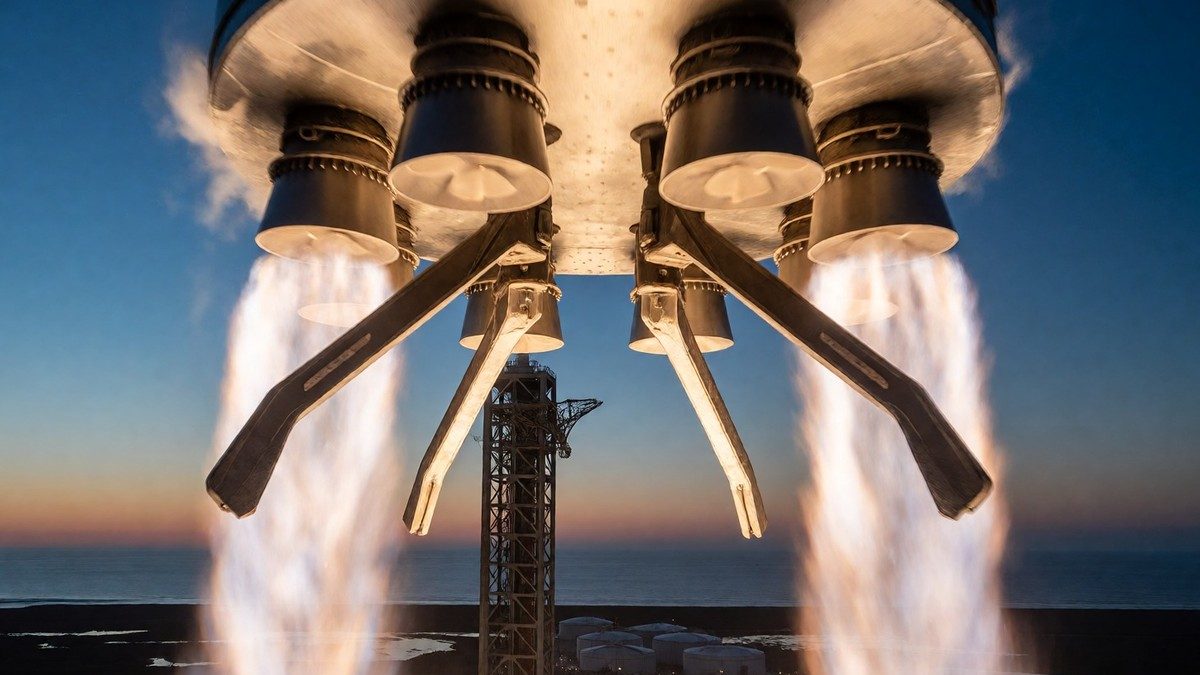
SpaceX successfully caught the Super Heavy booster using the "Mechazilla" mechanical arms, also called "chopsticks," during the fifth and seventh test flights. These maneuvers bring the booster back to the launch tower to avoid ocean landings. This capability remains inconsistent. During the 15th test flight, the 124-meter-tall rocket’s booster diverted to the ocean and exploded after an automated abort triggered during its return. The Ship stage successfully deployed 26 Starlink satellites before the booster failed its catch attempt six and a half minutes after launch. In the 12th flight, five of the 33 Raptor engines failed to re-ignite during the descent, which caused the Super Heavy booster to plunge violently into the Gulf of Mexico and explode on impact. The FAA noted that erroneous engine alarm system settings contributed to that return failure. One test flight in August saw a massive test stand explosion that sent debris into Mexican territory. These setbacks show the technical difficulties of the program. The company continues to refine the catch method to improve turnaround. Earlier, an engine ignition problem caused a launch abort just seconds before liftoff, which stopped the rocket before it could leave the pad. During the fifth flight, which launched at 7:25 AM CST from Starbase, Texas, the Starship performed a controlled reentry and soft splashdown in the Indian Ocean and hit its target zone with precision. This flight demonstrated improved aerodynamic control and the effectiveness of the "flip maneuver" during descent.
Thermal protection and structural limits
The Starship upper stage survives atmospheric reentry using thousands of ceramic tiles that withstand temperatures of up to 2,600°F. The steel body of the spacecraft handles heat better than the aluminum used in previous programs. During certain tests, engineers observed heat affecting the flap hinge areas. The hexagonal shape of the tiles helps prevent hot gas from moving through gaps in the shield. You should realize that the current design still requires modifications to the flap positions to prevent damage. SpaceX also tests aluminum-wrapped tiles and transpiration cooling, which uses water and methane to cool areas where erosion occurs. The vehicle also carries a secondary ablative heat shield below the tiles to provide extra protection.
| Component | Specification/Result |
|---|---|
| Starship Height | 52 meters |
| Super Heavy Height | 71 meters |
| Max Reentry Temperature | 2,600°F |
| Raptor Engines (Booster) | 33 |
Can the company achieve same-day reuse without replacing the entire heat shield?
Launch frequency and mission goals
SpaceX targets a turnaround time of less than one hour for the Super Heavy booster. While Falcon 9 boosters achieved a 21-day turnaround, the company intends to move much faster with Starship. The 124-meter-tall rocket is ready for missions to the Moon and Mars. The Starship upper stage carries payloads such as the 26 Starlink satellites. The 13th flight carried 20 Starlink satellites to test deployment and laser communication technology. NASA expects to use Starship to land astronauts on the Moon by 2028, with the Artemis III mission planned for summer 2027. SpaceX aims to launch uncrewed missions to Mars as early as 2026. The program requires massive investment, with over $15 billion spent on development to date. NASA monitors the program closely because Starship development remains necessary for the Artemis lunar landing. SpaceX is building the Star Factory at Starbase to increase production. The company aims to build hundreds of Starships annually to support frequent flights. The 10th test flight in August featured a 71-meter-tall Super Heavy booster and a 52-meter-tall Starship upper half. Blue Origin also designs vehicles for reuse, having demonstrated the first reuse of its New Shepard booster in 2016.