Carl Pei started Nothing in 2020 to rethink product design. He leads the company alongside Jesper Kouthoofd, the Creative Lead, and Tom Howard, the Head of Design. The design team includes Adam Bates, a former Dyson designer. They partner with Stockholm-based Teenage Engineering, the design house behind the Ikea Frekvens collection. The team draws inspiration from Massimo Vignelli’s subway maps to clarify complex systems. They also cite childhood nostalgia for transparent tech, such as the Gameboy, as a reason for their clear back panels. You probably already know that transparency reveals the internal hardware. Jesper Kouthoofd says the vision for Nothing creates excitement regarding how the identity translates into product design. Akis Evangelidis, the Head of Marketing, notes that modern tech design feels cold and fails to trigger excitement. The design team works with engineers to show interesting components by changing the manufacturing process so that the more than 400 individual parts inside a smartphone become very clearly visible to the end user. Pei aims for a distinct and iconic design language to avoid the lack of coherence seen in other manufacturers.
Hardware details and technical specs
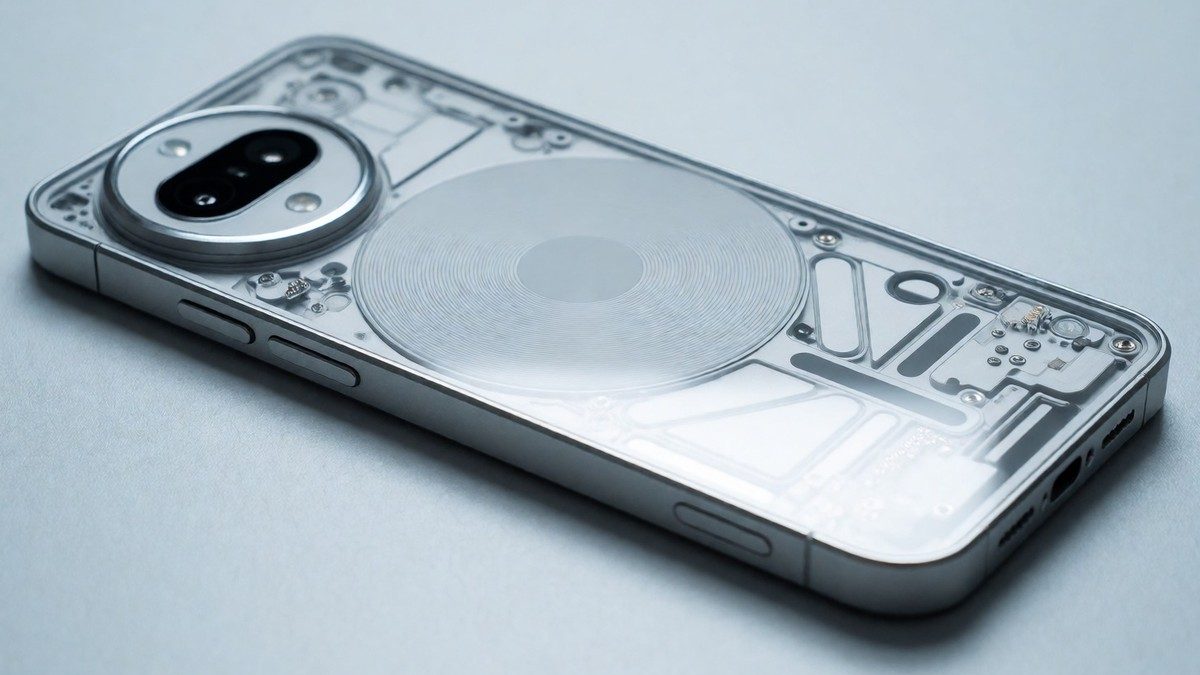
The Phone (1) uses a 100 percent recycled aluminum frame and over 50 percent bio-based or recycled plastic components. Its design shows the internal components through a transparent back. The Phone (3a) Pro adds a circular camera module and a periscope telephoto lens. This camera module accommodates the lens without disrupting the sleek form factor. The design team also worked to include a fourth glossy button on the right side for added usability. The Phone (1) design resembles the Nothing Ear (1) earbuds.
| Feature | Phone (1) | Phone (3a) Pro |
|---|---|---|
| Processor | Qualcomm Snapdragon | Not specified |
| Camera | Dual rear | Triple rear |
| Frame Material | 100% Recycled Aluminum | Not specified |
| Interface | Glyph interface | Redesigned Glyph interface |
The Phone (3) might include a 6.78-inch flexible LTPO AMOLED panel with a 120 Hz refresh rate and 3,000 nits of peak brightness. This upcoming flagship could use a Snapdragon 8 Elite chip and 12 GB of RAM. It may also include a 50 MP triple rear setup, a 32 MP front-facing camera, and a 5,000 mAh battery. The Phone (1) relies on a Qualcomm Snapdragon processor and wireless charging. The company also announced a community crowdfunding campaign where 20,000 individuals expressed interest to invest almost $30 million.
User feedback and design shifts
The Glyph interface uses light strips to signal charging progress or the arrival of an Uber. This system works on the back of the device to reduce distractions. However, some consumers find the Phone (3a) series design "fugly" and a "massive flop" compared to the earlier models. These buyers think the new look resembles cheap Chinese phone brands. The company also faces confusion regarding its product naming, specifically with the Nothing Ear, Nothing Ear 2, and Nothing Ear G series. Does the brand lose its identity when it adopts circular camera housings like Xiaomi or Vivo? The company attempts to solve user issues like the lack of included chargers by proposing a soft bundle option. This option allows customers to buy a charger at a reduced rate. The design team also considers user feedback on monochromatic icons to encourage mindful interaction. The company originally sold the Phone (1) through the O2 network in the UK, Flipkart in India, and Telekom Deutschland in Germany. The company also teamed up with StockX to auction the first 100 serialised units of the Phone (1) with proceeds going towards a community-managed fund. The Glyph interface also provides a way to signal calls and notifications.