Sizing Errors
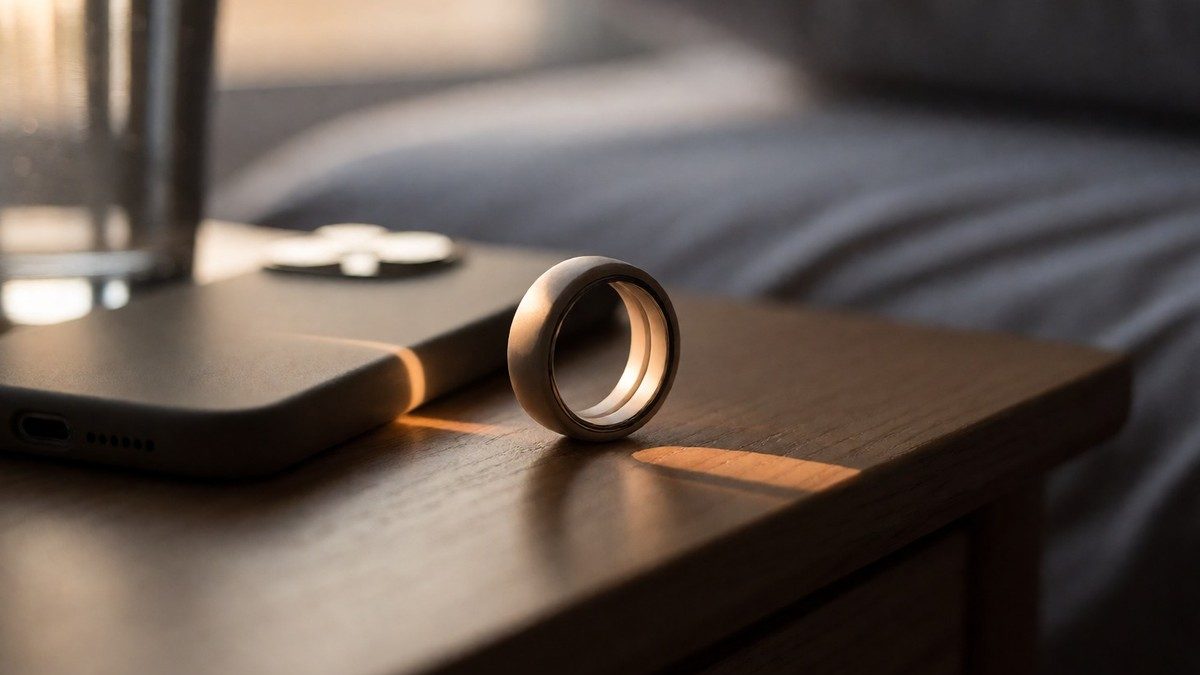
Users often fail to account for weight fluctuations when they buy a Galaxy Ring; this makes the device useless if they lose mass. A loose ring produces inaccurate measurements, as seen when a user’s heart rate dropped to 100 bpm on the ring while a Polar chest band registered 150 bpm. This same user only recorded two or three sleeps per week and only 60% of their steps. Because the Galaxy Ring’s concave design bends inwards, it stays more comfortable on swollen fingers than the Oura Ring, which provides less pressure and less indentation during the hot summer months when fingers swell. You should use the Samsung sizing kit to avoid this mistake, as you already know how much fit matters. Most users find that sizes above 10 are hard to find in stock. If you buy a size 13, which is roughly equivalent to a UK Z1/2, and your finger is actually larger, you will face immediate frustration. I have seen that wearing the ring on a wedding finger can lead to woeful accuracy, so you should stick to the index finger as Samsung recommends. I find it frustrating that the ring’s battery life was only two days for one user before a warranty replacement.
Smartwatch Rivalry
The competition between the Apple Watch Ultra 3 and the Samsung Galaxy Watch Ultra 2 involves high prices and rugged builds. The Samsung Galaxy Watch Ultra 2 costs $699.99, while the Apple Watch Ultra 3 costs $799. Samsung’s watch reaches 5,000 nits of brightness, which exceeds the 3,000 nits on the Apple model. Samsung’s watch also has a 1.5-inch Super AMOLED display and a 47mm frame.
| Spec | Samsung Galaxy Watch Ultra 2 | Apple Watch Ultra 3 |
|---|---|---|
| Price | $699.99 | $799 |
| Display Brightness | 5,000 nits | 3,000 nits |
| Battery Life (AOD on) | 60 hours | 42 hours |
| Connectivity | 4G LTE | 5G and Satellite |
Apple provides 5G and satellite connectivity, which allows users to contact emergency services or family members when they lack cellular service. The Apple Watch Ultra 3 has a 49mm case and uses a rotating digital crown and two buttons to scroll lists, whereas the Samsung watch relies on taps and swipes. Apple also integrates gestures better, such as the double-pinch action to answer calls or play music. Samsung’s watch monitors sleep apnea and snoring, whereas the Apple Watch Ultra 3 detects signs of sleep apnea. The Apple Watch Ultra 3 tracks sleep stages more accurately than the Samsung Galaxy Watch Ultra 2, which occasionally produces data gaps during the night. Samsung’s watch also provides a custom running coach, body composition measurements, and daily energy scores. The Samsung Galaxy Watch Ultra 2 managed 69.5 hours of battery life in testing, which beat the 63 hours recorded for the Apple Watch Ultra 3. The Apple Watch Ultra 3 has a 1.9-inch LTPO3 OLED display. I find the Apple Watch Ultra 3 superior for sleep, while the Samsung Galaxy Watch Ultra 2 is the better value for outdoor enthusiasts.
Future Updates
Samsung plans to release sizes 14 and 15 for the Galaxy Ring 2 to accommodate users with larger fingers. Current models only go up to size 13. This expansion addresses complaints from users who find the existing range too small. One user, Daniel Rotar, required hospital assistance to remove a swollen ring after a crack in the internal moulding caused it to clamp his finger. Samsung stated that this incident does not indicate a wider battery safety risk. Rumors suggest the Galaxy Ring 2 may arrive in August 2025 with a thinner design and improved AI functionalities. This new version could offer a battery life that exceeds seven days. The current Galaxy Ring costs $399 and has recently expanded its availability to Mexico. The size 14 will have a 23mm interior diameter, and the size 15 will have a 23.8mm interior diameter. Will the new, larger sizes solve the fundamental accuracy issues?