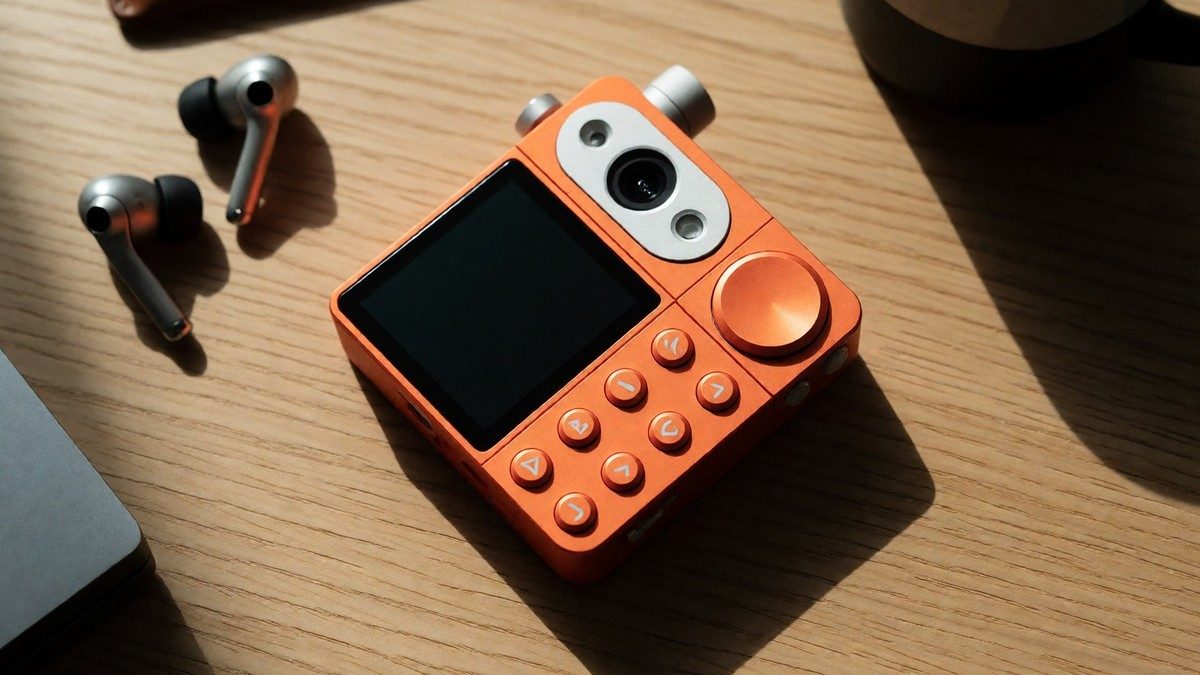
The Rabbit R1 costs $199 and ships with a one-year subscription to Perplexity Pro, a plan that normally charges $20 per month. This bundle includes access to advanced LLMs like GPT-4 for the first 100,000 units. The device measures 78mm by 78mm by 13mm and weighs 115g, fitting comfortably in your palm. It runs on a MediaTek MT6765 octa-core processor clocked at 2.3GHz, paired with 4GB of RAM and 128GB of storage. The hardware design is a collaborative effort with Teenage Engineering, featuring a walkie-talkie-like square shape in vibrant orange. You get a 2.88-inch touchscreen, a rotating camera, a control wheel, and speakers. The system relies on a "Large Action Model" rather than a standard language model. This architecture acts as a universal controller for various apps. It does not replace your smartphone but functions as a dedicated AI-powered personal assistant. Jesse Lyu, the CEO, confirms the device is intended to complement your phone, not replace it immediately. The first batch of 10,000 units sold out in a single day, beating internal targets by 20x. Pre-orders are still open, with delivery dates estimated between April and May 2024. Early birds who snagged the initial batch received their devices as early as March. The rapid sell-out speaks volumes about consumer interest in this new category.
Understanding the Large Action Model
The core innovation is the Large Action Model, which trains through direct human interaction with popular apps like Spotify and Uber. Instead of developing numerous APIs, Rabbit taught the model to recognize functionalities and apply its knowledge across various platforms. This approach allows the R1 to manage tasks such as playing music, ordering a car, or buying groceries via a single interface. The screen displays category-based cards for different functions, primarily serving to confirm the model’s output. A dedicated training mode lets users tailor interactions with specific commands. For example, you can teach the device to remove watermarks in Photoshop in just 30 seconds. Once learned, the R1 applies this autonomously in future tasks. The adaptability makes the R1 a tool capable of accommodating various user interfaces. It learns from and interacts with new applications, extending functionality beyond pre-installed apps. The Verge noted that while some tasks run directly on the R1, a web portal called Rabbit Hole handles service access. Teaching complex applications involves using Rabbit’s virtual machines, which may present challenges for diverse users. I find this reliance on external portals slightly limiting for a pocket-sized companion. However, the ability to automate specific workflows without coding is a clear advantage over traditional assistants. The model understands context better than simple voice commands. It anticipates needs based on usage patterns. You can ask it to play a specific playlist or send a message without navigating menus. The response time can be slow, especially for complex queries. Waiting over 30 seconds for a McDonald’s order is frustrating. But the accuracy improves with each update. Over 30 software updates have been released since launch. These patches have fixed bugs and added features like multi-language translation. The return rate is below 5% on over 100,000 units shipped. This indicates customers are happy once they adjust to the workflow. The device connects via Bluetooth 5.0, 2.4G/5G WiFi, and 4G LTE. You need Wi-Fi or LTE connectivity for the device to answer questions. Pairing with your phone in hotspot mode works well on the go. Entering the Wi-Fi password initially is a chore due to the tiny keyboard. But the touchscreen works in landscape mode. The push-to-talk button activates voice interactions. There is no "always listening" feature, which protects privacy. The camera defaults to a position that physically blocks the lens. This security measure builds trust.
Competing with Apple and Perplexity
Rabbit’s collaboration with Perplexity enhances the R1’s capabilities significantly. Perplexity provides live, up-to-date answers without any knowledge cutoff. This sets the R1 apart from standard large language models. Aravind Srinivas, co-founder of Perplexity, confirmed the integration during a live broadcast. The partnership offers advanced functionality without needing a separate subscription. In contrast, Apple Intelligence has faced criticism for its lack of deep app integration. Jesse Lyu described Apple’s approach as "trying to put a car engine on the back of a horse." He argues that Siri cannot execute actions with third-party apps effectively. You cannot ask Siri to order Diet Coke and expect it to arrive at your door. The R1 can do this because its agent navigates the web directly. Rabbit also released an AI agent called intern, accessible via a web browser. Intern can make websites, apps, or book meals. It produces formatted reports with colorful bar charts and line graphs. This capability extends beyond the physical device. You don’t need the R1 to use intern. The first three tasks with a new rabbithole account are free. Lyu believes no other company can replicate this next-level experience. He cites the unique architecture built from scratch. Jony Ive and Sam Altman’s upcoming wearable device lacks a screen entirely. Rabbit has already solved many problems these new devices will face. The R1 remains the only device with a built-in general web agent. You can save cookies on Amazon and ask for another pack of Diet Coke. No other platform allows this level of autonomy. The competition is fierce, but Rabbit holds a distinct advantage. The device is still selling and being actively developed today. Unlike the Humane AI Pin, which vanished from sale, the R1 persists. Its impact on the tech landscape is just beginning. Can it truly reshape our relationship with technology? Only time will tell.