Funding and leadership
Niklas Kohler, Torsten Reil, and Gundbert Scherf lead Helsing, a German company that recently raised $1.8 billion to reach an $18 billion valuation. General Catalyst led the Series C round. Other participants included Elad Gil, Accel, Saab, Lightspeed, Plural, and Greenoaks. Jeannette zu Furstenberg, MD and Head of Europe at General Catalyst, ranks Helsing as a vertical AI category leader in the defense industry. The startup develops AI software for weapons, vehicles, and military strategy. This includes electronic warfare for fighter jets and satellite signal intelligence. Helsing maintains activity in Ukraine since 2022 and established the Defence Manufacturers Alliance with the Ukrainian government. The company holds contracts for the German Eurofighter Electronic Warfare upgrade with Saab and AI infrastructure for the Future Combat Air System with the HIS consortium. The founders described the new investment as urgent. They believe speed is essential for democratic societies to deter and defend. The funds allow the company to invest in large-scale R&D and capabilities across all domains to protect European sovereignty.
The drone procurement conflict
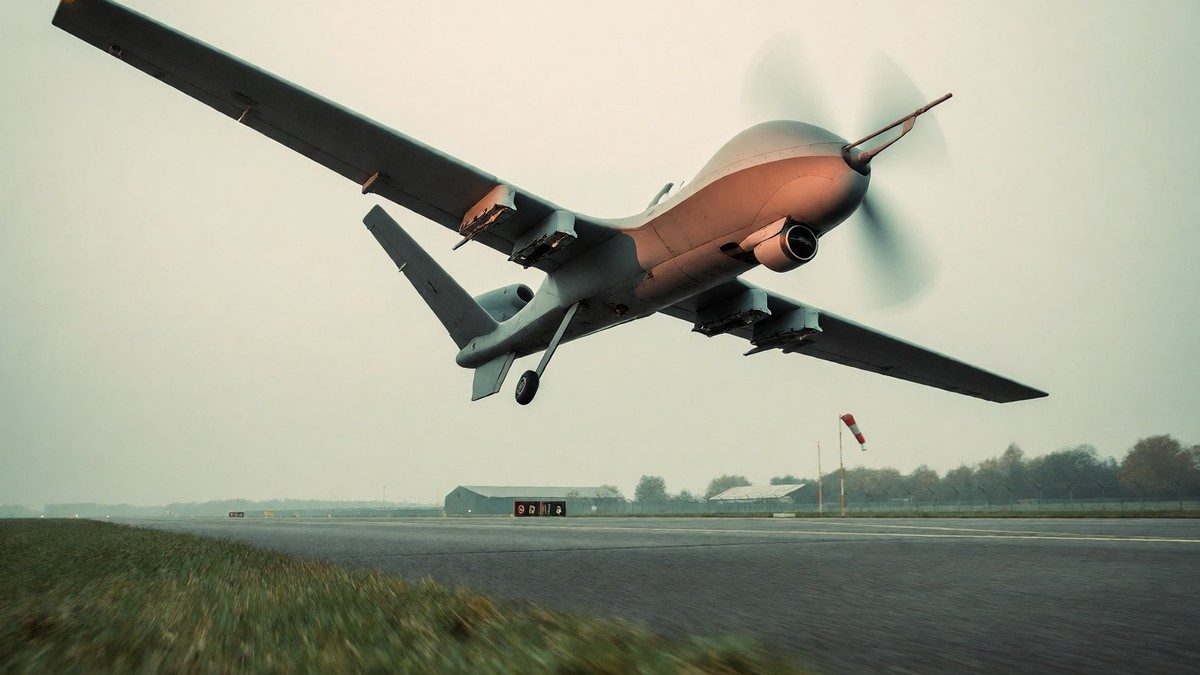
France canceled the Eurodrone and Safran Patroller programs on April 8, 2026, to prioritize cheaper, agile uncrewed systems. This shift follows observations from the conflict in Ukraine and the Middle East regarding the vulnerability of expensive platforms to sophisticated air defense. The decision reallocates resources from large-scale Medium-Altitude Long-Endurance platforms toward expendable, attritable technology. Germany approved a 3 billion euro contract for the Eurodrone project involving Airbus, Dassault, and Leonardo. The German military expects 21 drones, 12 ground control stations, and four simulators by 2030. These will replace Israel Aerospace Industries models used in Afghanistan and Mali. NATO Secretary Mark Rutte criticized the current defense cost ratio, noting that shooting down drones costing only a few thousand dollars with missiles costing half a million or even a million dollars creates a completely unsustainable long-term solution. You already know that modern attrition favors low-cost systems over expensive, single-use interceptors. The Eurodrone features a wingspan of 30 meters and a length exceeding 15 meters. It stays in flight for more than 24 hours at heights of 13,000 meters to monitor ground conditions with radar and infrared sensors. The European Drone Defense Initiative aims to set up a multi-layered network and expects to start in early 2026.
| Program/Capability | Manufacturer/Partner | Details |
|---|---|---|
| Eurodrone | Airbus, Dassault, Leonardo | 21 drones, 2030 delivery |
| HX-2 Strike Drone | Helsing, EURENCO | Swarm-compatible, GNSS-denied |
| Eurofighter Upgrade | Saab, Helsing | Electronic warfare focus |
HX-2 and sovereign capabilities
Helsing and EURENCO signed a Memorandum of Understanding to provide sovereign European warheads for the HX-2 strike drone. This platform operates in both GNSS and communications-denied environments and remains swarm-compatible. Frank Dirksen, Chief Commercial Officer at Helsing, stated that armed forces cannot depend on platforms with supply chains they do not control. The HX-2 provides scalable strike capabilities designed to meet French operational requirements. EURENCO provides high-performance Modular Explosive Warheads to reduce dependence on non-European suppliers. The partnership seeks to build resilient warhead supply chains across Europe. Global supply chains for propellants and explosives face severe strain, with lead times of 12 to 24 months. Thierry Francou, CEO of EURENCO, stated that a sovereign strike capability requires mastering both the digital and the physical domains. The HX-2 drone is designed to be swarm-compatible and highly scalable. Will the European Drone Wall meet its 2027 functional target?