

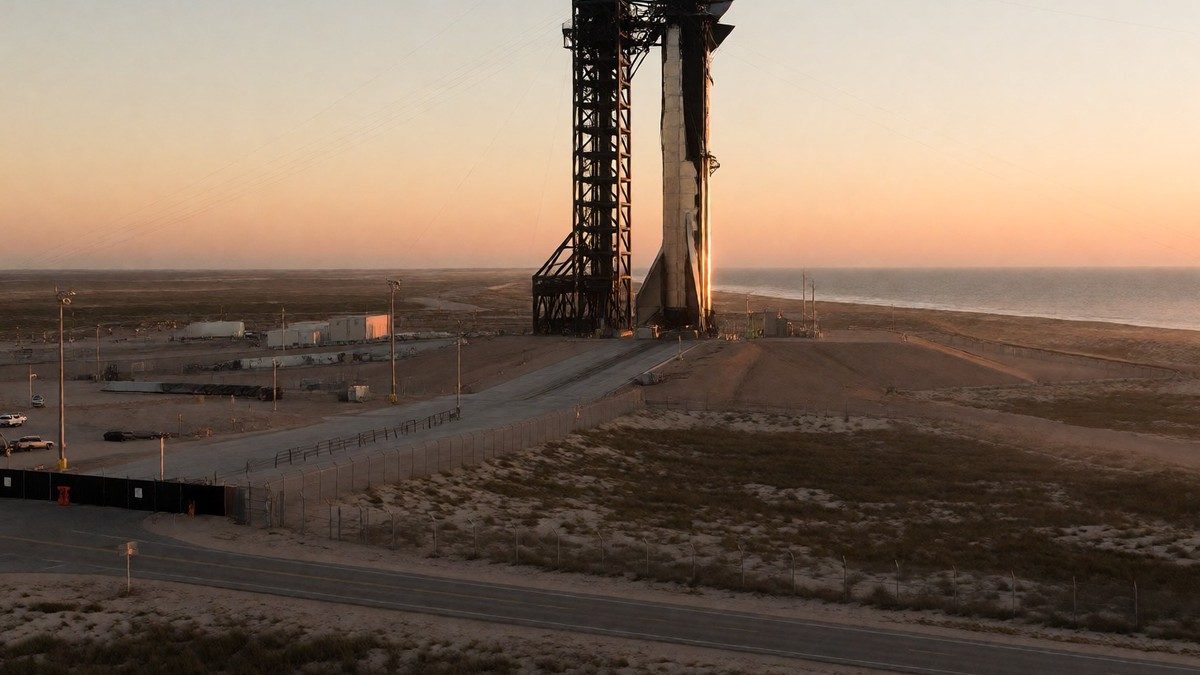
NASA restructured the Artemis program in February 2026, moving the first crewed lunar landing from Artemis III to Artemis IV in 2028. This change converts the Artemis III mission into a 2027 low-Earth-orbit rendezvous and docking test using test versions of SpaceX’s Starship HLS and Blue Origin’s Blue Moon. The decision follows reports that SpaceX falls behind schedule on the Human Landing System. NASA Administrator Jared Isaacman noted that the agency is willing to fly with whichever lander is ready in late 2027. This leaves the mission timeline susceptible to the technical delays currently affecting SpaceX’s Starship development.
Payload capacity shortfall threatens the mission architecture
Elon Musk disclosed that Starship faces a 50% underperformance in the payload it can deliver to orbit. While the official Starship Payload Users Guide states the baseline reusable design can deliver over 100 metric tons to Low Earth Orbit, Musk noted that Flight 3 would deliver only 40 to 50 tons. This shortfall directly impacts the refueling requirements for the Artemis program. The Starship HLS needs to receive fuel from multiple tanker launches in Earth orbit to reach the Moon.
If SpaceX can only launch 50 tons of propellant to orbit per tanker, it needs 30 launches to refuel a single lunar lander. This figure does not account for propellant lost to boil-off during the staging process. A single lunar mission requires between 8 and 19 tanker flights depending on boil-off and payload performance. If the payload mass stays low, the number of required tanker flights increases. This creates a feedback loop where more launches increase the probability of a single launch failure.
The probability of mission success correlates with the number of launches in a refueling campaign. If a mission requires 20 launches and each launch has a 98% success rate, the total mission success probability drops to 67%. High launch cadences remain a major hurdle because SpaceX must coordinate with the FAA for every launch. Current operations at Boca Chica and Florida require environmental reviews and additional paperwork that restrict the ability to fly a tanker every few days.
| Component | Specification / Detail |
|---|---|
| Starship Height | 408 feet (Version 3) |
| Starship Diameter | 9 meters |
| Starship Payload (Current) | 40 to 50 metric tons |
| Starship Payload (Target) | Over 100 metric tons |
| Starship Propellant Capacity | 1,200 to 1,500 metric tons |
| Tanker Requirement | 8 to 19 launches per mission |
Cryogenic propellant transfer remains unproven at scale
Transferring liquid oxygen and liquid methane between vehicles in microgravity is the single biggest unproven element of the HLS architecture. While NASA and SpaceX have flown internal-tank transfer demonstrations, a full ship-to-ship cryogenic transfer at operational scale has not been publicly demonstrated as of mid-2026. This process requires managing fuels that stay below -244 degrees Fahrenheit. In microgravity, these fuels form floating blobs that require settling thrust to stabilize the liquid for transfer.
The Starship HLS relies on a pressure-fed propellant transfer system using settling thrusters to create 0.001G of artificial gravity. This pressure differential forces propellant from a second vehicle into the first. SpaceX plans to demonstrate this ship-to-ship transfer using upgraded Version 3 Starships. This demonstration was originally planned for March 2025, then delayed to March 2026, and remains unscheduled as of September 2026.
Boil-off management poses a second technical threat. Every day the depot waits for a tanker or the HLS waits for Orion in Near-Rectilinear Halo Orbit, the mission loses propellant. The HLS architecture depends on active cooling and insulation to keep boil-off down to a few percent per month. If boil-off rates run high, the mission requires more tankers, which stretches the schedule and increases the risk of propellant loss.
Technical bottlenecks in engine and vehicle development
The Starship HLS requires Raptor engines to relight reliably after long cryogenic soaks. The HLS variant adds methalox landing thrusters near the top of the vehicle to avoid kicking up regolith during final descent. These thrusters represent a new system that must work for both descent and ascent burns. Engine relight after extended cold soak is a known hard problem.
SpaceX faces competing priorities between its Starlink satellite business and the Starship HLS program. The new Starship Version 3 will be needed to launch more capable revenue-producing Starlink V3 satellites while simultaneously creating fuel depots and the HLS. This creates a scheduling conflict between commercial satellite deployment and government lunar development.
The development of Starship Version 3 remains a primary dependency for the 2026 refueling tests. Version 3 will be larger and more powerful than previous iterations. If the Version 3 launch schedule slips, the ability to demonstrate the necessary orbital refueling capabilities also slips. This delay impacts the entire Artemis timeline because NASA requires a demonstrated propellant transfer before approving crewed flights.
Surface operations and crew safety risks
The Starship HLS is roughly 50 meters tall. The crew habitat sits near the top, while the lunar surface is at the bottom. This height presents significant challenges for crew ingress and egress. The current design uses a mechanical elevator to transport crew and cargo from the airlock to the surface. This elevator must work reliably in lunar gravity on a sloped, dusty, and potentially cratered surface.
The HLS must remain stable on whatever ground it lands on. Landing a 50-meter vehicle tilted at 5 to 10 degrees creates a much more difficult operational environment than the squat Apollo Lunar Module. The HLS variant uses elevated thrusters to place the plume impingement point higher above the surface to avoid regolith damage. However, the vehicle must still manage the physics of landing on unprepared terrain.
NASA’s Office of Inspector General found that gaps remain in testing posture and crew survival analyses. If the landers encounter a catastrophic event, NASA lacks the capability to rescue stranded astronauts from the lunar surface or space. The agency remains responsible for ensuring crew safety despite using a firm-fixed-price contract approach. The OIG report notes that while SpaceX and Blue Origin face technical difficulties, NASA must still monitor financial costs and safety gaps.
Budgetary shifts and program uncertainty
The White House proposed deep cuts to NASA’s science budget, requesting a 47% reduction in science funding and a 23% cut to the agency’s overall top line. While the administration requested a $1 billion boost for the Artemis program, the cuts to science programs create uncertainty. The Planetary Society stated that these cuts undermine milestones like the near-completion of the Nancy Grace Roman Space Telescope.
The budget also leaves the replacement of the International Space Station in limbo. NASA’s new plan involves partnering with a company to attach a new module to the existing station, but the White House proposal suggests slashing the ISS budget by $1.1 billion. This creates uncertainty for commercial partners who lack financial incentives to build a new orbital laboratory.
The Artemis program’s funding remains tied to the ability of NASA to manage many moving parts across different contractors. The program relies on a distributed launch architecture because no single rocket can perform the whole job. This requires funding for the Space Launch System, the Orion capsule, and the various commercial landers. When the administration proposes significant changes to the agency’s priorities, it creates disruption for the workforce.
Comparison of landing architectures
The two primary contractors for the Human Landing System utilize different propulsion and structural designs. SpaceX uses a methalox system, while Blue Origin uses a hydrolox system.
| Feature | SpaceX Starship HLS | Blue Origin Blue Moon MK2 |
|---|---|---|
| Propulsion | Methalox (CH4/LOX) | Hydrolox (LH2/LOX) |
| Primary Engine | Raptor | BE-7 |
| Height | Approximately 50 meters | Approximately 16 meters |
| Structure | 304L Stainless Steel | Aluminum and composites |
| Mission Target | Artemis IV (2028) | Artemis V (2030) |
| Crew Capacity | Multiple astronauts | Four astronauts |
The Blue Moon MK2 is a single-stage reusable lander. Its use of liquid hydrogen provides high specific impulse but introduces high complexity regarding hydrogen storage. Hydrogen has a very low boiling point, making it susceptible to boil-off. Blue Moon uses advanced cryocoolers and multi-layer insulation to maintain propellant in a liquid state.
Schedule delays and mission dependencies
The NASA Aerospace Safety Advisory Panel (ASAP) warned that the Starship HLS could be years late for the Artemis III mission. ASAP members noted that the HLS schedule is significantly challenged. The panel has recommended that NASA reevaluate the high number of individual risks and mission firsts associated with the program.
The mission timeline relies on several independent components that must all succeed. If the tanker cadence falls short, the depot cannot be filled, and the crew must roll to a different launch window. If a tanker fails during ascent, the replacement vehicle and schedule slip. If the Orion-HLS docking encounters issues, the mission could be shortened or aborted.
The development of Axiom Space’s AxEMU suits also presents a risk. Suits are historically a long pole in human spaceflight programs. The delivery schedules for both the HLS and the lunar spacesuits are deemed aggressive by ASAP. Any delay in the delivery of these programs places the planned lunar landing in jeopardy of postponement.
Can SpaceX solve the payload underperformance and the propellant transfer problem fast enough to meet the 2028 target? The success of the Artemis program depends on the ability to execute a coordinated campaign of over 30 tanker flights, a task that remains technically and logistically daunting.