Wayve’s $8.6 billion valuation follows a $1.5 billion investment from companies including Microsoft, NVIDIA, and Mercedes-Benz. This capital supports the deployment of the AI Driver technology through a partnership with Stellantis and Uber. Stellantis builds L4-ready platforms for driverless operations, while Wayve provides adaptive end-to-end AI driving software and Uber manages the mobility network. The companies plan to launch commercial robotaxi trials in London and Tokyo this year. This strategy bypasses the need for Wayve to build its own vehicles, as the software works on existing production models. I believe this hardware-agnostic model provides a faster route to global scaling than building a proprietary fleet. Stellantis designs vehicles with embedded sensor suites to meet the safety and redundancy needs of high-utilisation driverless services. This collaboration uses the Uber app to connect riders to autonomous trips, focusing on markets in Europe and North America. Wayve also works with Nissan to bring its AI Driver to consumer vehicles. Wayve, founded in 2017, uses its AV 2.0 approach to build a system that learns behavior from real-world experience.
Comparing end-to-end and hybrid driving models
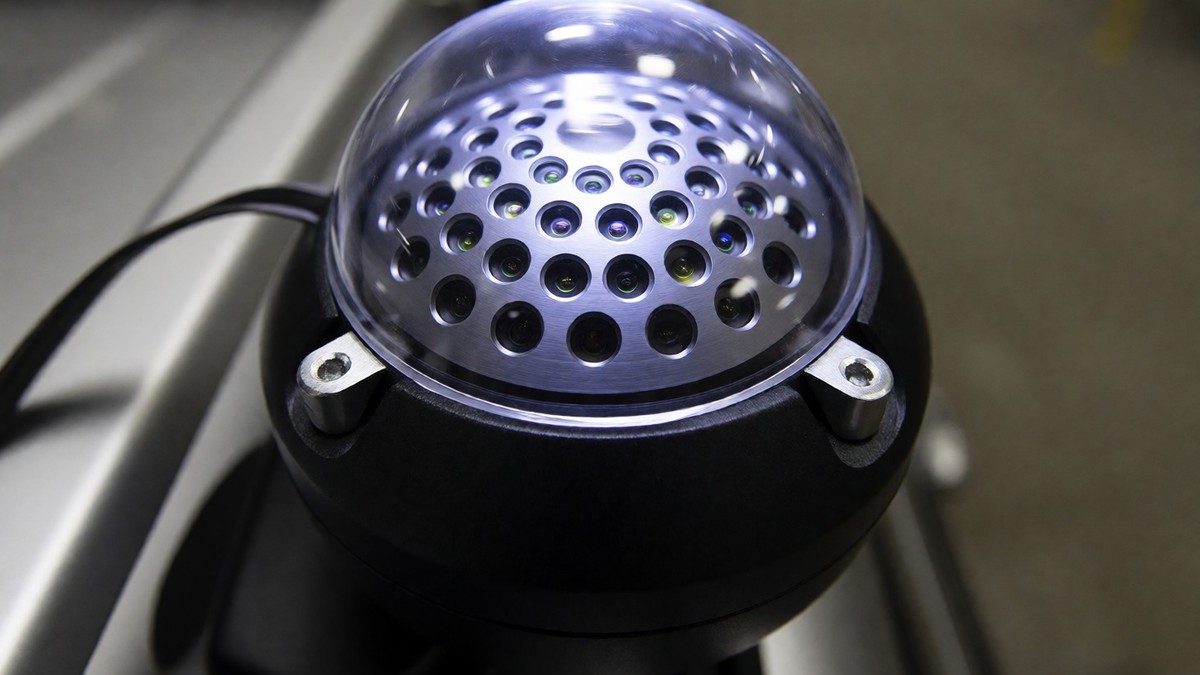
The rivalry between Wayve and Tesla centers on end-to-end neural networks. Wayve’s AV 2.0 system learns driving behavior from real-world data, which allows it to work in new cities without pre-mapped routes. Tesla also uses an end-to-end architecture, but its system relies on eight cameras and lacks the redundancy of LiDAR. Tesla uses a Lane and Object HydraNet to detect objects and an Occupancy Network to build 3D voxels from camera data. Waymo uses a hybrid architecture that combines a sensor fusion encoder with a vision-language model trained on Gemini. Waymo uses 29 cameras, 6 RADARs, and 5 LiDARs to create a three-dimensional view. This sensor fusion allows Waymo to match LiDAR distance measurements to specific camera pixels to locate objects precisely. Waymo’s hybrid model uses a sensor fusion encoder to break the scene into individual objects like pedestrians and fire hydrants, while the vision-language model considers the entire scene as a whole. I would skip the Tesla approach if I needed the redundancy of 29 cameras and 5 LiDARs to ensure safety in bad weather. Tesla’s vision-only approach struggles in fog or snow. Waymo’s "fast-thinking" sensor fusion module handles latency-critical scenarios, while its "slow-thinking" vision-language model uses world knowledge to understand complex semantic scenarios. Waymo’s research includes the EMMA model.
| System | Architecture | Sensor Suite |
|---|---|---|
| Wayve AV 2.0 | End-to-end neural networks | Hardware-agnostic |
| Tesla FSD | Vision-only end-to-end | 8 cameras |
| Waymo | Hybrid (VLM and sensor fusion) | 29 cameras, 5 LiDAR, 6 RADAR |
The commercial roadmap for embodied AI
Wayve intends to bring its software to consumer vehicles by 2027. The company aims to scale autonomy by using existing production vehicles instead of custom-built hardware. Uber leverages its global network to connect riders to these autonomous trips via its app. The partnership with Stellantis and Wayve targets deployment in Europe and North America. This model works because Wayve does not require city-by-city mapping or extensive re-engineering for every new location. Wayve’s approach focuses on embodied AI that learns from its environment by processing data from various sensors. This allows the software to adapt to different driving cultures and road rules. Wayve’s co-founder, Alex Kendall, notes that the system gathers data to train neural nets and build public trust. End-to-end systems use imitation learning to achieve competency and reinforcement learning to improve on edge cases. These unified learned policies attempt to replace the traditional sense, perceive, plan, and control stacks used in modular systems. Uber also plans to expand its autonomous presence in 15 additional cities over the next five years through partnerships with companies like WeRide. Do you think the simplicity of a monolithic end-to-end model can eventually outperform a hybrid system with specialized modules?