

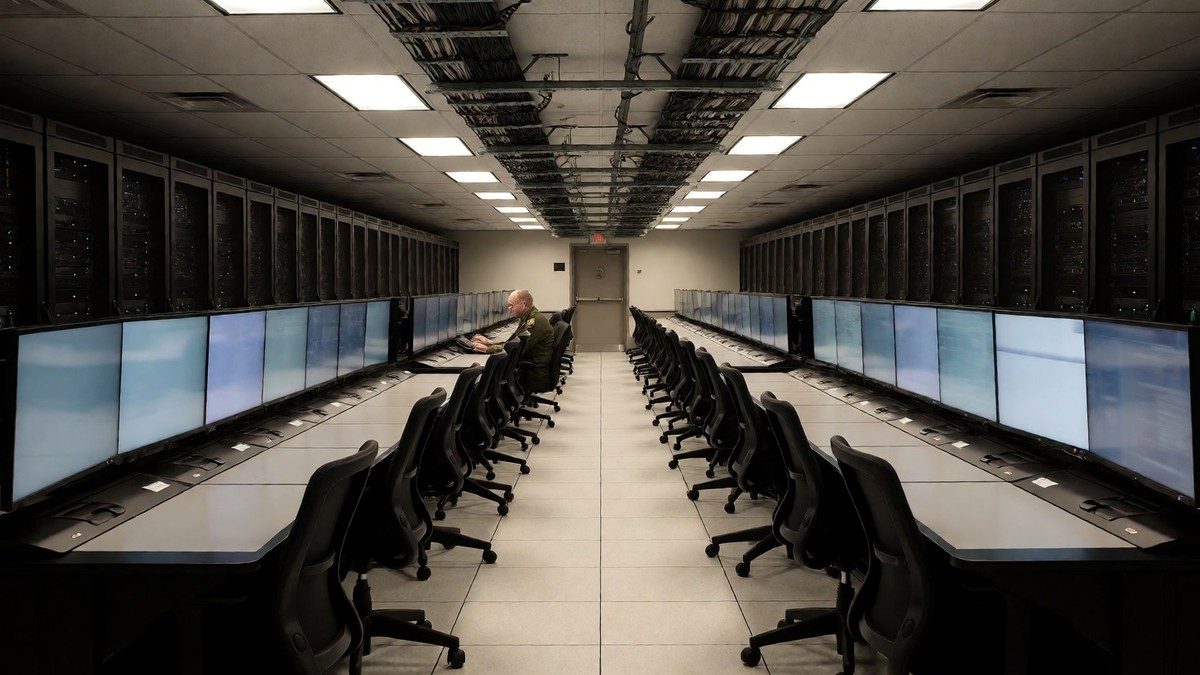
The Pentagon AI chief reported that the Maven Smart System processed 13,000 targets in 38 days during this year’s Iran campaign. The software fuses satellite imagery, drone feeds, radar, and intercepted communications into a single interface to propose candidate targets. This scale creates a dangerous margin for error. On February 28, 2026, the first day of that campaign, a strike hit a girls’ elementary school in Minab, Iran. Preliminary Pentagon reviews indicated that outdated coordinates incorrectly listed the school as part of an adjacent military compound. The Pentagon raised the Maven Smart System contract ceiling to $1.3 billion in May 2025 to meet demand. I find this operational failure a direct consequence of the pressure to compress hours of analysis into minutes. This speed amplifies the impact of a single bad record before human analysts catch the error. Will the Pentagon publish the Minab investigation in full?
Complexity and the FedRAMP transition
The July 4, 2026, implementation of the FedRAMP Consolidated Rules creates a heavy compliance hurdle for Palantir. The new rules replaced the term "continuous monitoring" with "ongoing certification" and changed how providers manage vulnerability detection. Palantir must manage the transition from Rev5 to the 20x standard before the June 2027 deadline, a process that requires updated documentation for all cloud service offerings. You already know that military data environments require extreme precision. Palantir’s architecture requires massive engineering investment because the platform relies on building a digital model of an organization’s real-world objects through the Ontology. This deployment model assumes the availability of specialized technical resources that many users lack.
| Feature | Specification |
|---|---|
| Army framework ceiling | $10 billion |
| Army agreement term | 10 years |
| Maven target usage | 13,000 targets |
| Minab strike date | February 28, 2026 |
The US Army also uses the Vantage platform to manage unified data. In February 2026, over 200 Soldiers participated in the Vantage Edge competition to redesign the interface. The platform manages a $458 million unified data management contract. The US Army also awarded a $178.4M OTA for TITAN in March 2024 for 10 AI-enabled ground-station prototypes. These requirements mean that Palantir’s military deployment depends on the Army’s ability to maintain complex, heterogeneous data ecosystems.
Sovereignty risks and contract concentration
European governments now challenge the growing dependence on Palantir. On June 16, the French prime minister announced that the domestic intelligence service would replace Palantir with a French firm to avoid reliance on a single supplier, while Germany remains split over letting federal police use the software. I see the US Army’s decision to fold 75 separate contracts into one $10 billion agreement as a dangerous concentration of leverage. This single contract creates uneven revenue recognition and makes the company vulnerable to US budget fluctuations. Palantir’s government segment accounted for 54% of its $4.5 billion FY2025 revenue. This heavy reliance on a few large agencies limits the company’s ability to maintain growth if political leadership shifts.
Germany’s Federal Constitutional Court ruled in February 2023 that automated police data-analysis powers in Hesse were unconstitutional. The court found these powers violated the right to informational self-determination by permitting dragnet analysis by association through automated methods. This legal precedent creates ongoing tension for Palantir’s Gotham deployment across German states like Bavaria and Baden-Wurttemberg, complicating expansion in regions like Bavaria. In Baden-Wurttemberg, the state signed a contract in March 2025 for approximately €25 million, with deployment beginning in Q2 2026. The GFF filed a Bavaria/VeRA constitutional complaint on 23 July 2025. I find the company’s expansion into these markets risky when the legal environment remains unsettled. The US business grew 104% year-over-year in Q1 2026, but this growth relies on the same concentrated government spending.