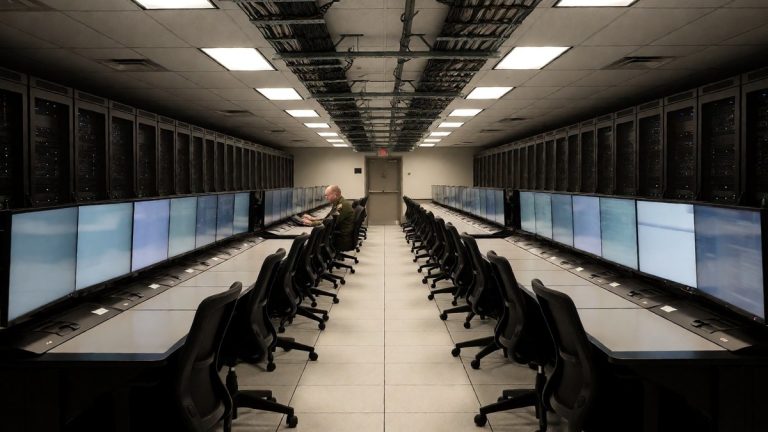


Scale AI secured a $500 million contract from the Pentagon to expand its military AI capabilities, a massive increase from the $100 million agreement the company signed in 2025. This deal follows Defense Secretary Pete Hegseth’s directive to accelerate weapons technology acquisition and move the military toward a wartime footing. Scale AI already participates in the Defense Innovation Unit’s Thunderforge initiative and President Donald Trump’s Golden Dome homeland defense project. The company works with the Chief Digital and Artificial Intelligence Office to embed AI into military planning.
The expansion carries technical risks. AI errors in combat can misidentify civilians as targets or overlook genuine threats, which undermines mission objectives and obligations under the laws of war. Commanders may defer to algorithmic recommendations instead of verifying targets independently. In Gaza, inaccuracies in AI-generated intelligence about militant locations informed strikes that killed scores of civilians. Furthermore, the Pentagon has curtailed efforts to test major weapons systems and assess civilian harm risks, making it harder to ensure AI-augmented systems work without excessive collateral damage.
| Contract Detail | Value |
|---|---|
| 2025 Pentagon Contract | $100 million |
| 2026 Pentagon Contract | $500 million |
The massive scale of these defense projects relies on a workforce that faces significant legal and financial instability. Scale AI agreed to a $12.5 million settlement to resolve a class action lawsuit filed by former Contributor Steve McKinney. The lawsuit alleged that Scale AI misclassified its workers as independent contractors rather than employees in violation of California labor law. The complaint claimed Scale AI exercised "Orwellian" control by using software to take periodic screenshots of computers and docking pay when tasks ran longer than estimates. The settlement fund covers individuals who worked as Contributors for Scale AI, Smart Ecosystem, or through HireArt while residing in California between December 10, 2020, and February 28, 2026.
Scale AI also faces allegations regarding the psychological toll on its workers. A lawsuit from Outlier workers claimed they received disturbing prompts involving violence and abuse without adequate psychological safeguards. In Kenya, ninety-seven workers wrote to the American president in May 2024 to describe conditions they compared to modern-day slavery. Scale AI moved to disband labeler organizing in Kenya in 2024. You might wonder if these labor disputes will halt the rapid delivery timelines the Pentagon demands.
The company’s business model faces a fundamental contradiction between its growth and the nature of the expertise it buys. Scale AI builds its value by purchasing the judgment of highly credentialed professionals to train models that eventually replace those same experts. Mercor, a competitor, pays more than $4 million daily to contractors to help make their own jobs obsolete. In July 2026, The New York Times reported on the scale of this operation. Professional contractors, such as physicians or physicists, often find that the models they train absorb their expertise within a week.
The economic stability of this workforce depends on the scarcity of skill, but AI makes expertise ubiquitous. When a professional’s judgment becomes codified into a model, the scarcity that underwrote their high wages evaporates. An arXiv paper published in April 2026 by researchers at the Max Planck Institute for Intelligent Systems and the Tubingen AI Center proves that platforms can pay only a vanishing share of what labor is worth. As more workers join a platform, the fraction of the true cost the buyer must pay dwindles toward nothing. This creates a squeeze where tasks become more intense as the work becomes more futile. Will the military rely on data labeled by a workforce facing such extreme economic volatility?