Tiny models outperform giants on small hardware
Hugging Face released SmolVLM-256M and SmolVLM-500M to analyze images, short videos, and text on constrained devices like laptops with less than 1GB of RAM. These models contain 256 million and 500 million parameters. By using The Cauldron, a collection of 50 high-quality image and text datasets, and Docmatix, a set of file scans paired with detailed captions, the Hugging Face M4 team trained these new multimodal models. Both SmolVLM models outperform the much larger Idefics 80B on the AI2D benchmark, which tests the ability of models to analyze grade-school-level science diagrams. These models can describe video clips and answer questions about PDFs, including scanned text and elements within charts. I find the efficiency of these small models useful for developers who need to process large amounts of data cheaply. The models provide versatility for lightweight visual tasks. They use an Apache 2.0 license for unrestricted use.
Reasoning struggles in the small scale
The competition between Google’s enterprise models and Hugging Face’s edge models centers on reasoning capabilities. Gemini 3.1 Pro reached 77.1% on the ARC-AGI-2 test, marking a 148% increase over the 31.1% score of Gemini 3 Pro. This performance gap separates high-end models like the 150B parameter Gemini Ultra from the SmolVLM family. Gemini 3.1 Pro also produces animated SVGs directly from text prompts, which Jiao Sun from Google DeepMind says helps UX designers transcend pixel constraints. This visual understanding capability exceeds the performance of GPT-5.2, which scored 92.4% on the GPQA Diamond science reasoning test. A study from Google DeepMind, Microsoft Research, and the Mila research institute found that many small models perform worse than expected on complex reasoning tasks. These researchers speculated that smaller models recognize surface-level patterns in data but struggle to apply that knowledge in new contexts. Gemini 3.5 Flash also shows strength by ranking #1 on APEX-Agents-AA, outperforming larger models. Gemini 3.5 Flash even replaced a custom vision pipeline for lane and car reasoning using a single multimodal API call. Gemini Live also supports many languages, including French, German, Portuguese, Hindi, Japanese, Korean, and Portuguese.
| Model | Parameter Count | Primary Use Case |
|---|---|---|
| SmolVLM-256M | 256 Million | Edge vision/text |
| SmolVLM-500M | 500 Million | Edge vision/text |
| Gemini Nano | Not specified | Mobile devices |
| Gemini Ultra | 150 Billion | Enterprise reasoning |
Deploying vision models on mobile browsers
I tested SmolVLM-256M-Instruct using Transformers.js and a WebGPU backend to run inference directly in a mobile browser. The implementation loads three 4-bit quantized models: the vision encoder, the embedding table, and the decoder. One run with fp16 precision produced a detailed description of the Statue of Liberty, including its pedestal, the calm water, and the surrounding buildings. This higher precision improves results, but it increases runtime and space requirements. Does the increase in latency justify the better descriptions for most mobile users?
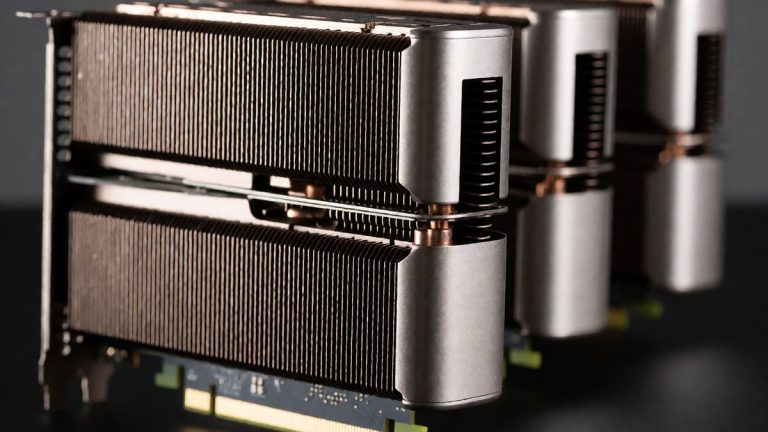
Developers often use ONNX-RUNTIME to abstract a target device from the library used to build the model. This approach works well on Apple Silicon, where MLX builds outpace generic GGUF. Red Hat released an FP8-quantized Qwen3-VL-235B-A22B-Instruct that achieves 50% reduction in GPU memory and maintains 99.6% accuracy. Huawei also developed SINQ, a post-training quantization scheme that works 30x faster than AWQ. NVIDIA also launched a 5nm chip that delivers 40% faster processing to help meet the global demand for AI hardware. In the same space, NVIDIA’s Gated DeltaNet-2 at 1.3B parameters outperforms KDA and Mamba-3 on language modeling and commonsense reasoning. Local deployment of Qwen3.8-27B reaches 206 tok/s on a single RTX 5090.