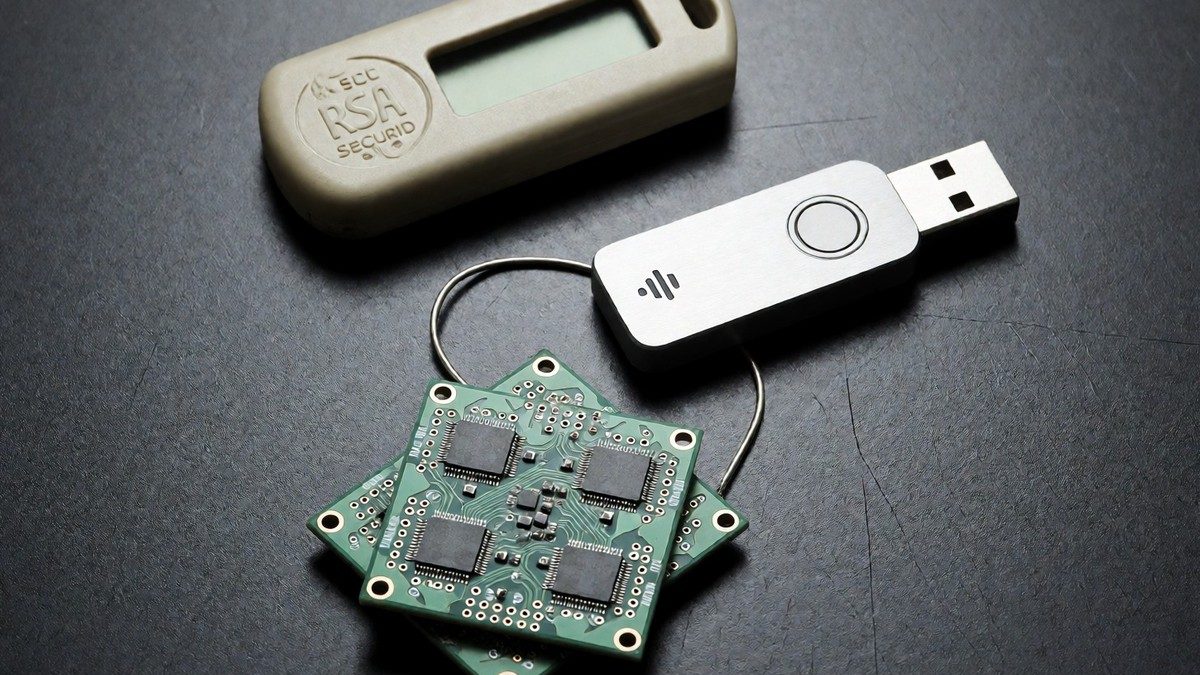
Dell Technologies agreed to sell its RSA Security business to an investor consortium led by Symphony Technology Group (STG) for $2.075 billion. This consortium includes the Ontario Teachers’ Pension Plan Board and AlpInvest Partners. The deal includes RSA Archer, RSA NetWitness Platform, RSA SecurID, RSA Fraud and Risk Intelligence, and the RSA Conference brand. Dell Technologies COO Jeff Clarke stated the sale allows Dell to simplify its business and product portfolio, though analyst Dave Vellante argues the move helps Dell pay down debt from its $67 billion acquisition of EMC Corp in 2017. I find the focus on liquidity over a prominent cybersecurity asset a blunt move by Dell.
The sale places RSA under new leadership as the industry faces a massive shift in cryptographic requirements. NIST finalized FIPS 203, 204, and 205 in August and October 2024, establishing ML-KEM, ML-DSA, and SLH-DSA as the approved post-quantum algorithm suite. Nation-state actors currently use a "harvest now, decrypt later" strategy, collecting encrypted data to decrypt once quantum computers become capable. This makes any secret transmitted using RSA or ECC vulnerable. NIST IR 8547 designates RSA and elliptic curve cryptography for deprecation, setting a 2030 deadline for RSA-2048 in new systems and pointing toward a 2035 retirement for legacy systems.
| Algorithm | Standard | Purpose | Key Size | Security Level |
|---|---|---|---|---|
| ML-KEM-1024 | FIPS 203 | Key Encapsulation | 1,568 bytes | NIST Level 5 |
| ML-DSA-65 | FIPS 204 | Digital Signatures | 3,293 bytes | NIST Level 3 |
| SLH-DSA-SHA2-128s | FIPS 205 | Stateless Hash Signatures | 8,496 bytes | NIST Level 1 |
| AES-256 | Existing | Symmetric Encryption | 256 bits | Quantum-safe |
| SHA-384/512 | Existing | Hashing | 384/512 bits | Quantum-safe |
The technical pressure of NIST migration
The industry must move toward lattice-based cryptography because no known efficient quantum algorithm can solve the problem of finding short vectors in high-dimensional lattices. In 2026, the migration reaches a critical stage where US federal contractors must use these NIST-approved algorithms. The NSA’s Commercial National Security Algorithm Suite 2.0 recommends these standards and expects vendors to show FIPS-203 compliance to compete for National Security Systems contracts starting in 2027. Browsers like Chrome 128+, Firefox 132+, and Safari 18+ already support hybrid key exchange, combining X25519 with ML-KEM-768 to protect connections if a post-quantum algorithm fails.
The transition requires a complete Cryptographic Bill of Materials (CBOM) to map every asset, algorithm, and key size across an estate. Organizations should prioritize long-lived secrets like TLS certificates and encrypted backups because these face the highest risk from data harvesting. If you rely on RSA-2048 or ECDSA P-256, you are behind. High-priority targets include code signing and firmware, where SLH-DSA and ML-DSA provide necessary protections for devices with long operational lives.
Implementation timelines and risk
The timeline for migration follows specific government and regulatory anchors. The NSA mandates the full retirement of RSA and ECDH/ECDSA from US National Security Systems by 2033. The UK’s National Cyber Security Centre set a phased timeline for critical infrastructure, with Phase 1 discovery ending in 2028 and full migration targeted for 2035. Organizations must manage the complexity of root CA replacement, a process that takes twelve to eighteen months.
| Browser | PQ KEM Support | PQ Signatures | Default? |
|---|---|---|---|
| Chrome 128+ | ML-KEM-768 (hybrid) | ML-DSA-65 | Yes |
| Firefox 132+ | ML-KEM-768 (hybrid) | ML-DSA-65 | Yes |
| Safari 18+ | ML-KEM-768 | ML-DSA-65 | Yes |
| Edge 128+ | ML-KEM-768 (hybrid) | ML-DSA-65 | Yes |
The Mosca inequality suggests that if a cryptographically relevant quantum computer arrives in 2033, a complex enterprise needs four to six years to finish migration. This means the window for safe movement closes between 2025 and 2027. Using hybrid key exchange provides immediate protection for traffic from the point of deployment, but it does not protect data already stored by adversaries. Does the current pace of hardware IP development for these new standards satisfy the needs of low-resource devices? Organizations must establish crypto-agility to swap primitives without rewriting application logic.