Addressing identity threats
Microsoft addressed 1,411 new security flaws during its October Patch Tuesday. This follows a massive rise in credential theft, where infostealer malware infected 7.4 million endpoints and resulted in 1.7 billion stolen credentials between January and June 2026. I see why organizations need more than just login-time authentication. Groups like ShinyHunters use vishing to bypass modern push-based MFA, including number matching, by guiding victims to select specific numbers on phishing pages. These attackers gain access to Okta SSO dashboards and subsequently access Microsoft 365, Google Workspace, and Salesforce. The group ShinyHunters specifically targets Salesforce as a primary interest, but they also target other enterprise platforms. Device code phishing also allows attackers to capture access and refresh tokens, which they then use to access email or cloud storage without a password. Because threat actors now weaponize exploits with unprecedented speed, security teams must move past simple authentication to detect active threats like session hijacking or anomalous changes in device posture during a user’s active session. Recent vulnerabilities like the Palo Alto PAN-OS RCE (CVE-2026-0322) or the Cisco Secure Email Gateway flaw (CVE-2026-76519) show how attackers gain root privileges through specialized attachments. The SonicWall SMA1000 SSRF (CVE-2026-102255) and Citrix Netscaler memory overflow (CVE-2026-107406) show attackers target management interfaces. The phishing kits used in these attacks often include web-based control panels that allow attackers to manipulate authentication flows in real time and relay stolen credentials to Telegram channels.
Continuous monitoring with Okta AI
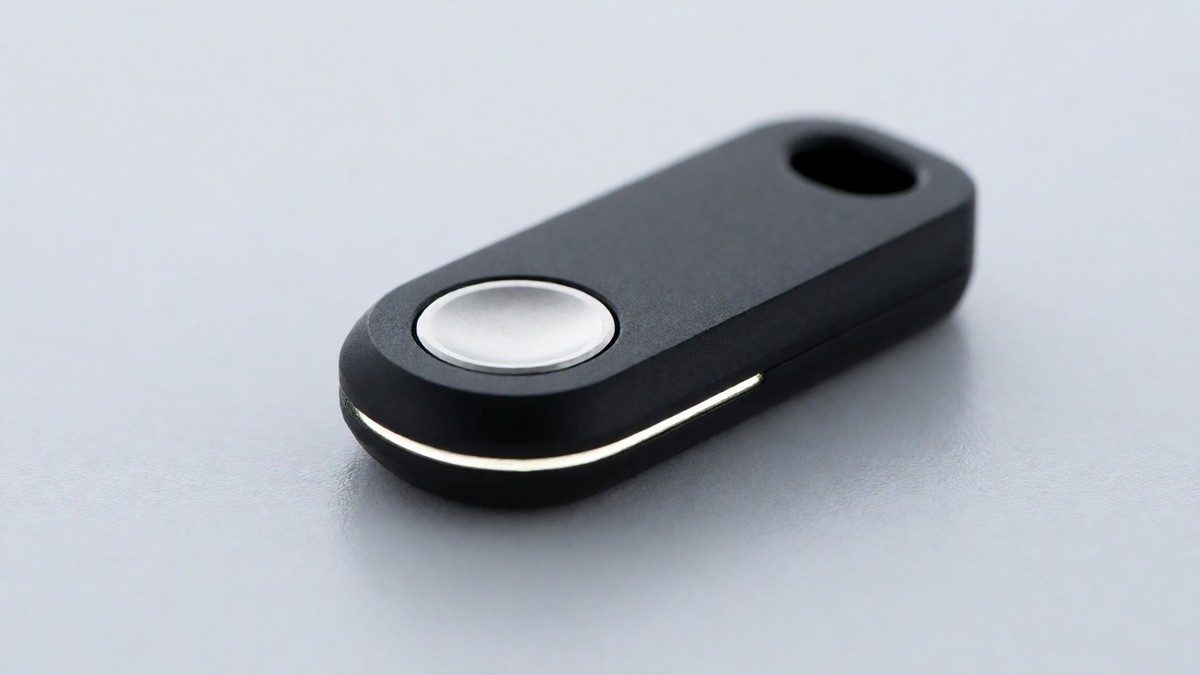
Okta Identity Threat Protection uses Okta AI to analyze millions of signals in real time. This tool extends security to any time a user remains logged in, which addresses risks like session hijacking and Adversary-in-the-Middle attacks. When the system detects an anomalous change in device posture or IP address, it triggers "Adaptive Actions" such as session revocation or requiring re-authentication. I find the ability to execute a "Universal Logout" across supported applications to be the most effective way to neutralize active threats. The product integrates with partners like CrowdStrike, Jamf, Netskope, and Zscaler through a standards-based event pipeline to amplify threat visibility. You know how traditional MFA often fails once a session is hijacked. Okta protects against credential theft by using phishing-resistant methods like Okta FastPass and FIDO2 security keys. A user reported that they experienced a lot of false positives when they first onboarded the product, though they eventually fine-tuned their policies to resolve the issue. Okta’s risk engine enables Adaptive MFA and Bot Detection to protect users without adding unnecessary friction.
| Feature | Function |
|---|---|
| Continuous Risk Evaluation | Enforces policies during active sessions |
| Shared Signals Pipeline | Amplifies visibility across security tools |
| Adaptive Actions | Triggers logout or MFA prompts |
Automation and posture management
Okta Identity Governance delivers a 211% ROI according to a Forrester study by automating access reviews and enforcing least privilege. Identity Security Posture Management (ISPM) helps administrators find and fix security gaps by scanning for misconfigurations and over-privileged access. Automated offboarding prevents "orphan accounts" by syncing with HR systems to revoke access the moment an employee leaves. This process prevents former employees from accessing sensitive company data or systems. For companies managing complex environments, Okta provides automated remediation for identity misconfigurations like stale accounts. Organizations like Xactly use automated remediation for identity misconfigurations, including excess privileges and stale accounts, to reduce risk. I see that this automation saves thousands of IT hours. Using Okta Workflows, administrators can automate the remediation of security posture risks. The 20,000 customers relying on Okta benefit from the visibility provided by continuous identity-based risk discovery. Okta currently manages roughly 20,000 customers and holds $4.15 billion in remaining performance obligations. How will the system handle the upcoming surge of agentic AI threats?