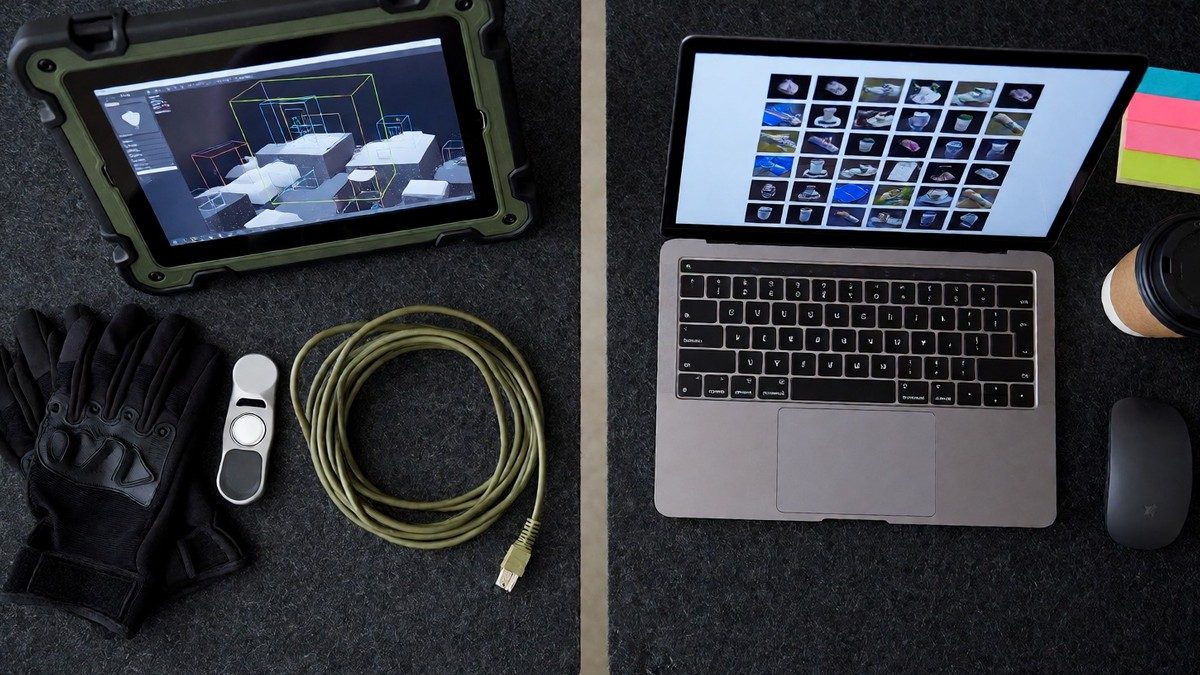
Defense and enterprise dominance
The Department of Defense Chief Digital and Artificial Intelligence Office awarded Scale AI a $500 million contract in May 2026, increasing a September 2025 agreement from $100 million to support essential military decision-support systems. This expansion focuses on AI integration within defense workflows and decision-support services. Scale AI maintains a $29 billion valuation following a June 2025 Meta investment of $14.3 billion for a 49 percent non-voting stake. Scale AI revenue reached $870 million in 2024 and nearly $1 billion in 2025, with expectations to top $1 billion in 2026. Scale AI wins the Pentagon contract race for high-stakes defense applications. Scale AI’s custom pricing excludes small teams that cannot meet its $15,000 annual minimum. Scale AI’s Python 3.9+ SDK allows engineers to automate quality checks and integrate with model training pipelines. Scale AI manages large-scale, complex projects for the defense sector, where its platform Scale Donovan turns unstructured data into actionable insights on classified networks. Scale AI’s founder Alexandr Wang remains on the board of directors as Francis deSouza serves as CEO. Scale AI coordinates a vast network of over 100,000 contractors to perform labeling tasks. Scale AI’s higher costs often deter smaller startups.
Labelbox workflow and accuracy
Labelbox manages the mid-market demand by providing an intuitive interface that non-technical annotators learn in hours. The company integrated AI agent technology into its Alignerr expert network following the February 2026 acquisition of Upcraft. Labelbox achieves 90-95 percent accuracy on standard 2D and video tasks with faster throughput for large image batches than Scale AI. Scale AI achieves 95-99 percent accuracy on 3D bounding boxes but processes 2D images more slowly due to quality checks. You should evaluate your engineering capacity before picking a vendor. The platform targets startups that need rapid prototyping and tight integration with existing ML pipelines. Scale AI treats labeling as an engineering problem, whereas Labelbox treats labeling as a workflow problem. The platform provides a free tier for 5 users and 10 projects, while its Pro tier costs $299 per user per month. It also integrates with Zapier, Make.com, and n8n to automate data flows. The company maintains a community of 10,000 members on Slack. It provides ontology management to define hierarchical labels and relationships in a visual editor. The system uses model-assisted labeling to allow humans to review pre-labeled images.
| Feature | Scale AI | Labelbox |
|---|---|---|
| Pricing Model | Custom / $15k-$50k mid-market | Freemium / $299 per user/month |
| 2D Accuracy | 90-95% | 90-95% |
| 3D Accuracy | 95-99% | 95-99% |
| Setup Time | 2-3 weeks | Hours |
Market competition and fine-tuning
The data labeling market exceeds $8.5 billion in 2026. Scale AI focuses on RLHF pipelines and programmatic control for autonomous vehicles and LLM fine-tuning. Labelbox focuses on rapid prototyping and model-assisted labeling for startups. A 2025 survey by AI Infrastructure Alliance found 68 percent of teams report labeling tool complexity as their top bottleneck. Scale AI contracts for enterprise deployments often exceed $200,000 per year, whereas Labelbox enterprise pricing typically starts around $10,000 per year. Scale AI wins the Pentagon contract race for high-stakes defense applications, but Labelbox wins the enterprise LLM surge for rapid prototyping teams. Scale AI lost OpenAI as a customer after the Meta deal, though Google resumed work with Scale AI in May 2026. Mercor and Surge AI are also closing the gap on Scale AI’s market position through rapid growth. Surge AI reported $1.2 billion in revenue in 2024. Snorkel AI remains a competitor by using programmatic labeling to reduce manual work through weak supervision. Does the higher accuracy of Scale AI justify the weeks of engineer training required for its steep learning curve?