Scaling autonomous systems across domains
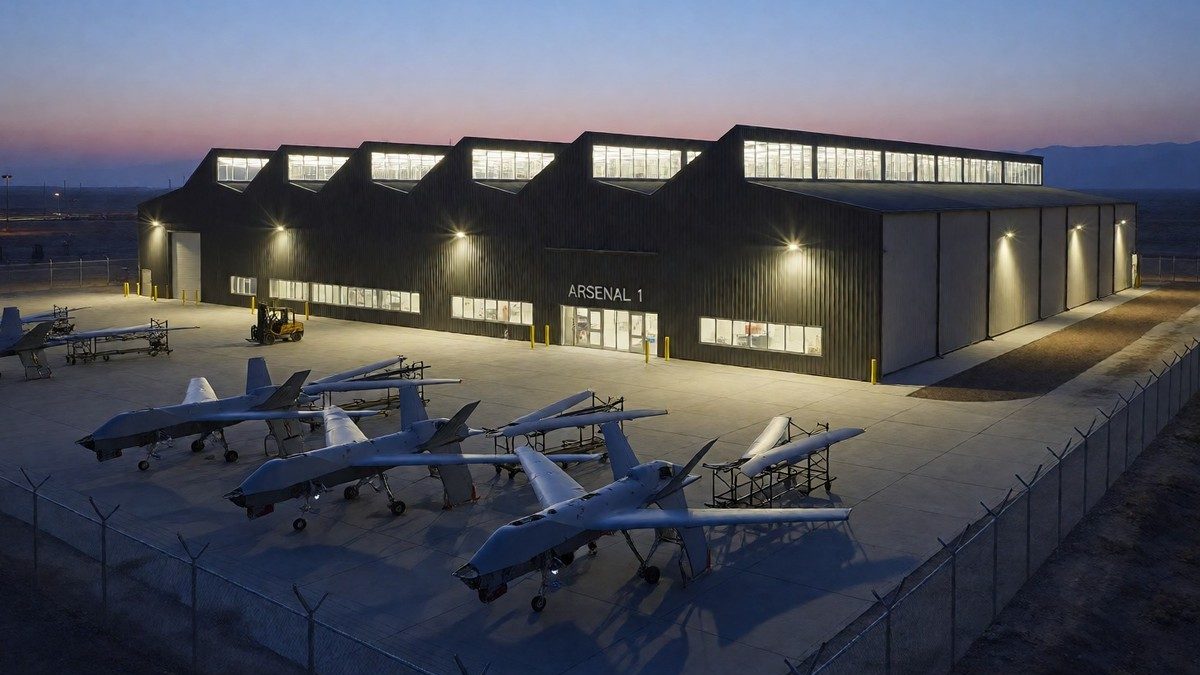
Andiril expands its defense footprint through the Lattice operating system, which connects sensors and autonomous platforms into a single command and control center. The company holds a $20 billion contract vehicle for federal buyers to purchase commercial products. This follows an $87 million award for the counter-UAS task force to use Lattice for distributed detection, tracking, and engagement of drone threats. In June 2026, the U.S. Air Force selected Andiril to manufacture the FQ-44 Collaborative Combat Aircraft. This production contract moves the program from the prototype stage into full scale manufacturing to extend the reach and awareness of crewed fighters. Andiril’s Arsenal-1 facility uses software defined manufacturing to switch between products using common machinery. The company also manages a $1.1 billion contract for Ghost Shark in Australia, where first production deliveries occurred in early 2026. Additionally, the Army awarded a $14.4 million supply contract for the Company-Level Small Uncrewed Aircraft System program, which includes Andiril’s Ghost X and PDW’s C-100 drones. The company also holds a $249.9 million contract to deliver more than 500 Roadrunner-M interceptors and Pulsar electronic warfare systems to address UAS threats.
| Program | Value | Product |
|---|---|---|
| Counter-UAS | $87 million | Lattice |
| Air Defense | $249.9 million | Roadrunner-M and Pulsar |
| SUAS Tranche 1 | $14.4 million | Ghost X and C-100 |
| IVAS | $159 million | Night vision system |
Security vulnerabilities challenge the NGC2 prototype
The Army chief technology officer labeled the NGC2 prototype, a collaboration with Palantir, as a "very high risk" system due to security vulnerabilities. The internal memo states that the platform allows any authorized user to access all applications and data regardless of clearance level or operational need. Because the system lacks logging to track user actions, the likelihood of an adversary gaining persistent undetectable access to the platform remains high. One hosted third party application revealed 25 high severity code vulnerabilities, while three other applications each contain over 200 vulnerabilities requiring assessment. The 4th Infantry Division tests these Lattice based capabilities through the Ivy Sting series of exercises. In the February 2026 Ivy Sting 4 exercise, the division added soldier vital sign tracking and electromagnetic jamming to the test. The Army chief technology officer stated that the current security posture of the platform and the hosted third party applications makes the likelihood of an adversary gaining persistent undetectable access very high. This risk assessment follows a $100 million award for Andiril to scale edge data integration services. The project follows rapid, iterative sprint cycles rather than traditional long acquisition phases. The program also aims to develop software that enables soldiers to intuitively relay reconnaissance intent to a team of autonomous sensors.
Software defines the new defense competition
Andiril engineers focus on building the Lattice C2 UI and Vehicle Interface to connect high level mission autonomy software with various robot platforms. Engineers utilize TypeScript, React, RxJS, C++, Rust, and Golang to design and maintain the frameworks that interact with Lattice OS. The company’s leadership, including Palmer Luckey and Brian Schimpf, positions Lattice to compete with Palantir’s Maven Smart System. While Palantir focuses on data analytics, Andiril emphasizes edge computing. The companies formed a consortium to combine Palantir’s data fusion with Andiril’s autonomy to solve data readiness issues. Lattice is designed to collapse the traditional find-fix-track-target-engage-assess kill chain by automating sensor management and tasking at the tactical edge through machine learning. The integration of Lattice into the Microsoft IVAS program provides soldiers with automated warnings about incoming airborne threats. You should watch how this partnership handles the massive data volumes generated by modern sensors. The rapid deployment of Lattice across diverse domains makes Andiril the primary driver of autonomous edge capability for the entire defense industry. Will the Army accept these security risks for the sake of speed?