
The faulty configuration update for the Falcon sensor software on July 19, 2024, forced 8.5 million Microsoft Windows devices into boot loops or recovery modes. This specific modification to a configuration file responsible for screening named pipes caused an out-of-bounds memory read in the Windows sensor client. The error resulted in an invalid page fault that rendered computers temporarily inoperable. I view this event as a massive failure in automated software deployment. The impact hit airlines, government agencies, banks, hospitals, and retailers.
The technical cause stemmed from a mismatch where the sensor expected 20 input fields but received 21. This error disrupted operations for nearly 60 percent of Fortune 500 companies and more than half of the Fortune 1000. While CrowdStrike reverted the content update within 78 minutes, the manual remediation process required significant labor. Technical staff had to reboot affected computers individually and enter 48-digit BitLocker recovery keys. This manual requirement slowed recovery for many organizations.
The massive gap in insurance coverage
The massive gap between the estimated $5.4 billion in direct losses for Fortune 500 companies and the projected insurance coverage of only $540 million to $1.08 billion leaves a multi-billion dollar hole in corporate balance sheets. Parametrix estimates that cyber insurance will only cover 10% to 20% of the total losses. I find the inability of current policies to cover 80% of these damages to be a systemic failure. Most companies face massive unrecovered losses because of large risk retentions and policy limits.
| Loss Metric | Value |
|---|---|
| Total Fortune 500 direct losses | $5.4 billion |
| Projected insurance coverage | $540 million to $1.08 billion |
The insurance market responded to the event with varying levels of capacity. Some carriers like Beazley offer business interruption coverage for system failures. A system failure means an unintentional and unplanned interruption of computer systems. This coverage helps retailers when a glitch takes point of sale systems offline. However, the duration of the outage and the length of policy waiting periods affect whether a claim succeeds. If a policy requires an 8 to 24 hour waiting period, a quick recovery might prevent a payout.
Aviation and the Delta Air Lines deficit
Airlines experienced the highest per-company costs following the outage. The average loss per airline exceeded $143 million. Delta Air Lines faced a $380 million revenue loss from the incident. This figure includes customer compensation in the form of cash and SkyMiles. Delta also reported a non-fuel-expense impact of $170 million. This amount stems from crew-related costs and customer-expense reimbursements.
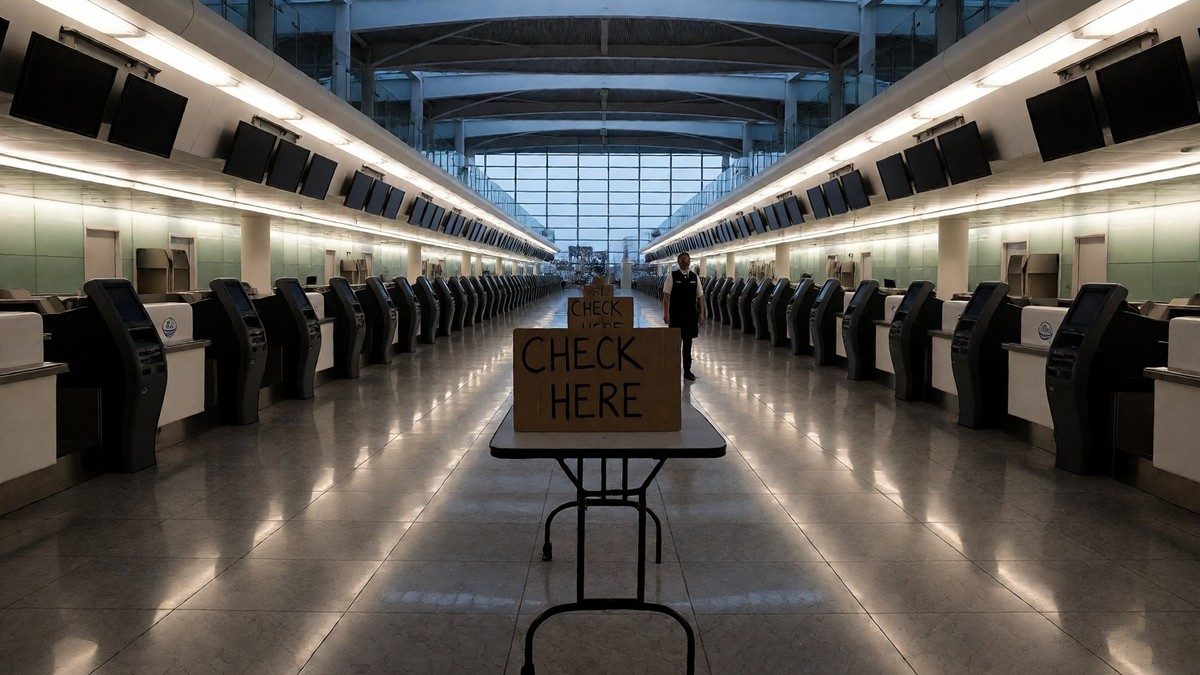
You already know that one faulty update can freeze an entire airport. The disruption at airports was widespread and global. In India, IndiGo cancelled 192 flights. Hong Kong International Airport experienced delays during check-in. Staff at Hong Kong Express used handwritten signs to direct passengers. Singapore Changi Airport saw issues with self-checkin kiosks, which forced airlines to switch to manual processes.
| Industry Sector | Estimated Direct Loss |
|---|---|
| Healthcare | $1.94 billion |
| Banking | $1.15 billion |
| Airlines (average per company) | Over $143 million |
The aviation sector saw significant flight cancellations. Global data showed 5,078 flights, or 4.6 percent of scheduled flights, were cancelled in a 72-hour period. Delta Air Lines struggled more than other carriers because more than half of its systems ran on Windows. The U.S. Department of Transportation opened an investigation into Delta after these cancellations.
Healthcare and banking sector losses
The healthcare sector experienced $1.94 billion in losses. The banking industry suffered $1.15 billion in direct losses. These figures show how the outage hit different industries with varying intensity. The healthcare sector saw the biggest impact among industries. Three quarters of Fortune 500 healthcare companies faced impacts.
The UK National Health Service also felt the impact. The outage hit the Emis Web GP IT system. This prevented general practitioners from accessing medical records, appointment schedules, and prescription information. In India, the Ministry of Civil Aviation ordered airlines to provide food and seating to waiting customers.
Banks and card payment systems scrambled to respond to customers who could not access accounts online. The outage affected financial services across Europe, the Middle East, and Asia. Many organizations had to manage the fallout of interrupted digital transactions. The financial services industry remains a top target for adversaries, which adds layers of risk to these outages.
The financial stability of CrowdStrike
CrowdStrike reported a revenue of $1.059 billion for the quarter ending in early 2026. This represents a 25 percent increase compared to the previous year. The company reached an ending Annual Recurring Revenue of $5.25 billion for FY2026. This growth represents a 24 percent increase. Net new ARR grew by 24 percent to $5.25 billion. I find the 97 percent gross retention rate hard to trust because it only exists because CrowdStrike issued credits and discounts through its Customer Commitment Package to prevent customers from leaving.
The company used the Customer Commitment Package to mitigate the impact of the July 2024 outage. This program provided discounts and credits to customers. These credits impacted the company’s margins. Net new ARR for the quarter was $224 million, which is a step down from the $282 million seen the prior year.
| Financial Metric | FY2026 Value |
|---|---|
| Total Revenue | $4.78 billion |
| Ending ARR | $5.25 billion |
| Net New ARR | $1.01 billion |
| Gross Retention Rate | 97% |
CrowdStrike’s Falcon Flex subscription model also grew. Falcon Flex ARR reached $1.69 billion, which is a 120 percent increase. This model allows enterprises to expand module usage without fixed bundles. The company maintains a strategy of platform consolidation. Customers adopt more modules to make the platform harder to displace.
Regulatory mandates and insurance compliance
New federal and international regulations changed the insurance landscape in 2026. The Cyber Incident Reporting for Critical Infrastructure Act, or CIRCIA, is now live. This law requires covered entities in 16 critical infrastructure sectors to report qualifying incidents on tight timelines. These sectors include finance, energy, and transportation.
The EU implemented the NIS2 Directive to increase board-level accountability. Management bodies must approve and oversee cybersecurity risk-management measures. Executives face administrative sanctions if they fail to meet these obligations. Organizations must ensure their insurance covers regulatory defense and incident notification costs.
| Regulation | Primary Focus |
|---|---|
| CIRCIA | Incident reporting for US critical infrastructure |
| NIS2 | Cybersecurity accountability in the EU |
Insurance companies now scrutinize how companies manage vendor risk. Policies may not cover losses caused by disruptions to business partners or suppliers. The specific language in a policy determines if supply chain losses are covered. Many existing policies lack the depth to handle the compliance requirements of CIRCIA and NIS2.
The shift in cyber insurance claims
The nature of insurance claims changed in 2026. Business email compromise now drives more claims than ransomware. Data exfiltration has replaced encryption as the primary ransomware tactic. These exfiltration attacks cost twice as much as traditional encryption attacks.
| Threat Type | Impact Trend |
|---|---|
| Business Email Compromise | Higher claim volume |
| Ransomware (Data Exfiltration) | Higher cost per incident |
Ransomware remains a major threat. In 2025, big game hunting threat actors named 423 financial services entities on leak sites. This was a 27 percent jump from the prior year. Adversaries like MUTANT SPIDER drive high volumes of intrusions. Other groups like SCATTERED SPIDER resumed aggressive operations against insurance entities in 2025.
The insurance market is also seeing a shift in premiums. After three years of falling rates, premiums are climbing again. Many companies report cost increases on recent renewals. The market is no longer a buyer’s market.
Unresolved questions of liability
CrowdStrike’s terms and conditions limit liability to the fees paid by the customer. This effectively functions as a refund. Larger customers may have negotiated different terms. In the EU, GDPR regulations may hold the company liable for the impact of security incidents on user data. This includes data destruction or the loss of access to data.
The incident also involves potential litigation from shareholders. Shareholders allege that the company made misleading statements about its internal controls and testing. Airline travelers filed class action lawsuits regarding cancellations and delays. Some customers prepare to file suit because of financial and reputational damage.
Will insurance carriers eventually reject system failure claims altogether? The industry must decide how to handle the risk of interconnected software failures. The outage showed that a single point of failure can cause massive economic ripples. Companies need to map their service providers to understand their dependency on external vendors.
The total cost for the UK economy fell between $2.18 billion and $2.96 billion. This demonstrates the scale of the disruption. The industry continues to face questions about how to manage aggregation risk. Carriers must decide if they can continue to provide coverage for systemic failures.