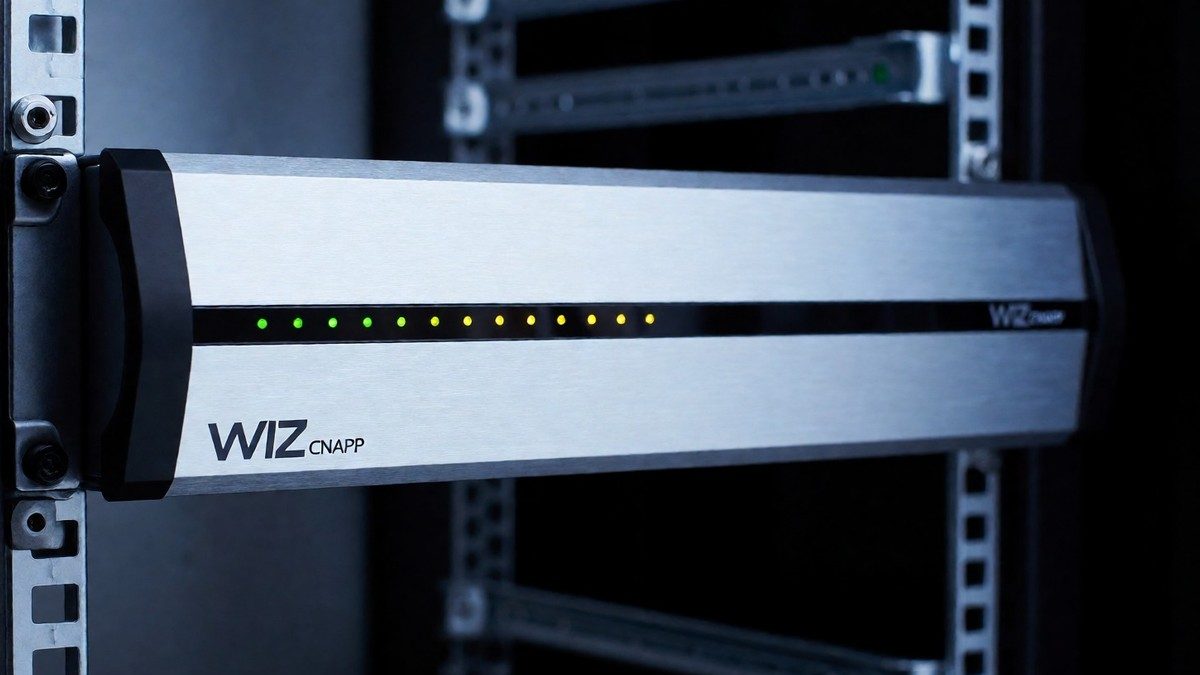
Google completed its $29.5 billion acquisition of Wiz on March 11, 2026, after a rejected $23 billion offer in July 2024. Assaf Rappaport, Yinon Costica, Roy Reznik, and Ami Luttwak founded the company in 2020. These founders previously built Adallom, which Microsoft bought in 2015. Wiz reached $100 million in annual recurring revenue 18 months after launch. The company reached $350 million by February 2024 and $500 million by October 2024. Wiz surpassed $1 billion in annual recurring revenue in 2025. The U.S. Department of Justice cleared the deal in November 2025. The European Commission granted unconditional approval in February 2026 after conducting a thorough probe. The Commission assumed customer mobility would constrain anticompetitive conduct. The European Commission concluded that Google’s position in cloud infrastructure trails Amazon and Microsoft, so the acquisition does not raise competition concerns. The regulatory review for this deal was faster than the 21-month review for Microsoft’s Activision Blizzard acquisition. Google places the leading Cloud-Native Application Protection Platform under Google Cloud ownership. The transaction follows a rejected $23 billion offer from July 2024, and Google paid a significant premium to secure the assets of the company that reached $1 billion in annual recurring revenue during 2025.
The CNAPP competition
The CNAPP market includes Palo Alto Networks, CrowdStrike, Microsoft, and Orca Security, and the sector was worth $15 billion in 2025. Palo Alto Networks maintains a position as a leader in the cloud security market. CrowdStrike competes using the Falcon Cloud Security platform. Microsoft Defender for Cloud supports Azure, AWS, and GCP workloads.
| Vendor | Product | Cloud Support |
|---|---|---|
| Wiz | CNAPP | AWS, Azure, GCP, OCI |
| Palo Alto | Prisma Cloud | Multi-cloud |
| Microsoft | Defender | Azure, AWS, GCP |
| Orca | CNAPP | Multi-cloud |
Palo Alto Networks released Prisma AIRS 3.0 on March 23, 2026. This product focuses on the agentic lifecycle. Microsoft Defender for Cloud is a CNAPP that combines DevSecOps, CSPM, and CWPP. You should monitor if Google maintains its multicloud promise for AWS and Azure users. Google committed to keeping Wiz available across competing environments. Feature development for Google Cloud might outpace parity for other providers. Google has a commercial incentive to use bundled pricing to nudge workloads toward GCP. Salesforce left Palo Alto Networks to use Wiz before the acquisition. Will Google prioritize its own infrastructure over the needs of AWS customers?
Wiz provides Cloud Security Posture Management, Cloud Workload Protection, and Cloud Infrastructure Entitlement Management. The platform uses a security graph to map relationships between resources, identities, and vulnerabilities. This method allows teams to prioritize critical attack paths. A CSA survey found 75 percent of organizations implemented or planned to implement a CNAPP. 84 percent of those respondents operate in two or more cloud environments. The 84 percent of CSA members in multi-cloud environments makes the concentration of leading CNAPP capability a systemic risk.
AI agent security
Attackers use generative AI to scale operations. This capability forces defenders to adopt automated tools. Palo Alto Networks targets discovery, risk assessment, and runtime controls, while Google combines Wiz with Mandiant threat intelligence and Gemini AI features. This combination aims to protect workloads across any cloud or AI platform. The focus shifts toward the agentic lifecycle of AI agents.
The security model now overlaps with identity and application security. An agent can receive instructions, access data, and call tools. Security teams must understand what identity an agent uses. The convergence of CNAPP and AI security is the new reality. Companies like Shell, BMW, and Morgan Stanley use Wiz to manage risk. These users must assess if the change in ownership affects their data processing agreements. On April 22, 2026, Wiz added dedicated protection for Databricks environments, an extension that brings the agentless model to data and AI platforms. An agent’s prompt can be attacked, and its impact depends on identity, API permissions, and cloud resource access.