The US Army’s Enterprise Contract
The US Army awarded Anduril an enterprise contract worth up to $20 billion over ten years, which consolidates 120 separate procurement actions into a single vehicle administered by the Army Contracting Command at Aberdeen Proving Ground. This agreement covers hardware, software, infrastructure, data, computer systems, and technical support services. Government agencies can issue task orders for Anduril’s software, hardware, and data infrastructure through 2036. This consolidation is a logical attempt to bypass traditional procurement failures. The Joint Interagency Task Force-401 selected the Lattice platform as its tactical command-and-control backbone for counter-uncrewed aircraft system operations. This initial task order has a value of approximately $87 million. Lattice fuses data from sensors, autonomous platforms, and defensive systems into a unified operational picture using AI-driven analytics, computer vision, and mesh networking. The platform integrates radars, electro-optical sensors, electronic warfare systems, and kinetic interceptors within one environment. Army officials say the unified platform addresses fragmented command systems that prevent sensors and effectors from operating as a coordinated network. Can the Army prevent the fragmentation seen in other service programs through this single contract?
Revenue Growth and R&D Investment
Anduril projected revenue of $4.3 billion for 2026 after reaching $2.2 billion in 2025. The company expects an operating loss near $1.2 billion as it funds factories. Research and development spending accounts for 50 to 60 percent of total revenue. The firm raised $5 billion in a Series H funding round that doubled its valuation from the $30.5 billion mark set in June 2025. The company follows a model where it funds product development with internal capital before selling to governments. This strategy allows for rapid prototyping and keeps financing flexibility in private hands. Once a customer adopts Lattice for one mission, the integration cost is already paid. This creates a reason to buy the next Anduril sensor or effector.
| Metric | Value |
|---|---|
| 2025 Revenue | $2.2 billion |
| 2026 Projected Revenue | $4.3 billion |
| Projected Operating Loss | $1.2 billion |
| R&D Percentage of Revenue | 50% to 60% |
| Series H Funding | $5 billion |
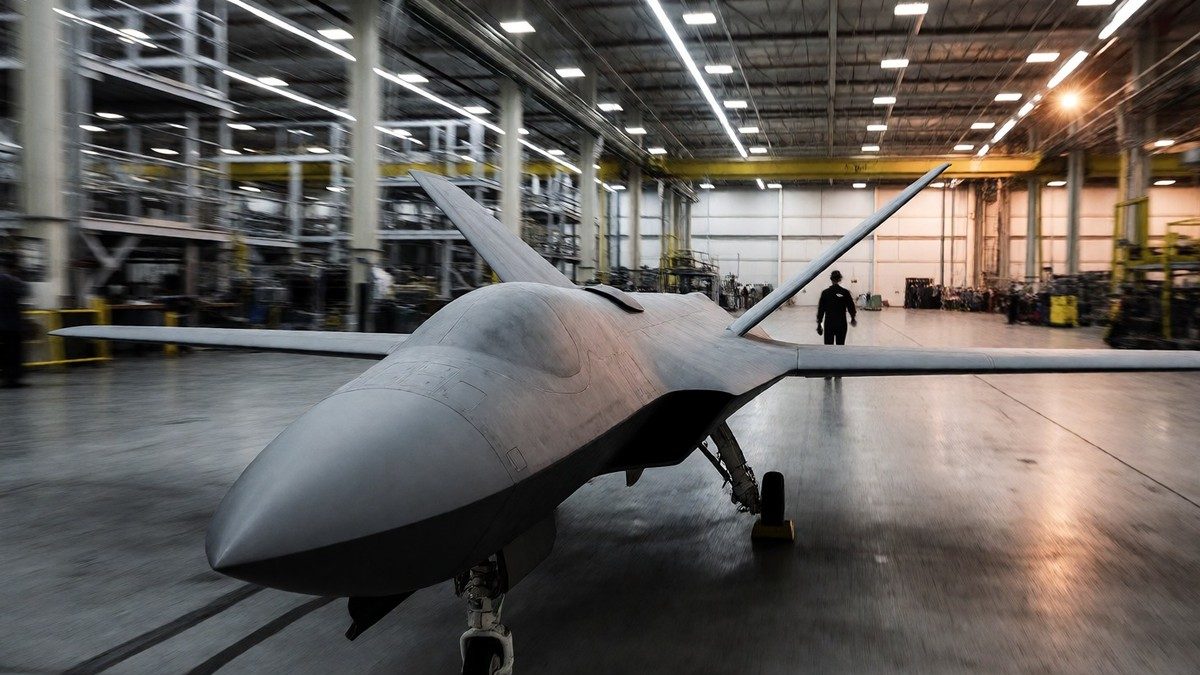
The company builds massive production facilities to support its growth. Arsenal-1 near Columbus, Ohio, is a roughly $1 billion factory announced in January 2025. This facility produces the FQ-44A Fury, and the first Ohio-built aircraft rolled out 557 days after the announcement. The Fury line is rated for up to 150 aircraft per year. Arsenal-2 in Baltimore County, Maryland, involves a $2.9 billion Navy contract and a $3.7 billion investment from Anduril. This site will produce Virginia-class components for Electric Boat and Newport News Shipbuilding.
Production Scaling and Market Realities
The Steelfin interceptor family provides capabilities similar to traditional systems at a fraction of the price. This allows for rapid procurement of defensive missile inventories to increase stockpiles. The Lattice architecture supports a distributed defense model where multiple sensors and interceptors from different vendors operate within a single networked system. However, the Navy canceled the MASC program Anduril sought to win. The company also faced hardware complaints regarding heat and security memos from the NGC2 program. Hiring for production roles pulls from the same labor pool as aerospace primes and the commercial aviation sector. You should know that the company’s headcount nearly doubled in 2025 to reach 8,500 employees.
| Facility | Location | Investment |
|---|---|---|
| Arsenal-1 | Columbus, Ohio | ~$1 billion |
| Arsenal-2 | Baltimore County, MD | $6.6 billion (total) |
The US military currently struggles with fragmented command systems where each service builds its own version of orchestration software. While Lattice provides a platform to link sensors and interceptors, the Department of Defense still faces challenges with top-down approaches and legacy system integration. The company aims to provide an option for rapid procurement of defensive missile inventories in response to conflicts in the Middle East.