Scaling production at BotQ
The BotQ manufacturing facility now produces one robot per hour, a 24-fold increase from the previous rate of one robot per day. Figure delivered more than 350 Figure 03 units to support research, housework, and commercial use cases. This production scale follows a Series C financing round that brought the company’s valuation to $39 billion after exceeding $1 billion in committed capital. The money supports the manufacturing of humanoid robots and the expansion of GPU infrastructure for Helix, the company’s proprietary AI platform. The facility utilizes more than 150 networked workstations and 50 in-process inspection points. Figure has produced more than 9,000 actuators across more than 10 different stock-keeping units. Each robot undergoes more than 80 functional verification tests, including multi-limb stress tests and jogging, before sign-off. Figure aims for an initial production capacity of 12,000 units per year and plans to produce 100,000 robots over four years. To improve the Helix platform, Figure partnered with Brookfield to capture navigation and manipulation data in residential environments. Investors including Parkway Venture Capital, Brookfield Asset Management, NVIDIA, Intel Capital, and Salesforce provide the funding.
Deployment in automotive and logistics
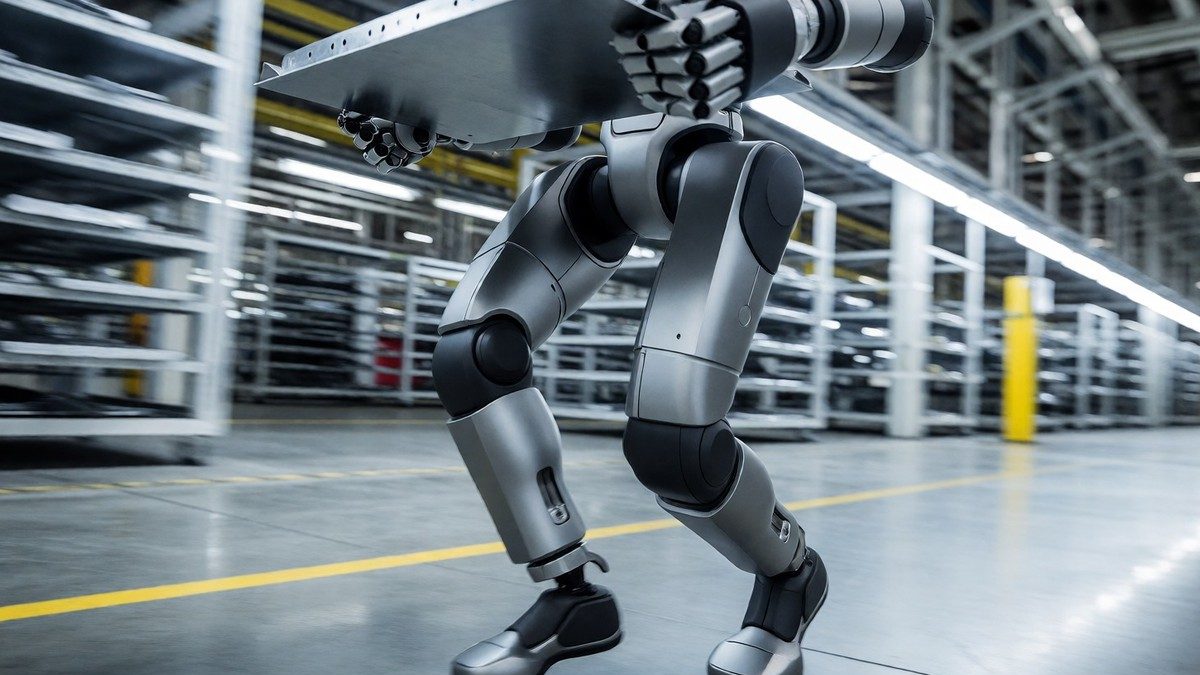
Figure 02 completed 1,250 operational hours at the BMW manufacturing plant in Spartanburg, South Carolina, where the robot transfers sheet metal body parts between storage racks and assembly stations. The robot picks parts from a shelf, carries them across the facility floor, and places them at a specific position for the next stage of assembly. This deployment marks the first commercial use of a general-purpose humanoid robot in a major automotive facility. Figure 02 avoids the limitations of fixed-arm robots because its bipedal mobility allows it to move between workstations in environments designed for humans. The company uses a "robot as a service" model, charging between $8,000 and $15,000 per month for hardware, software, and maintenance. This cost structure suits high-labor-cost environments like Spartanburg, where assembly technicians earn between $50,000 and $70,000 annually. While Agility Robotics’ Digit platform handles tote movement in Amazon fulfillment centers, Figure focuses on tasks requiring multi-axis hand dexterity. Agility Robotics maintains a production capacity of 10,000 Digit units annually at its RoboFab facility. Tesla has produced several thousand Optimus Gen 3 units to be used within its own manufacturing operations. You should realize that these machines do not replace entire workforces, but rather specific, repetitive workflows. How will these robots handle the extreme variability of unstructured warehouses?
Technical performance and competition
Figure 03 includes a lighter body, better vision systems, and embedded palm cameras to assist with tasks. The Helix AI platform uses a "vision-language-action" system to handle perception, reasoning, and control. This setup allows the robot to follow commands and adjust to changing contexts by integrating language understanding with physical inputs. In a recent warehouse demonstration, the Helix-02 robot performed package sorting tasks, but the footage showed the machine moving slower than human workers. The machine also handled boxes with insufficient gentleness, which could lead to damage for packed goods. The Figure 02 robot utilizes actuators like the L4, which provides 150Nm of torque and a 135-degree range of movement. The robot’s foot design mimics human movement with a specialized ankle and heel gap to enable rotation, while the underside has textured protrusions to increase grip on various surfaces. The Figure 03 robot can operate for up to five hours on a single charge. In the competitive market, Tesla’s Optimus Gen 3 performs tasks inside Gigafactories, while Unitree’s G1 provides a compact $16,000 platform. AgiBot has verified 5,000 shipments globally, and the EngineAI T800 provides 450 N-m of peak torque.
| Figure 03 Metric | Value |
|---|---|
| Annual Capacity | 12,000 units |
| 4-Year Target | 100,000 units |
| Single Charge Runtime | 5 hours |