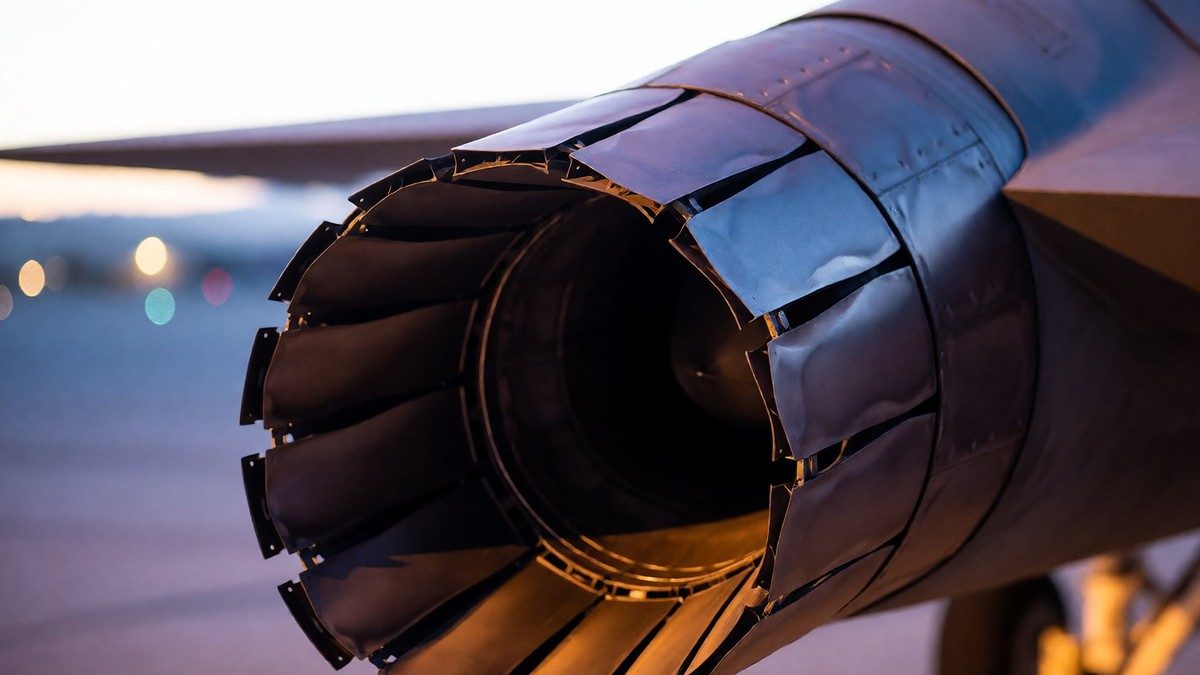
Anduril recently conducted live-fire tests with the U.S. Air Force using the YFQ-44A, a jet-powered combat drone at Edwards Air Force Base. This aircraft is a shift toward greater autonomy in unmanned aerial vehicles. During the tests, the YFQ-44A autonomously located a digital threat and launched an AIM-120 missile under human supervision. The Air Force intends to deploy a fleet of at least 1,000 Collaborative Combat Aircraft (CCAs) for strike missions and operations alongside manned jets like the F-22 or F-35. The Experimental Operations Unit gained experience during the exercise, as airmen performed tasks such as the launch, recovery, and inspection of aircraft. Airmen managed weapons loading and unloading and tasked the aircraft throughout its mission cycle. The YFQ-44A requires less maintenance and fewer personnel than traditional UAVs. This testing uses an "operator-driver experimentation" model to embed operators with acquisition professionals.
| Program/Asset | Detail |
|---|---|
| YFQ-44A | Autonomous targeting and missile launch |
| CCA Fleet Target | 1,000 units |
| Anduril Valuation | $30.5 billion |
Anduril’s revenue doubled to approximately $1 billion in 2024. This growth follows a $2.5 billion Series G funding round led by Founders Fund. The company also secured an Army contract to develop augmented and virtual reality headsets for soldiers to modernize military equipment. Can the military integrate these autonomous platforms without overwhelming its personnel?
Distributed systems drive true swarming
True swarming requires distributed systems infrastructure rather than just individual AI capabilities. Current military "swarms" often consist of robotic maneuver en masse where drones function as individuals. This approach is not a true swarm. A genuine swarm is singular. It is overwhelming in scale and in its unity and resilience. It adapts intelligently to changing circumstances at machine speed. A genuine swarm is a distributed system.
The Department of Defense faces the massive challenge of effectively commanding hundreds or thousands of robots when communications may be jammed and the battlefield moves significantly faster than traditional human reaction times can ever allow for any single individual operator. The U.S. defense industry has failed to deliver distributed systems for useful, resilient, collaborative swarming behavior among autonomous platforms. Industry focus remains on massing and maneuvering robots as mere surrogates for humans. This is a failure to achieve the "third offset," which seeks advantage through AI-driven decision-making and rapid adaptability. DARPA’s Decentralized Artificial Intelligence through Controlled Emergence (DICE) program addresses this by seeking a drone network where mission-level behavior emerges from local interactions. This architecture avoids the vulnerability of centralized control, where a single radio-frequency jammer could collapse a network.
Scaling production for attrition
The Pentagon’s Replicator initiative is an effort to quickly muster and deploy large numbers of cheap drones by August 2025. This program targets $500 million annually to network and task thousands of cheap, smart combat drones. Anduril’s Arsenal One facility in Columbus, Ohio, is a 5-million-square-foot campus. This facility is built around a contract-manufacturer model. The production lines can pivot rapidly between weapon systems based on shifting military demand.
| Capability | Metric/Detail |
|---|---|
| US Munitions (vs China) | 8 days (current) vs 800 days (needed) |
| Replicator Target | Thousands of drones |
| Replicator Budget | $500 million annually |
The U.S. currently has only eight days of munitions for a major conflict with China, compared to the 800 days needed. This vulnerability is heightened by the "2027 Taiwan window," where China is rapidly closing the military capability gap. You should recognize that massed drones require continuous replacement cycles rather than stockpiled durable goods. Defense leaders advocate viewing munitions and drones as consumables to create predictable demand. This model helps avoid the reactivation lags seen when retired workers must return to restart production lines. The U.S. leads in drone production by a ratio of 10,000 to one over China, but faces significant gaps in other areas. Maintaining industrial readiness is necessary to prevent adversaries from testing U.S. thresholds.