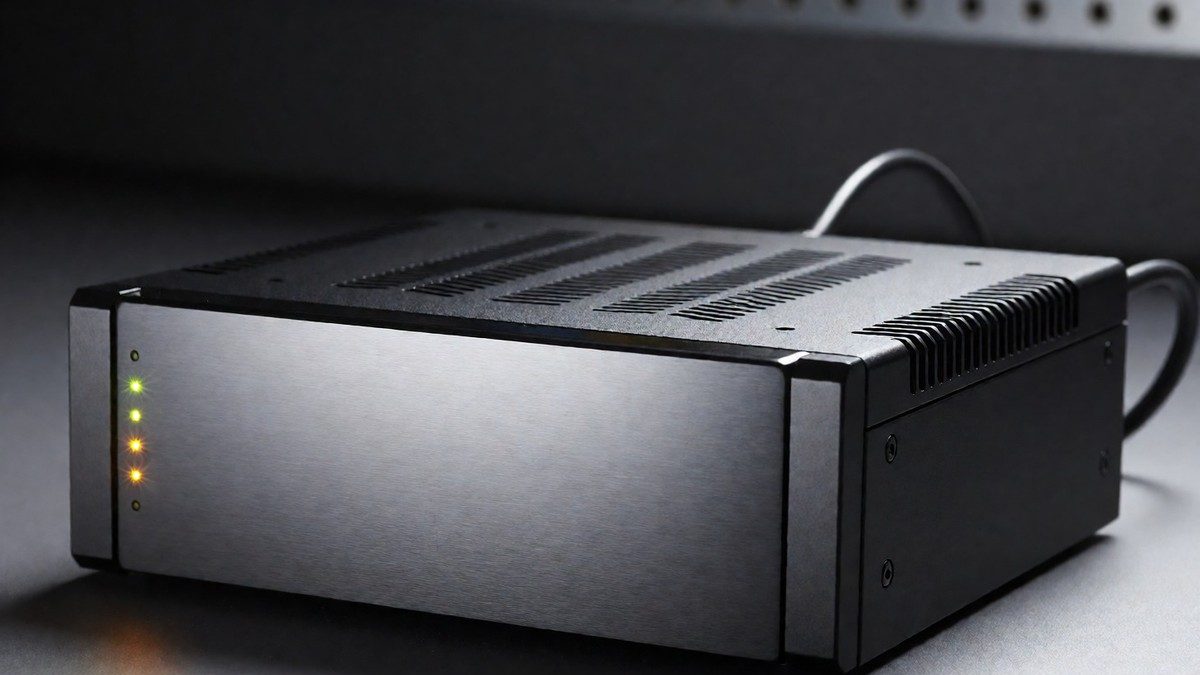
Efficient deployment for enterprise workflows
Cohere generates revenue through enterprise AI solutions like API usage and custom deployments. The company makes between $180 million and $220 million in 2026. It targets industries including finance, healthcare, and legal. Cohere launched Command R7B to suit businesses requiring speed and low cost. The model runs on low-end GPUs, CPUs, or MacBooks. It provides a 128k context length and utilizes retrieval-augmented generation with native inline citations. The model outperforms competitors in RAG, tool use, and AI agent tasks. It costs $0.0375 per million input tokens. Command R7B provides retrieval-augmented generation with native inline citations and performs well on math, code, and reasoning tasks across a 128,000 token context window while maintaining low costs for enterprises using affordable infrastructure. The model achieves strong results on the HuggingFace Open LLM Leaderboard, yet it lacks the massive reasoning capacity of frontier models. Command R7B provides the most viable path for businesses needing efficient, localized AI.
| Specification | Detail |
|---|---|
| Input Price | $0.0375 per million tokens |
| Context Window | 128,000 tokens |
| Deployment | Low-end GPUs, CPUs, MacBooks |
| Performance | High RAG and tool use |
Compliance needs in healthcare
Regulated industries prioritize data isolation and specific compliance requirements. In healthcare, the OCR investigated a small dental practice in 2023 because the entity could not produce workforce HIPAA training records. The HIPAA Privacy and Security Rules mandate training for all workforce members on relevant policies. Cohere Health uses agentic AI to automate prior authorization, which results in a 63% reduction in denial rates and a 70% increase in the speed of patient care access. The platform achieves a 18-43% decrease in adverse outcomes and handles 12 million prior authorization requests annually. This technology supports clinicians and coding experts across utilization management and payment integrity operations. You should know that many bundled training programs fail to meet OCR expectations because they skip the technical safeguards and incident response procedures required under the Security Rule. These programs often ignore the minimum necessary standard or role-based access specific to a workforce. To satisfy federal requirements, training must cover the Privacy Rule, the Security Rule, and the Breach Notification Rule. The Cohere Unify platform integrates intelligent digitization and clinical expertise to streamline the end-to-end patient journey. It uses touchless technologies to eliminate manual steps and predictive technologies to anticipate the next likely actions. This automation results in a 92% satisfaction rate among providers and can reduce administrative costs for health plans by 25% to 40%.
Sovereignty and the rivalry for government cloud
The rivalry between OpenAI on Azure Government and Cohere’s deployment options shapes how agencies choose models. Azure OpenAI provides GPT models in USGov datazones for FedRAMP High and DoD IL4/IL5 environments. A known issue affects all GPT 4.1 series models, where large tool or function call definitions exceeding 300,000 tokens cause failures. Command R7B provides an alternative via private deployment where data never leaves the customer perimeter. Cohere also addresses sovereignty through partnerships like the EU AI Cloud with SAP. This platform allows European enterprises to build AI into core processes while maintaining data and model residency. The platform includes options like SAP Sovereign Cloud on SAP Infrastructure in EU data centers or SAP Sovereign Cloud On-Site in customer facilities. The partnership integrates Cohere’s agentic AI North into the SAP Business Technology Platform. The EU AI Cloud provides sovereign compliant infrastructure for deploying agentic AI models within strict regulatory boundaries. Customers can select deployment options ranging from SAP’s European data centers to customer-owned facilities. This addresses demand from regulated industries requiring control over sensitive assets. In the government sector, Azure OpenAI enables agencies to streamline complex processes and automate repetitive work through models like GPT-4o. Will small models eventually replace the need for massive frontier reasoning?