
Anthropic is on a revenue path that exceeds $100 billion annually as of mid-September 2026. This follows a climb to $65 billion in July 2026 and $47 billion in May 2026. The company grew from $9 billion in annualized revenue at the end of 2025. This growth comes from the Claude API and enterprise contracts, which provide 75% to 85% of the total revenue base. Consumer subscriptions account for the remaining portion. The revenue growth is one of the fastest in the history of enterprise software. In April 2026, the company surpassed OpenAI in annualized revenue. Anthropic reported $47 billion in revenue in April 2026, while OpenAI reported $25 billion.
The infrastructure investment from Amazon
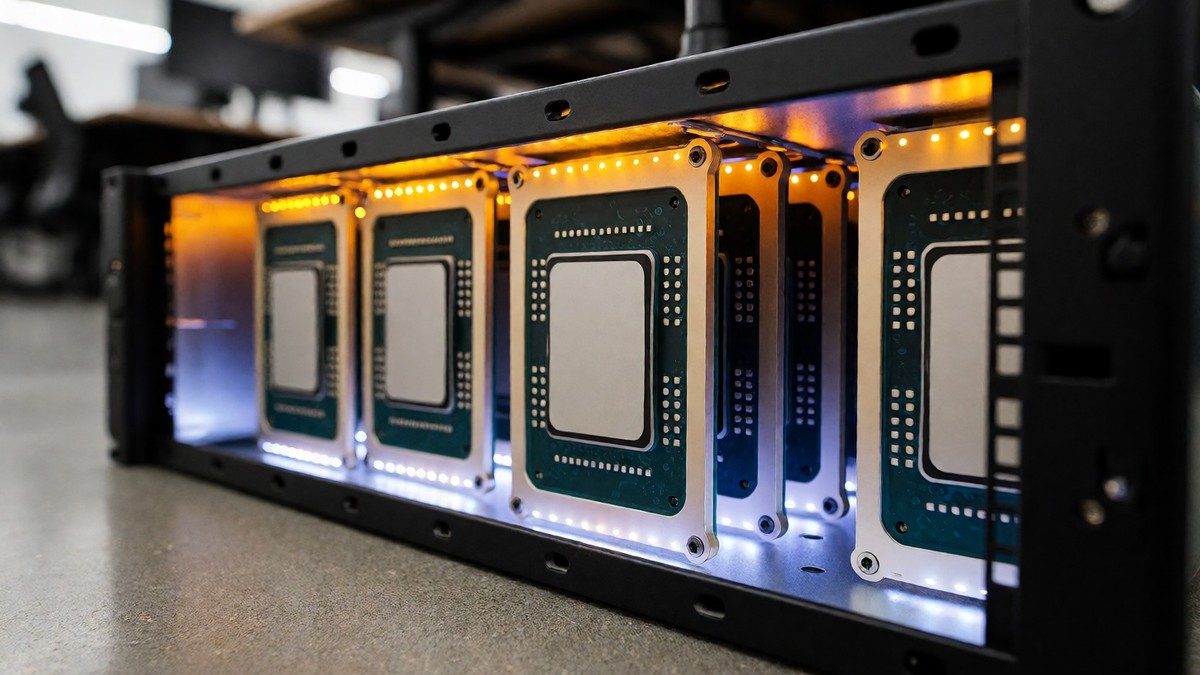
Amazon is investing up to $25 billion in Anthropic to expand AI infrastructure. This includes an initial $5 billion investment at a $380 billion valuation. Anthropic committed to spending more than $100 billion on AWS technologies over 10 years. The company has secured 5 gigawatts of capacity for training and deploying Claude models. Anthropic will bring nearly 1 gigawatt of Trainium2 and Trainium3 capacity online by the end of the year. Amazon is also building Project Rainier, an $11 billion AI data center complex. Claude models run on hundreds of thousands of Amazon Trainium 2 chips in this complex.
Amazon’s third-quarter profits rose 38% to $21.2 billion. A large part of this jump came from a $9.5 billion pre-tax gain from its investment in Anthropic. This gain is a mark-to-market adjustment because Anthropic raised $13 billion in new funding at a $183 billion valuation in September. The Amazon Web Services cloud business generated $11.4 billion in quarterly operating profits. Amazon spent $35.1 billion on property and equipment in the third quarter. This amount is 55% higher than the previous year. The heavy investment in AI infrastructure is starting to impact AWS results. AWS sales rose 20% to $33 billion, but operating income only increased 9.6% to $11.4 billion.
The revenue engine of Claude Code
Claude Code is a primary driver of the financial performance at Anthropic. This terminal-based agent reads, writes, and executes code in development environments. The product reached $1 billion in annualized revenue in November 2025. It reached $8 billion in annualized revenue by May 2026. TickerTrends estimated that the product reached $15 billion in annualized revenue in mid-August 2026. This product is available through various subscription plans and the API.
Claude Code functions as a feature on top of existing Claude products. The usage of the tool draws from the same token budget as regular Claude usage. Coding workloads generate a high volume of output tokens. This volume helps drive the revenue for the company. A single engineer running agentic coding sessions can consume more tokens in a day than a casual chatbot user does in a month.
| Model Version | Input Cost (per million tokens) | Output Cost (per million tokens) |
|---|---|---|
| Claude Fable 5.1 | $10 | $50 |
| Claude Opus 5.5 | $4 | $20 |
| Claude Sonnet 5 | $2 | $10 |
| Claude Haiku 4.5 | $1 | $5 |
The pricing structure for these models depends on the specific version. Claude Fable 5.1 is designed for long-running agents. Claude Opus 5.5 is a high-end model. Claude Sonnet 5 is a mid-tier model. Claude Haiku 4.5 is the budget option. Users can also use batch processing to cut costs by 50% or prompt caching to cut input costs by 90%.
Enterprise adoption and customer concentration
The enterprise customer base for Claude is very large and concentrated in high-value accounts. 70% of Fortune 100 companies use Claude. There are more than 300,000 business customers worldwide. More than 1,000 customers spend over $1 million annually. This number of high-value customers doubled from 500 in the two months before April 2026.
Major companies use Claude for different workflows. Netflix, Spotify, KPMG, L’Oreal, and Salesforce use Claude Code. Large organizations like Deloitte, Cognizant, and Accenture have deployed Claude to hundreds of thousands of employees. The company has a strong presence in regulated industries because of its constitutional AI approach. This approach focuses on safety and security.
You know that enterprise AI demand is scaling faster than the hardware can be deployed. The company sees a sharp rise in consumer usage as well. Claude has approximately 245 million monthly active users as of mid-2026. The company generates $192 annually per monthly active user. This is much higher than the $23 generated per user by OpenAI.
The unbundled pricing model for mid-market teams
The pricing structure for the Claude Enterprise plan changed in 2026. Anthropic decoupled seat fees from token bundles. Previously, higher seat prices included discounts of 10% to 15% on API rates. Those discounts are no longer part of the Enterprise agreement. The base seat fee for the Enterprise plan is approximately $20 per user per month. Users pay for all token consumption at standard API rates.
This change affects the total cost of ownership for many organizations. For a team with 100 seats, the monthly seat cost is $2,000. If the team has moderate usage, the monthly token cost is about $300. This leads to a total monthly cost of $2,300. However, many mature deployments have much higher usage. A high-usage team with three automated workflows might see a monthly token cost of $3,500. This brings the total monthly cost for 100 seats to $5,500.
The Enterprise plan requires a minimum of 50 seats. It includes features like SSO, SCIM provisioning, and audit logs. The Claude Team plan is for teams with at least 5 seats. The Team plan has a lower price point but lacks the governance tools found in the Enterprise version. I recommend targeting the Enterprise Plan only if your security team demands SSO or audit logs, as the unbundled token costs make it too expensive for many mid-market teams.
The massive valuation and market comparisons
Investors expect an IPO for Anthropic with a valuation of $2 trillion. This valuation is higher than the $1.77 trillion SpaceX IPO from June. To maintain a $2 trillion valuation, Anthropic needs annual profits between $59 billion and $79 billion. The company is currently valued at $380 billion based on its Series Ground funding in February 2026. This valuation is much higher than the $965 billion reported during its Series H in May 2026.
The valuation of Anthropic is much higher than many other large technology companies. Nvidia has a valuation of more than $5 trillion and earned $120.1 billion in net income last fiscal year. Alphabet has a valuation of $4.55 trillion and earned $132 billion in net income. Apple has a valuation of $4.49 trillion and earned $112 billion in net income. Microsoft has a valuation of $3.7 trillion and earned $133.7 billion in net income.
The massive valuation of the company depends on whether the leadership can successfully bridge the gap between high-volume API usage and the massive capital expenditure requirements of its multi-year infrastructure roadmap during the next several fiscal years. Will the company maintain these margins once the next generation of training runs begins?
Competition in the frontier model market
Anthropic competes directly with OpenAI and Google. Anthropic has a multi-cloud presence. The company provides models through Amazon Bedrock, Google Vertex AI, and Microsoft Azure. This distribution helps Anthropic reach enterprise buyers who have existing cloud commitments.
OpenAI is the main rival in the consumer market. OpenAI has a much higher share of consumer web traffic. However, Anthropic is winning in the enterprise and developer markets. The revenue per user for Anthropic is much higher than for OpenAI. Anthropic focuses on coding agents and productivity tools. This focus on professional use cases drives higher revenue per token.
Amazon is also investing in OpenAI. Amazon agreed to invest up to $50 billion in OpenAI in early 2026. Both companies are racing to secure enough compute capacity. OpenAI executives have criticized Anthropic for not acquiring enough compute. Anthropic has responded by securing capacity through Amazon, Google, and Broadcom.
The challenge of profitability and training costs
Anthropic reported its first quarter of positive adjusted operating income in Q2 2026. The revenue for that quarter was more than $10.9 billion. This is more than double the $4.73 billion in revenue from Q1 2026. The company expects to report an adjusted operating profit in Q3 2026 as well. These profits are calculated before interest on debt and taxes.
The company still has large cumulative losses. Anthropic has $10 billion to $15 billion in net losses since 2021. These losses come from the cost of training models and buying compute. Training a single flagship model can cost hundreds of millions of dollars. Anthropic agreed to pay SpaceX’s xAI $1.25 billion a month for data-center capacity through May 2029. The company also signed a $45 billion, six-year agreement with Nscale.
The margin for the company depends on the cost of inference. Gross margins for the company exceed 80% before revenue-sharing payments to partners like Amazon. Outside estimates suggest inference margins are closer to 50% to 60%. Every new model generation requires a fresh and larger training run. These costs can compress the profit margins for the company in the short term.