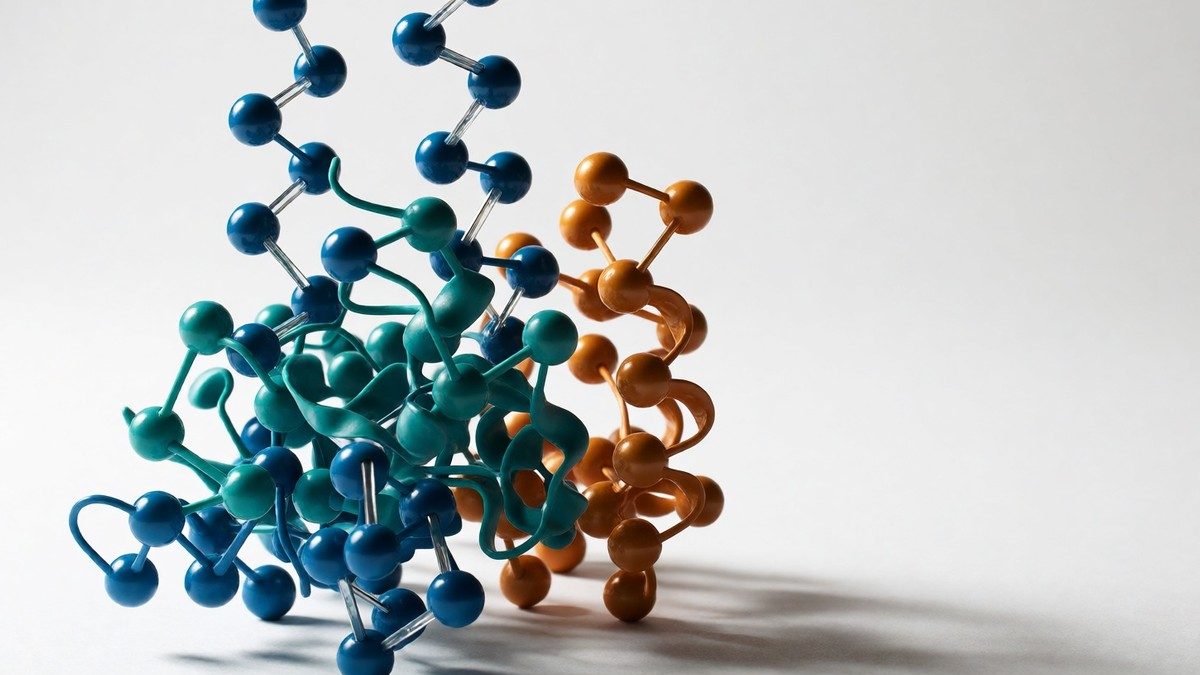
Google DeepMind developed AlphaFold 3 to predict the structure and interactions of all life’s molecules. This AI system predicts a protein’s 3D structure from its amino acid sequence. The AlphaFold Server provides scientists free access to AlphaFold 3 structure prediction capabilities for non-commercial research. Users can also access AlphaFold 3 model code and weights for academic use. The system predicts how proteins interact with other molecules throughout cells. Because the system works on amino acid sequences, researchers study how life’s molecules interact. The methodology achieves accuracy that is competitive with experimental methods. In CASP13, AlphaFold placed first. The DeepMind team expanded to work on an innovative new system. Demis Hassabis and John Jumper received the Nobel Prize in Chemistry for their work on AlphaFold. You likely know that protein folding remains a central challenge in biology. This system predicted structures with a median error (RMSD_95) of less than 1 Angstrom. Such accuracy is three times higher than the next best system and is comparable to experimental methods.
The AlphaFold Database and global research
Google DeepMind and EMBL’s European Bioinformatics Institute (EMBL-EBI) created the AlphaFold Database to make predictions freely available to the scientific community. The latest database release contains over 200 million entries. These entries provide coverage of UniProt, the standard repository for protein sequences and annotations. Researchers can download the human proteome or the proteomes of 47 other organisms important for global health. This includes predictions for human and animal viruses with pandemic potential, bacterial proteins linked to antimicrobial resistance, and proteins from organisms causing neglected tropical diseases. The database also includes the 30 WHO priority global health proteomes. This supports research on pathogens of major global public health importance. A transformer-based named entity recognition (NER) model identifies protein residues and point mutations in structural biology publications. This model links experimentally supported annotations to UniProt reference sequences. These annotations transfer from experimentally validated PDB structures to AlphaFold models using the SIFTS framework. This allows users to move from residues in AlphaFold predictions to publications that describe their function, interactions, and experimentally observed mutations. Researchers in over 190 countries use the AlphaFold Protein Structure Database for work on antimicrobial resistance, crop resilience, and heart disease. The database also provides a download for the manually curated subset of UniProt known as Swiss-Prot. It supports research into pathogen biology and drug or vaccine target discovery. Scientists use the data to target early-onset Parkinson’s or breed healthier honeybees.
Accuracy and technical specifications
AlphaFold 2 won CASP14 by a large margin and produced predictions with high accuracy. The AlphaFold Database integrates AI-derived residue-level annotations from scientific literature to provide biological context. These annotations allow users to interpret predicted structures in their biological context. If a specific use case is not covered in the database, users can generate their own AlphaFold predictions using the open source code. This code supports multimer prediction. Users can also download the PAE for all residue pairs as a JSON file. The predicted_aligned_error field contains the PAE value of the residue pair, rounded to the closest integer, at position (i, j) where i is the residue on which the structure is aligned and j is the residue on which the error is predicted. The JSON file also contains the max_predicted_aligned_error. This file format was updated on 28th July 2022 to reduce file size by 4x. One example of a protein in the database is Q8I3H7, which may protect the malaria parasite against attack by the immune system and has a mean pLDDT of 85.57. For sequence searches, the input query must contain at least 20 amino acids and only standard amino acids are accepted. Can these automated annotations replace manual curation for all new protein entries?