The Processor Fight
The Snapdragon 8 Elite Gen 5 for Galaxy gives the Samsung Galaxy S26 Ultra a clear performance lead. Qualcomm’s processor uses custom Oryon CPU cores to provide a 45% boost in single-core and multi-core performance over the Snapdragon 8 Gen 3. The prime CPU cores clock in at 4.32GHz, which outpaces the Tensor G5. The Google Pixel 10 relies on the Tensor G5, which Google produces with TSMC on a 3nm N3E node. While the Tensor G5 handles 4K60 HDR video, the Snapdragon 8 Elite’s NPU delivers 45% better AI performance per watt and supports up to 70 tokens per second on certain AI models. I find the Snapdragon’s 45% increase in performance makes the Tensor G5 struggle to keep up during heavy workloads. The Pixel 10’s Tensor G5 provides "Post-capture Generative AI-based Intuitive Video Editing" for the Photos app, but this lacks the raw power of the Snapdragon’s multimodal AI. The Snapdragon 8 Elite’s AI ISP also allows for 4.3 gigapixels per second of throughput, helping it process high-resolution data faster than the Pixel. The Snapdragon 8 Elite also includes the X80 modem with 10Gbps downlink speeds. The Pixel 10 Pro XL has 16GB of RAM on all storage tiers to help with future AI, whereas the S26 Ultra has 12GB on the base and middle storage levels. Will the Tensor G6’s 7-core configuration finally close the gap with Qualcomm’s dominance?
Design and Display
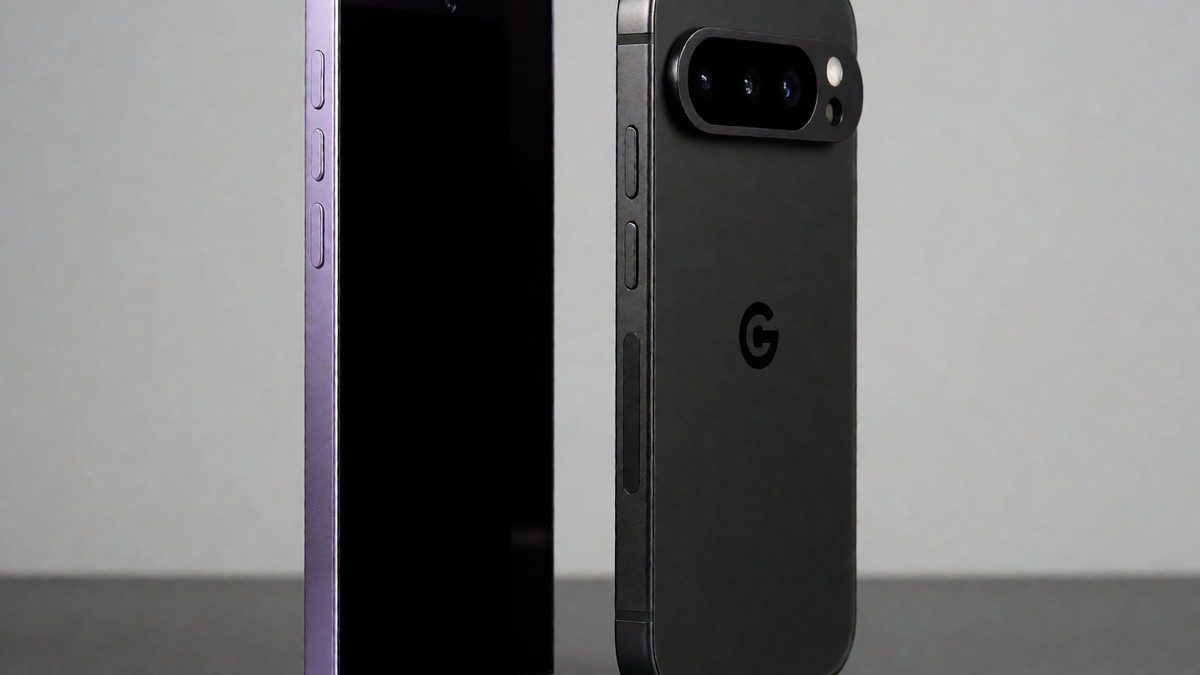
The Samsung Galaxy S26 Ultra wins on physical ergonomics and display clarity. Samsung reduced the weight of the S26 Ultra to 214 grams and the thickness to 7.9mm. The Pixel 10 Pro XL weighs 232 grams and measures 8.5mm thick. The S26 Ultra uses a 6.9-inch QHD+ AMOLED panel with a 120Hz refresh rate, while the Pixel 10 Pro XL utilizes a 6.8-inch Super Actua display. The Pixel 10 Pro XL provides a 6.8-inch Super Actua display with 3,300 nits peak brightness, but the low 480Hz PWM dimming rate makes it difficult for users with sensitive eyes to use for long periods. I would skip the Pixel 10 Pro XL if you have eye sensitivity because of this dimming issue. You should know the Pixel 10 Pro XL adds bulk because of the built-in magnets for Pixelsnap. The S26 Ultra is more comfortable to hold since it is much slimmer and lighter than the heavy Pixel. The S26 Ultra comes in Cobalt Violet, Sky Blue, and Black for $1,299.99, while the Pixel 10 Pro XL starts at $1,199 for 256GB. The S26 Ultra also includes S Pen support, which the Pixel lacks.
Camera and Battery
The Google Pixel 10 Pro XL delivers more battery runtime and advanced AI camera features, but the Samsung Galaxy S26 Ultra charges much faster. The Pixel 10 Pro XL has a 5,200mAh battery, while the Galaxy S26 Ultra maintains a 5,000mAh capacity. Samsung supports 60W wired charging, but Google restricts the Pixel 10 Pro XL to 45W and throttles speeds after 200 charge cycles through Battery Health Assistance. The Pixel 10 Pro XL’s "Pro Res Zoom" allows for 100x reach, but the AI often creates gibberish by trying to clarify blurred text. The S26 Ultra uses a 200MP main sensor with a wider aperture to capture clearer low-light photos. The Pixel 10 Pro XL uses a 50MP main camera, a 48MP ultrawide lens, and a 48MP periscope telephoto lens. The S26 Ultra’s 50MP 5x telephoto camera captures clearer low-light photos than previous models because of wider apertures. The Pixel 10 Pro XL’s 48MP 5x periscope telephoto camera works well, though the 48MP ultrawide lens is an improvement. The Pixel 10 Pro XL also includes Auto Best Take to improve group photos. The S26 Ultra includes a 10MP 3x telephoto lens and a 48MP 5x periscope telephoto lens. The S26 Ultra provides 25W wireless charging with Qi2, while the Pixel 10 Pro XL provides 25W via its Pixelsnap implementation. The Galaxy S26 Ultra is the better flagship for most people because it addresses the weight and charging issues found in the Pixel.